Description
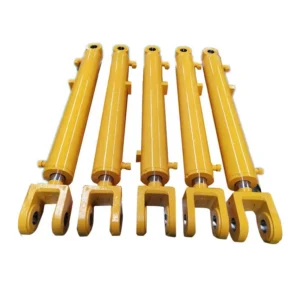
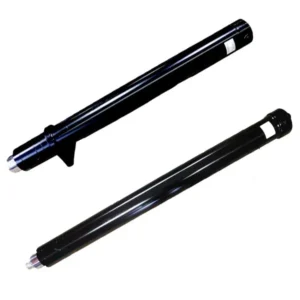
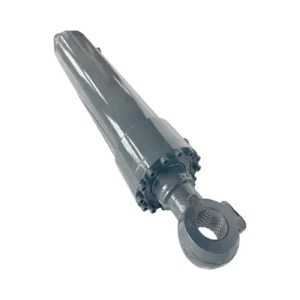
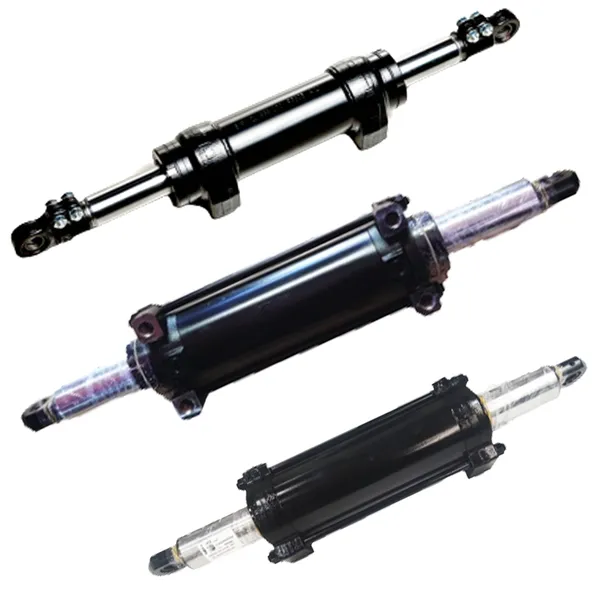
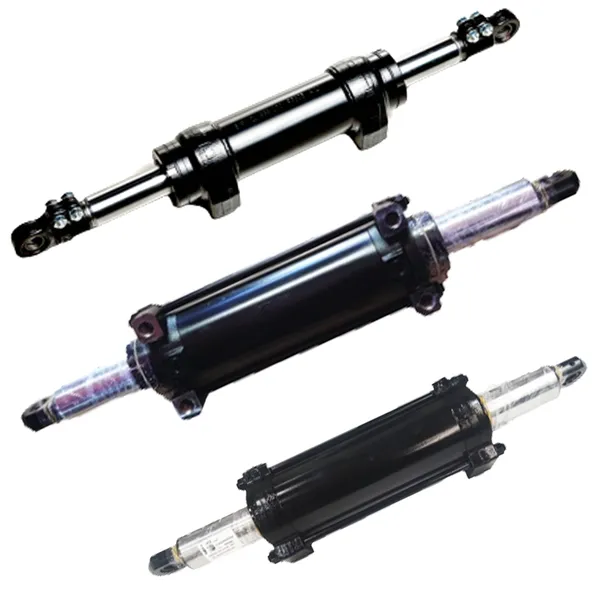
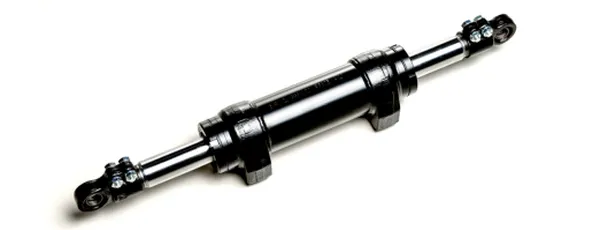
Forklift Steering Cylinder — Safety-Critical Hydraulic Actuator
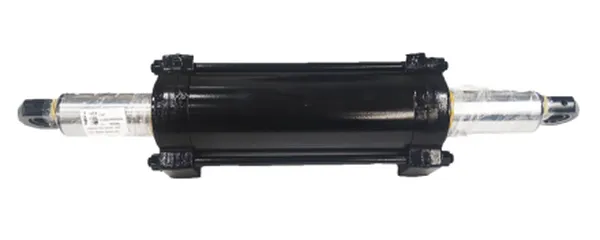
The steering hydraulic cylinder on a counterbalance forklift connects the steering axle to the orbitrol (steering control unit), converting hydraulic flow into lateral wheel movement. Unlike steering in most road vehicles, forklift steering uses the rear axle — the rear wheels steer and the front wheels drive. This rear-steer geometry gives forklifts their characteristic short turning radius but also means the steering cylinder is working against the combined effect of the drive torque reaction and the rear axle caster forces. The cylinder must respond immediately to operator input without perceptible lag; any hysteresis in the cylinder translates directly into unpredictable steering feel and reduced maneuverability in tight aisles.
Technical Specifications
| Parameter | Value | Notes |
|---|---|---|
| Type | Double-acting | Steer left and right under power |
| Application | Rear axle steering | Counterbalance and reach forklifts |
| Construction | Welded body | Vibration-resistant, compact OD |
| Rod | Hard chrome, h6 tolerance | Abrasion and corrosion resistant |
| Seal Package | Low-friction composite | Minimises steering effort at low speeds |
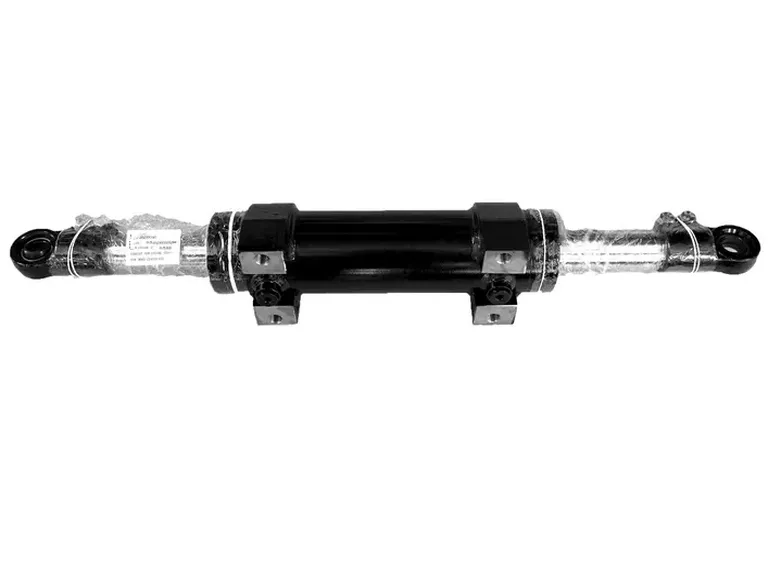
| Mounting | Clevis and pin (standard) | Custom eye, threaded, or flange mount |
| Port Standard | SAE or BSPP | Specify at order |
Low-Friction Steering Seal Design
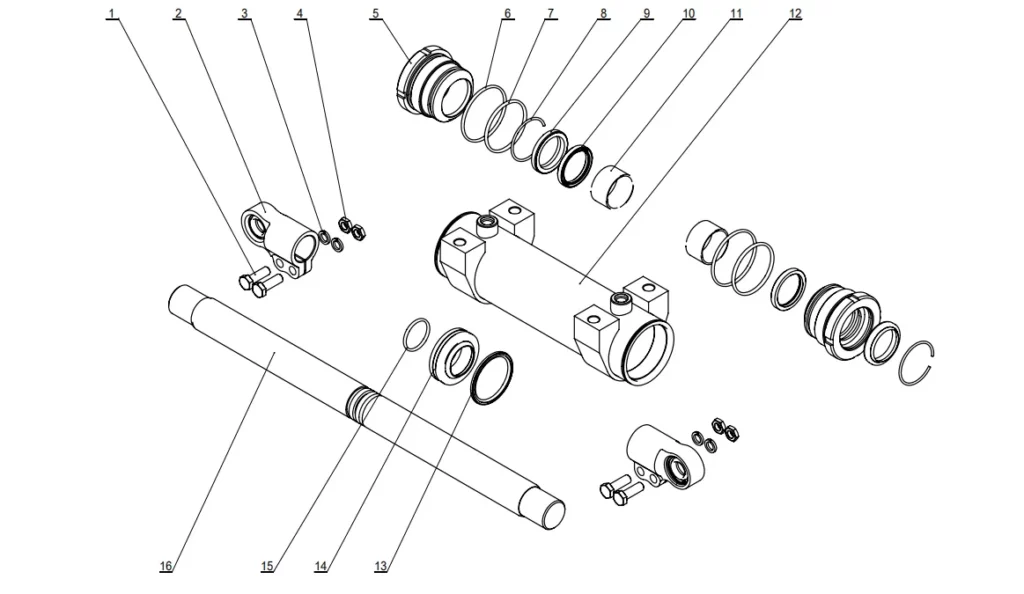
Steering cylinder seal friction directly determines operator effort at the steering wheel. High seal friction requires more handwheel torque, which fatigueing operators during high-cycle picking operations. The seal package in this cylinder uses a low-friction compound polyurethane piston seal that maintains pressure retention without the stick-slip onset that harder seal materials can introduce at low steering speeds. The result is a smooth, linear steering effort characteristic across the full range of axle loads.
Rod Wiper Selection
The rear axle environment on a forklift is significantly more contaminated than the mast area — road grit, concrete dust, and water contact the rod in outdoor and dock operations. The dual-lip rod wiper in this cylinder provides a primary scraping edge and a secondary retention lip, keeping the gland clean even in heavy contamination environments. The wiper lip geometry is profiled for the specific rod diameter to ensure effective contact without excessive drag.
Application Context: Rear-Steer Forklift Geometry
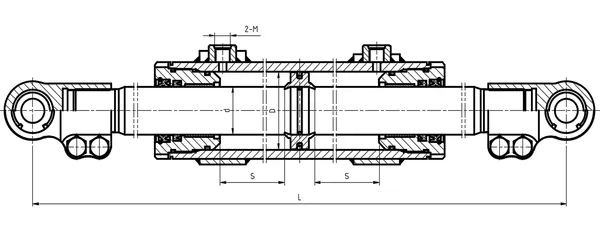
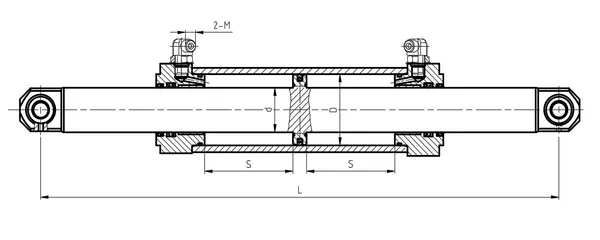
In a standard counterbalance forklift, the steering cylinder is mounted transversely between the steering axle beam and the chassis, or arranged inline with a drag link. The cylinder must accommodate the angular sweep of the axle through its full steering range — typically 80° to 90° total — without introducing binding. Spherical rod ends or self-aligning clevis pins accommodate this angular movement. When ordering a replacement cylinder, note the full angular range and the clearance envelope, as both affect the choice of rod end style.
Performance Highlights
Low-friction seal compound eliminates stick-slip for consistent, proportional steering control in tight picking aisles.
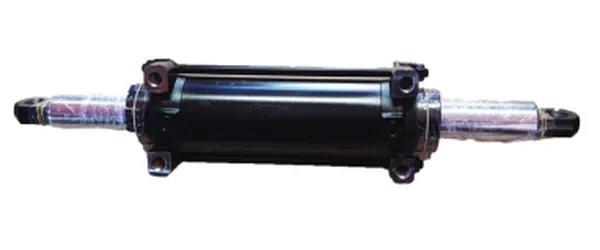
Compact OD and vibration-resistant joint handles the combined axle and drive reaction loads on the rear steer axle.
Bore, stroke, rod end style, and mounting dimensions matched to major forklift brands on request.
Keeps the gland clean in outdoor dock, cold store, and construction site environments where rod contamination is highest.


Replacement and Ordering Procedure
Record brand, model, and serial number range. Different mast heights and load capacities within the same model range can use different steering cylinder specifications.
Bore, rod diameter, stroke, and pin-to-pin retracted distance. Rod end type (eye, clevis, or threaded) and pin diameter at both ends.
Note port thread standard (SAE or BSPP), port size, and whether end-of-stroke cushioning is required.
Contact us at [email protected] with dimensions or OEM part number. Replacement confirmation within 24 hours.

To request pricing for the forklift steering cylinder, custom specifications, or an OEM supply assessment, contact Hangzhou Ever-Power Hydraulic Cylinder Co., Ltd. at +86-571-88220653 or [email protected]. Our address is Shenhua Road, Hangzhou. Use the contact form for a response within one business day.