
Choosing the best hydraulic cylinder for a pressing application requires matching the cylinder type, bore size, stroke, and mounting to the force, geometry, and duty cycle of the specific press. Pressing is one of the most force-intensive hydraulic cylinder applications — hydraulic cylinders for pressing must generate high compressive force on the downstroke while maintaining precise position under load and returning reliably for the next cycle. This guide covers every aspect of hydraulic press cylinder selection from force calculation to mount type.
Why Single Acting Is Standard for Hydraulic Press Cylinders
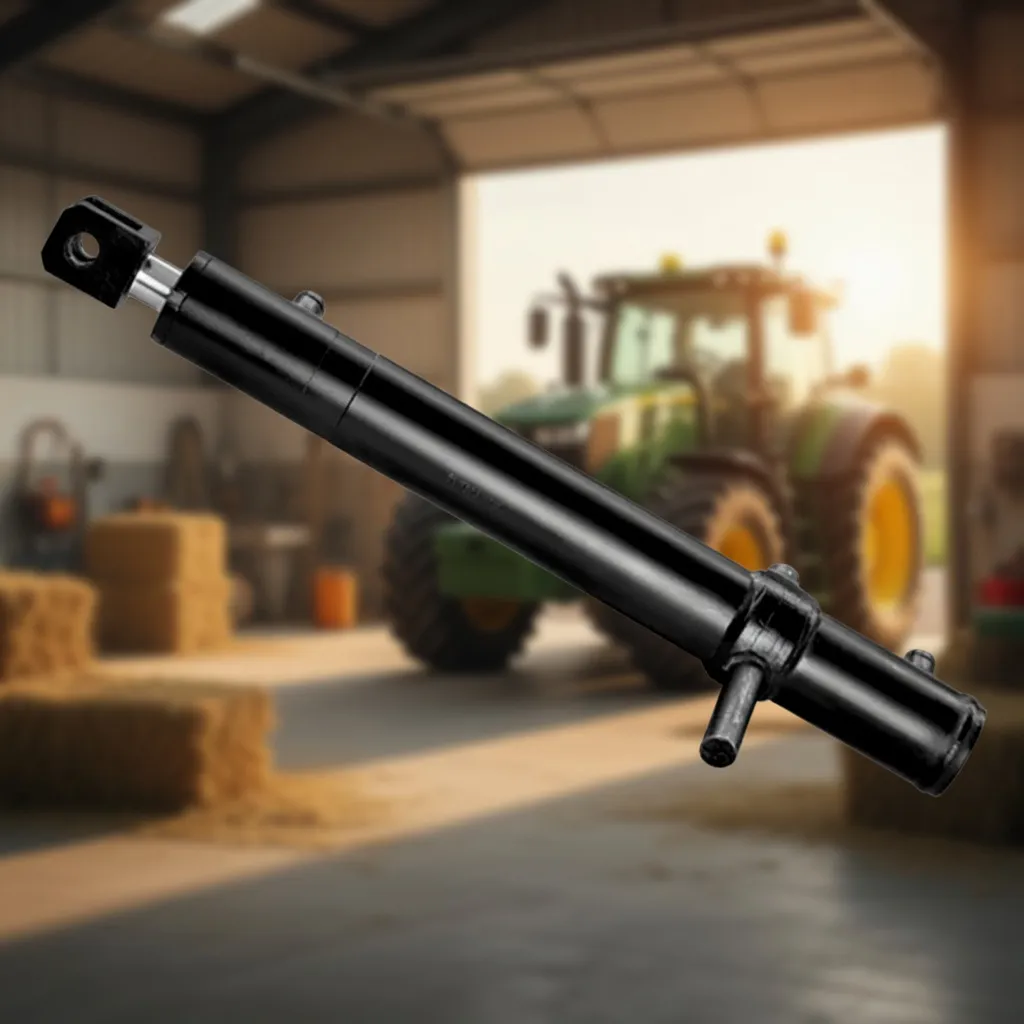
A hydraulic press cylinder applies its force in one direction — downward onto the workpiece. Once the pressing operation is complete, the tooling must retract to allow the pressed part to be removed and a new workpiece loaded. In virtually all press applications, the tooling and ram assembly weighs enough that gravity provides reliable and adequate retraction — making a single acting hydraulic cylinder the natural match for the work cycle.
Single acting press cylinders offer additional advantages over double acting: the one-line circuit is simpler and lower cost; the absence of a rod-end port eliminates the risk of rod-end seal damage from press ram flash and debris; and the cylinder body can often be made more compact because no provision for the return pressure line is needed. For small tabletop presses where the ram weighs under 5 kg and gravity return is insufficient, a spring return single acting cylinder bridges the gap without adding a second hydraulic line.
Hollow Plunger vs Piston-Rod for Press Applications
Standard hydraulic press cylinders below 50 tonnes typically use the conventional piston-and-rod design — the same cylinder used in other applications. Above 50 tonnes, the hollow plunger design becomes increasingly preferred for press duty:
Piston-Rod Press Cylinder (< 50 tonnes)
Conventional bore-and-rod design. Rod diameter is smaller than the bore — rod buckling under high compressive load must be checked using Euler’s formula when stroke exceeds 10× rod diameter. Standard stock availability in most bore sizes. Easy to source seal kits.
Hollow Plunger Press Cylinder (> 50 tonnes)
Plunger diameter equals the force-generating area. The larger diameter provides inherently higher column stiffness — far less susceptible to buckling under high compressive force. No separate piston seal — only one gland seal. Higher force in a more compact cross-section at very high tonnages.
Press Force Reference Table — Bore vs Force at Common Pressures
| Bore (mm) | Force at 20 MPa (kN / tonnes) | Force at 25 MPa (kN / tonnes) | Force at 31.5 MPa (kN / tonnes) |
|---|---|---|---|
| 80 | 100.5 kN / 10.2t | 125.7 kN / 12.8t | 158.3 kN / 16.1t |
| 100 | 157.1 kN / 16.0t | 196.4 kN / 20.0t | 247.4 kN / 25.2t |
| 125 | 245.4 kN / 25.0t | 306.8 kN / 31.3t | 386.5 kN / 39.4t |
| 160 | 402.1 kN / 41.0t | 502.7 kN / 51.2t | 633.4 kN / 64.6t |
| 200 | 628.3 kN / 64.1t | 785.4 kN / 80.1t | 989.6 kN / 100.9t |
| 250 | 981.7 kN / 100.1t | 1227.2 kN / 125.1t | 1545.2 kN / 157.6t |
Rod Buckling Check for Press Cylinders
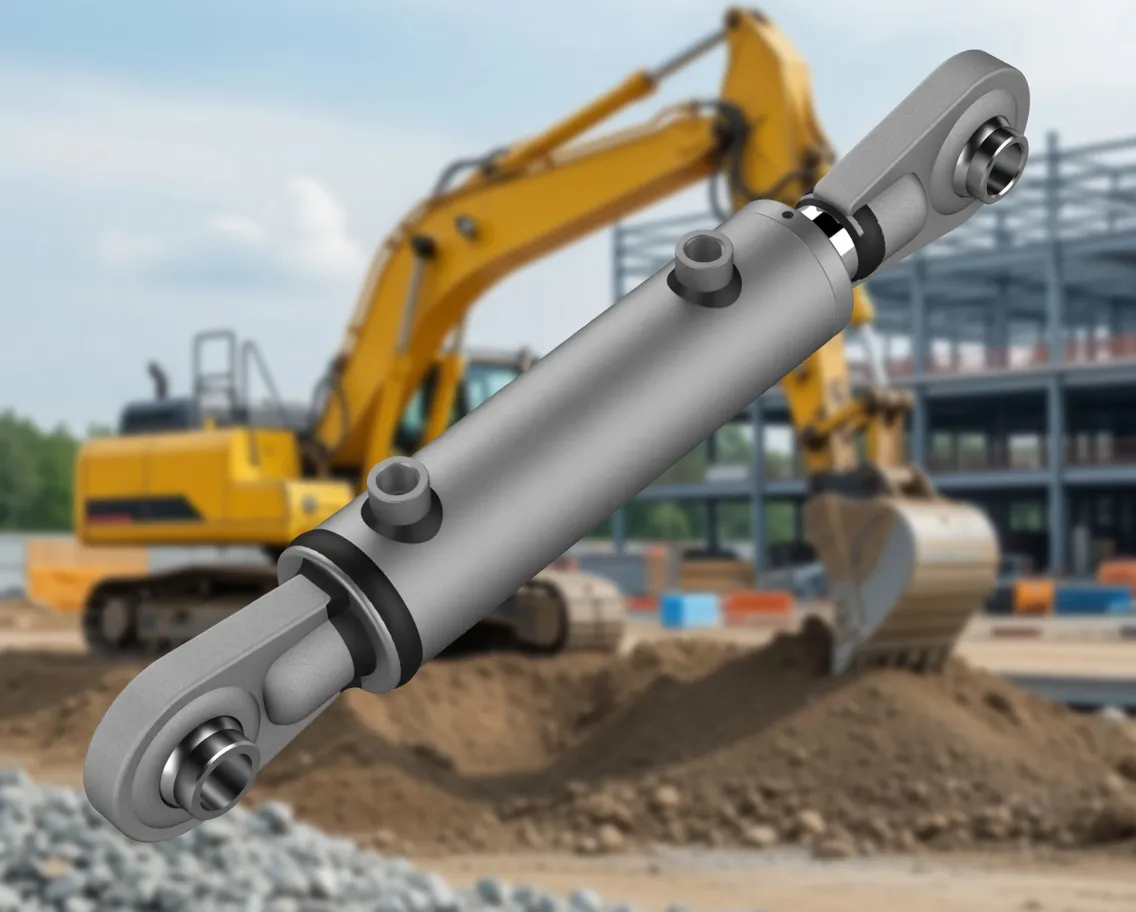
Press cylinders operate in compression — the load pushes back against the rod throughout the pressing stroke. This compressive loading creates a buckling risk that increases with stroke length and decreases with rod diameter. For any press cylinder where the stroke exceeds 10 times the rod diameter, a formal buckling check using Euler’s column formula is mandatory. The buckling safety factor must be at least 3.5 under the maximum press force.
A press cylinder that passes the force calculation but fails the buckling check requires either a larger rod diameter (increasing the bore to maintain force output), a shorter stroke (reducing the unsupported length), or an external guide to prevent lateral displacement of the ram. Contact Ever-Power with bore, stroke, rod diameter, and maximum press force for a free buckling safety check before ordering.
Request a Free Specification Review
Send your application details to [email protected] or call +86-571-88220653. Our engineers respond within 24 hours.