Description
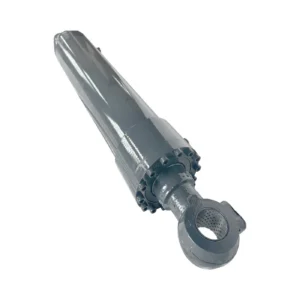
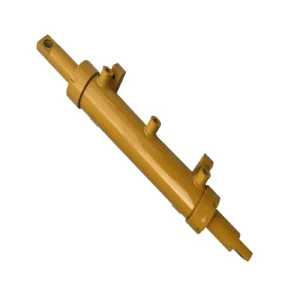
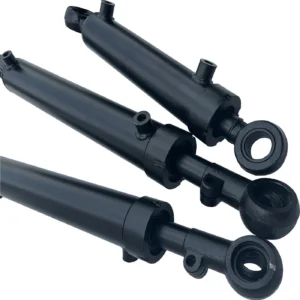
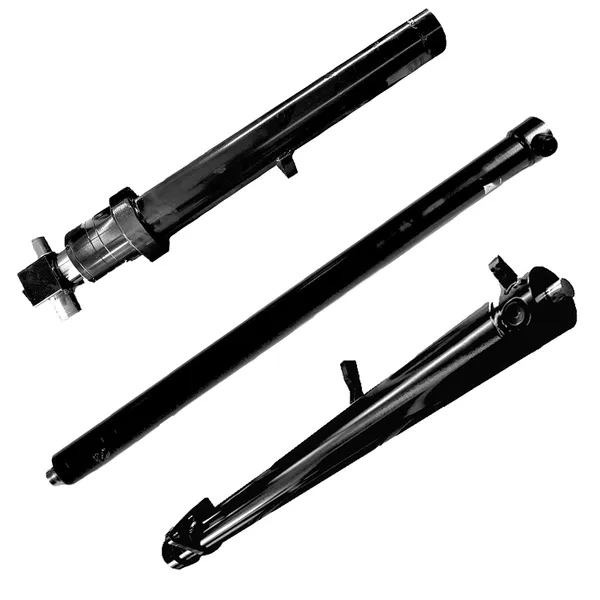
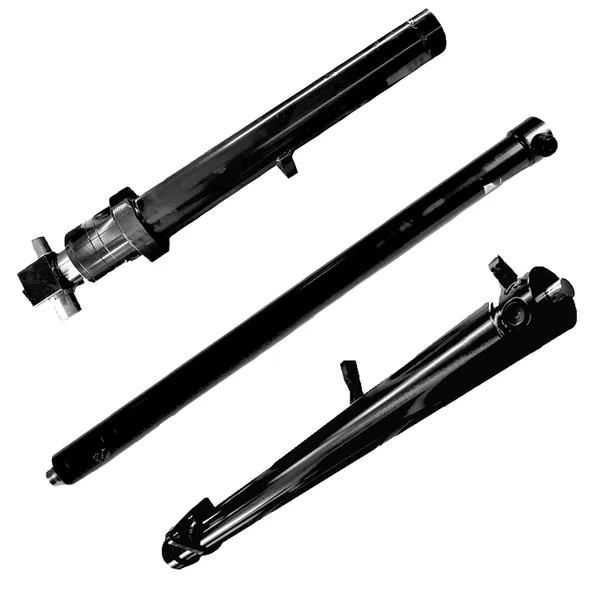
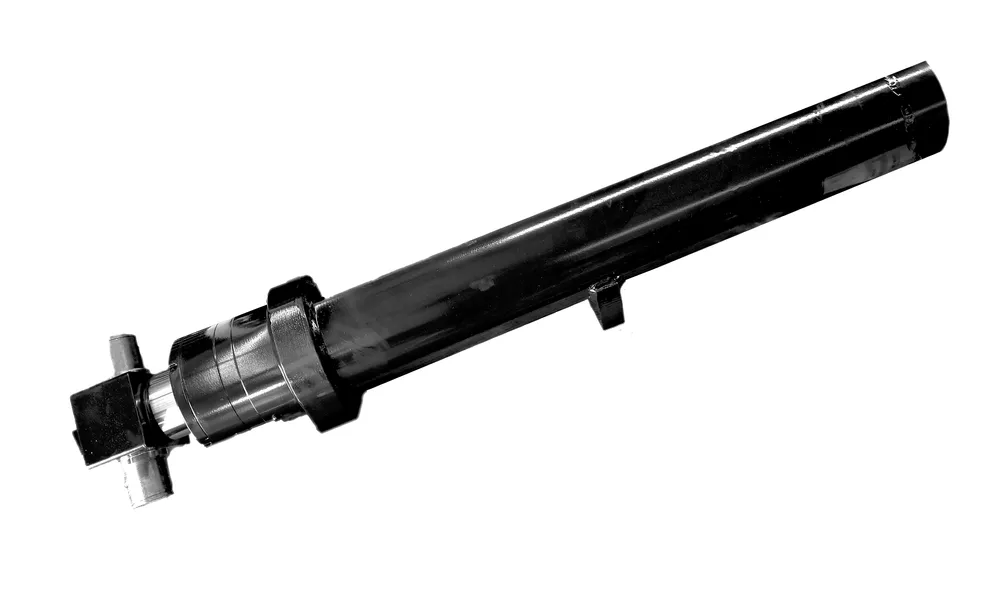
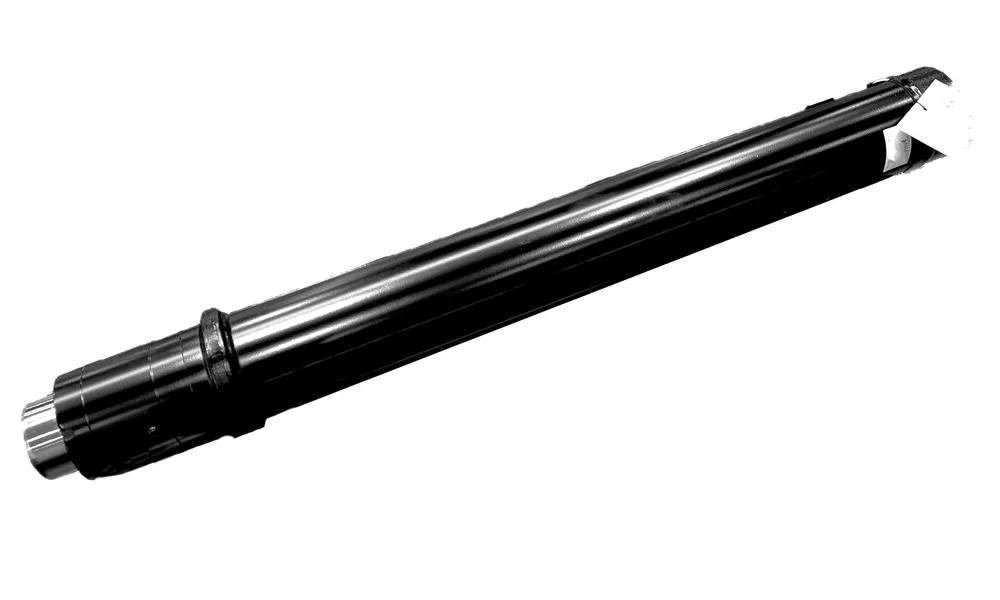
Car Forklift Lift Cylinder — High-Capacity Customized Design
Car forklifts — larger capacity industrial vehicles used in automotive manufacturing, heavy steel service centers, and shipyard applications — require lift cylinders with larger bore diameters and heavier rod construction than standard warehouse forklifts. A 10-tonne car forklift lifting at its rated capacity generates significantly higher cylinder pressure than a 2-tonne counterbalance unit, requiring thicker barrel walls, larger piston seals, and more robust end cap attachment methods. This customized lift cylinder is produced to customer specification for high-capacity car forklift applications.
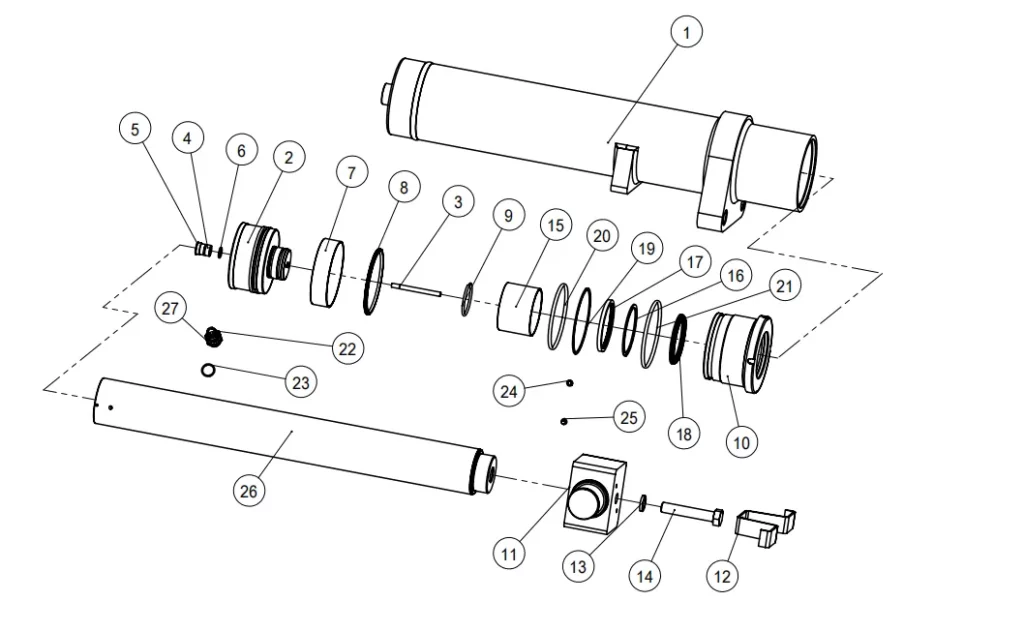
Specifications
| Parameter | Value | Notes |
|---|---|---|
| Application | Car forklift and heavy industrial vehicle lift | 5-tonne to 30-tonne capacity range |
| Bore Range | 80mm to 250mm | Custom to rated capacity requirement |
| Working Pressure | 20–25 MPa | High-pressure barrel and end cap design |
| Barrel Wall | Heavy-wall seamless steel | Calculated per pressure and bore |
| Rod | Large diameter, heavy chrome | Column buckling rated for extended stroke |
| Seal | High-pressure composite seal kit | Rated for peak and sustained pressure |
| End Caps | Welded with full-penetration weld | Inspection documentation available |
Engineering Design for High-Capacity Lift
Barrel Wall Thickness Calculation
For large-bore, high-pressure cylinders, barrel wall thickness is calculated from the Lamé thick-cylinder formula rather than the thin-wall approximation used for small-bore cylinders. The calculation accounts for working pressure, proof pressure (typically 1.5× working), material yield strength, and a safety factor appropriate for the lifting application. Our engineering team provides the wall thickness calculation as part of the design documentation for all custom high-capacity cylinders.
Rod Buckling Analysis
For long-stroke, large-bore lift cylinders, piston rod buckling under compressive load is a design constraint. The rod diameter is selected to provide an adequate safety margin against Euler column buckling for the full extended stroke length and the applied axial load. We provide the buckling calculation for all custom lift cylinders with stroke-to-rod-diameter ratios above 10:1, giving customers the engineering data to confirm the design without independent recalculation.
Performance Highlights
Bore and wall thickness engineered for 5-tonne to 30-tonne rated lift capacity at system pressure.
Rod diameter selected with Euler buckling calculation — engineering documentation included for customer qualification.
Material certificates for barrel, rod, and end components provided with first-article and on request for subsequent batches.
PPAP documentation package available for automotive sector OEM supply programs.
To request pricing for the car forklift lift cylinder, custom specifications, or an OEM supply assessment, contact Hangzhou Ever-Power Hydraulic Cylinder Co., Ltd. at +86-571-88220653 or [email protected]. Our address is Shenhua Road, Hangzhou. Use the contact form for a response within one business day.