
A double acting hydraulic cylinder is a linear actuator that produces hydraulic force in both extension and retraction directions. Unlike a single acting hydraulic cylinder — which relies on gravity or a spring to retract — a double acting hydraulic cylinder uses hydraulic pressure for both strokes. It has two ports: pressurising the cap-end port extends the rod; pressurising the rod-end port retracts it. The double acting hydraulic cylinder is the dominant actuator type in excavators, loaders, steering systems, and any application requiring controlled force in both directions of travel.
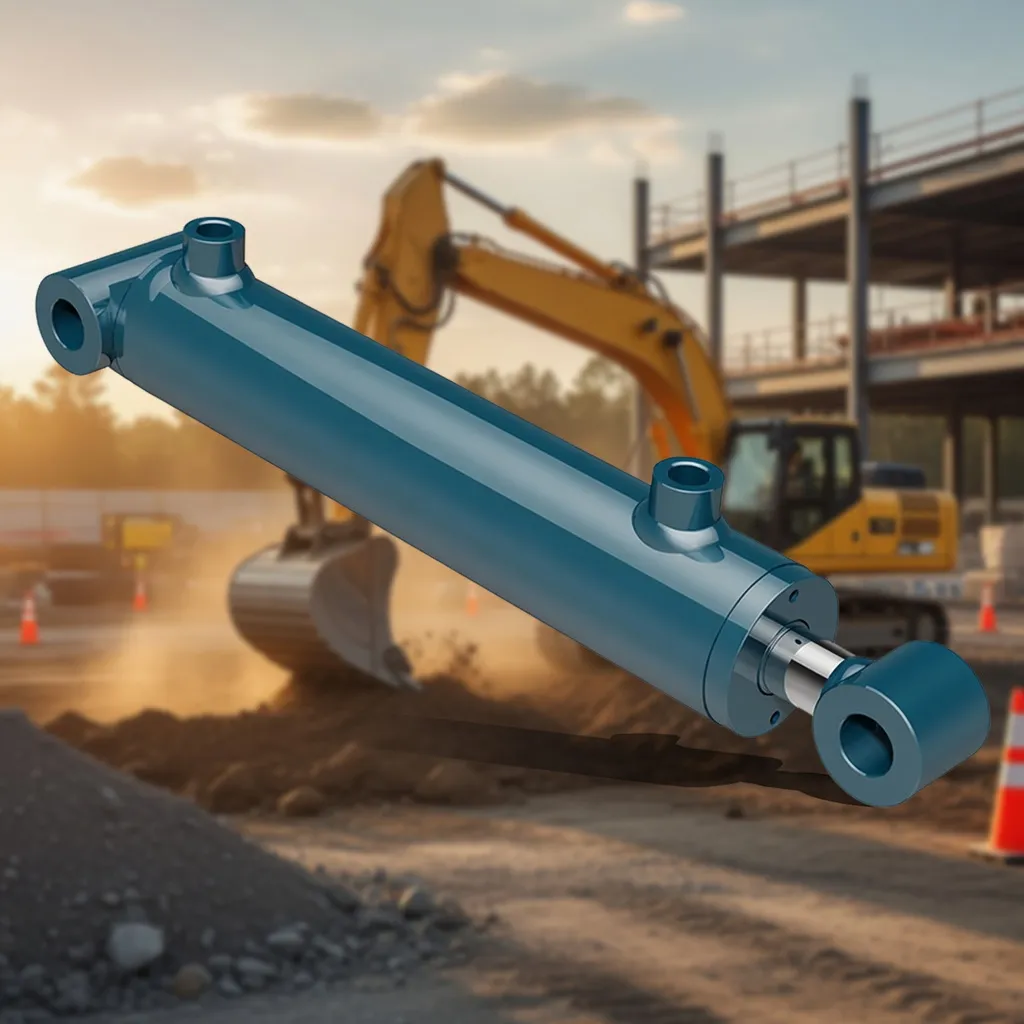
How a Double Acting Hydraulic Cylinder Works
A double acting hydraulic cylinder operates through a four-way directional control valve that routes pressurised oil to either the cap-end or rod-end port while simultaneously connecting the opposite port to the tank return line. On the extension stroke, oil under system pressure enters the cap-end port and acts on the full piston face area (bore area = π × r²), generating the extension force. The rod-end oil is displaced through the rod-end port back to the reservoir. On the retraction stroke, the valve reverses: oil enters the rod-end port and acts on the annular area between the bore and rod (annular area = bore area minus rod area), generating the retraction force. The cap-end oil returns to reservoir. In neutral, both ports are blocked and the cylinder holds its position.
Extension Force vs Retraction Force: Why They Differ
The extension force of a double acting hydraulic cylinder is always greater than its retraction force at the same system pressure. This is because extension uses the full bore area, while retraction uses the smaller annular area — the bore area minus the rod cross-sectional area. The ratio of extension to retraction force equals the ratio of bore area to annular area.
Retraction Force = Pressure × (π × (Bore/2)² − π × (Rod/2)²)
Example: 100 mm bore / 56 mm rod at 20 MPa:
Extension = 20M × 0.007854 = 157.1 kN
Retraction = 20M × 0.005391 = 107.8 kN
Retraction is 31% less force than extension at the same pressure.
This force asymmetry must be considered when sizing the cylinder for applications where retraction force is critical — for example, a bucket curl cylinder on a loader that must curl against a full bucket under both extension and retraction. If the retraction force is insufficient, either the system pressure must be increased on the retraction stroke, or a larger bore cylinder must be specified.
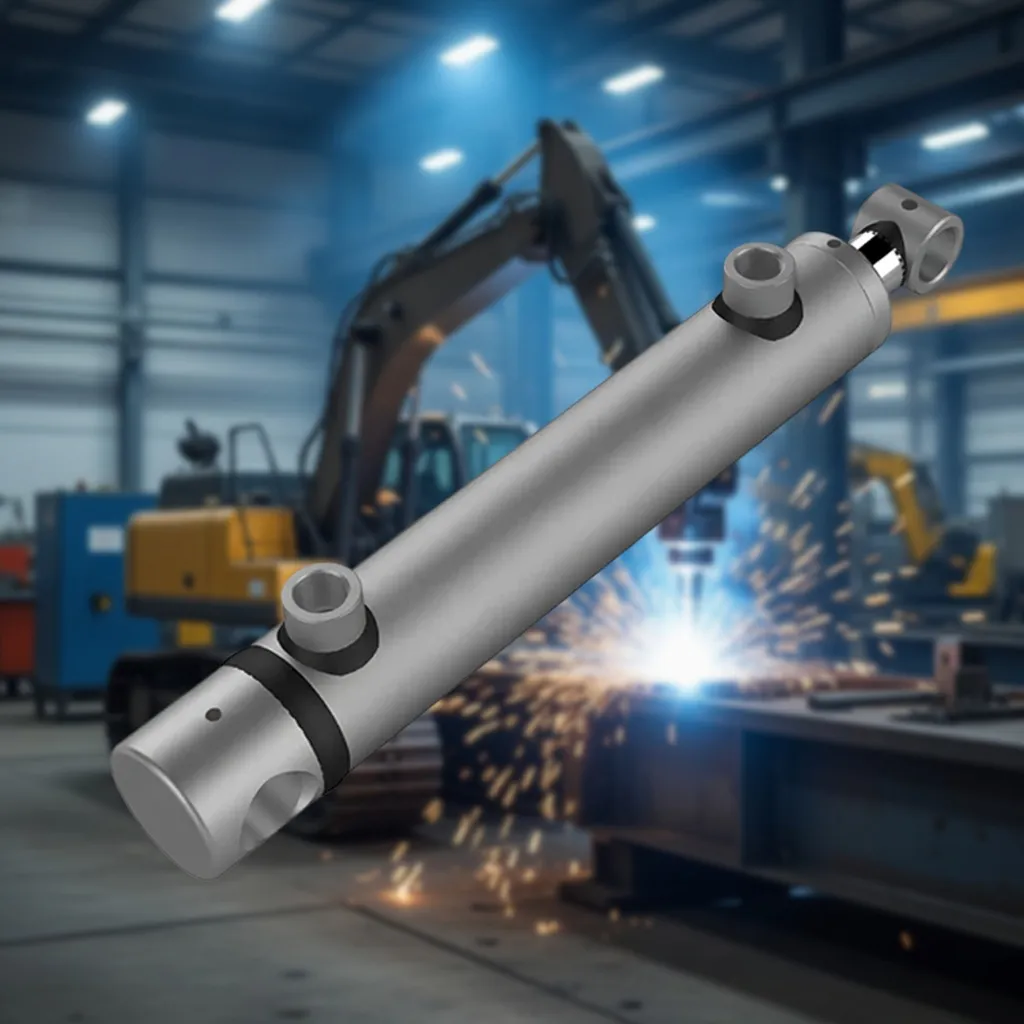
Double Acting vs Single Acting: When Each Is the Right Choice
| Criterion | Double Acting | Single Acting |
|---|---|---|
| Hydraulic lines required | 2 — cap end and rod end | 1 — cap end only |
| Control valve type | 4/3 directional control valve | 3/2 or simple 4/3 |
| Retraction mechanism | Hydraulic pressure | Gravity, spring, or load |
| Force on retraction | Full hydraulic — adjustable | Limited by spring rate or load weight |
| Horizontal mounting | Fully supported | Spring return needed |
| Position holding | Both ports blocked in neutral | Cap-end only; POCV needed for load holding |
| Circuit cost | Higher — two lines, complex valve | Lower — one line, simpler valve |
| Best applications | Excavators, loaders, steering, two-way presses | Lifting, clamping, tipping, log splitting |
Key Applications of Double Acting Hydraulic Cylinders
Excavator and Construction Equipment
Boom, arm, and bucket cylinders all require full hydraulic force in both directions — to lift and lower under load, and to curl and dump against material resistance. Double acting is the only practical solution.
Agricultural Loader Booms
Telehandler and front loader boom cylinders must extend to lift loads and retract to lower them while carrying a full bucket. The retraction force must handle the bucket weight plus any resistance from compacted material.
Steering Cylinders
Hydraulic steering requires full force in both left and right directions at any vehicle speed and load. Double acting cylinders in both directions of the steering rack provide consistent steering effort regardless of road surface.
Horizontal Industrial Presses
Where gravity cannot assist return, double acting cylinders provide controlled force in both the pressing and return directions, with adjustable speed and force on each stroke through flow and pressure control.
Double acting hydraulic cylinders from Ever-Power are available in welded and tie rod configurations, bore sizes from 32 mm to 250 mm, stroke lengths from 50 mm to 3,000 mm, and working pressure ratings to 31.5 MPa. Custom specifications including non-standard bore-stroke combinations, special seal compounds, and stainless steel construction are available with prototype quantities from one unit. Contact the engineering team with your application requirements for a specification and price.
Request a Free Specification Review
Send your application details to [email protected] or call +86-571-88220653. Our engineers respond within 24 hours.