
Bleeding air from a hydraulic cylinder is a straightforward procedure when the correct technique is used — but skipping it after installation or maintenance produces a system that performs poorly from the first operation and may damage seals within hours. Air trapped in a hydraulic cylinder circuit is compressible, unlike hydraulic oil, and its presence makes the cylinder feel spongy, move in jerks, and generate pressure spikes at end of stroke. This guide covers the complete bleeding procedure for single acting and double acting cylinders.
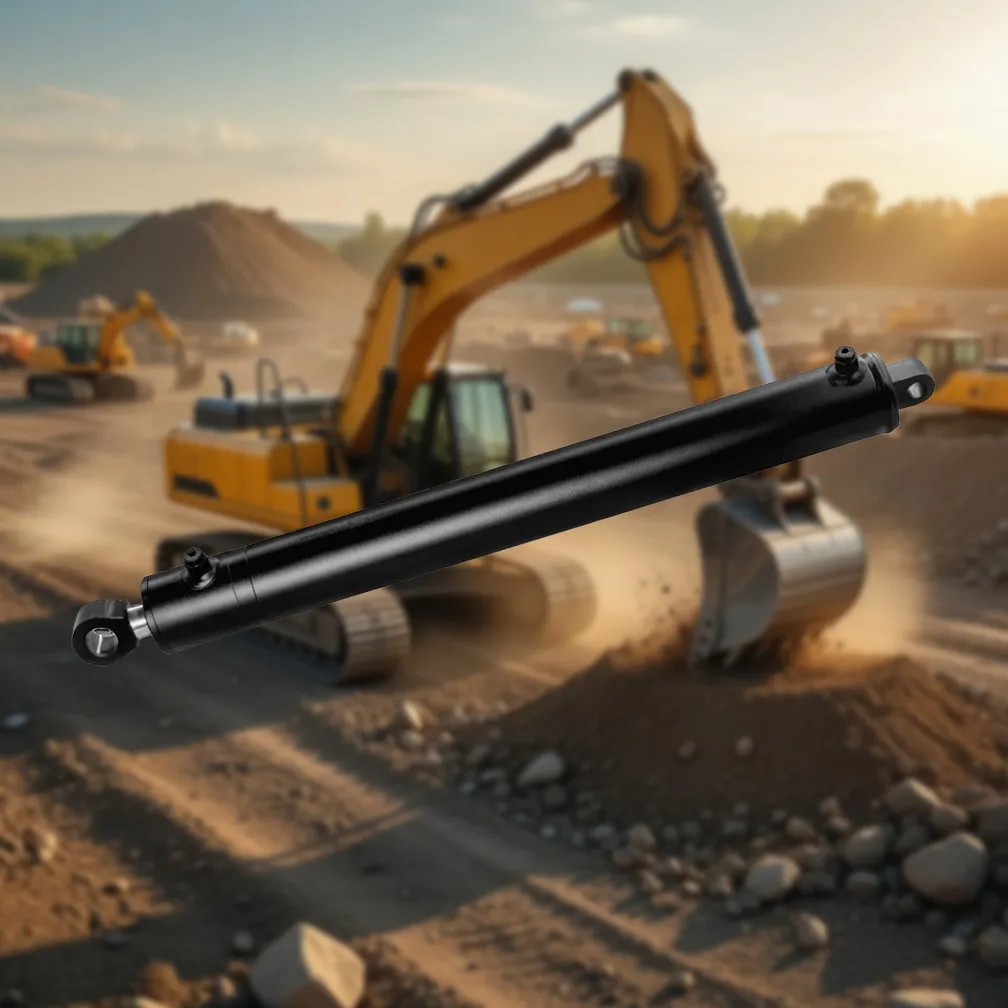
Why Bleeding Is Necessary
Hydraulic oil is essentially incompressible — its bulk modulus is approximately 1,500–2,000 MPa. Air is highly compressible — at atmospheric pressure, 1 litre of air compresses to less than 1 ml at 200 bar. This difference in compressibility is why even a small volume of air trapped in a hydraulic cylinder circuit causes dramatically different behaviour. When the directional valve opens, the pump must first compress the trapped air before pressure builds to move the load. This compression phase produces a delay followed by a sudden lurch as the air reaches the pressure needed to move the load — the classic aeration judder.
After any maintenance that involved disconnecting a hydraulic line, installing a new cylinder, or draining and refilling the reservoir, the circuit contains air at whatever volume the disconnected components held. Bleeding the air out before full-load operation protects seals from the pressure spikes caused by air collapse and ensures the cylinder performs to its rated response time and accuracy.
Bleeding Procedure for Single Acting Hydraulic Cylinders
Reduce the relief valve setting or use a pressure-reducing valve in the test circuit. Low initial pressure prevents hydraulic hammer if a large air pocket collapses suddenly during the first cycles.
Remove the load from the cylinder before bleeding. Extend fully, pause 2 seconds, retract fully, pause 2 seconds. Repeat 8–10 times. Each cycle pushes trapped air toward the reservoir through the directional valve return port. Slow cycling (below 50 mm/s) keeps air moving as bubbles rather than re-entraining it as foam.
Many cylinders have a bleed screw at the highest point of the cap-end chamber. Crack it open by one turn while extending slowly. Allow oil to flow until no bubbles are visible in the oil stream, then close the screw before the next retraction. Never open the bleed screw during retraction — it will draw air in rather than bleed it out.
Raise the system pressure to full working pressure. Cycle the cylinder twice through the full stroke. The final traces of dissolved air are purged at full operating conditions.
Oil filling the previously empty cylinder volume comes from the reservoir. Check the reservoir sight glass and top up to the correct level with the correct oil grade to prevent the level dropping low enough to cause suction-side air ingress during future operation.
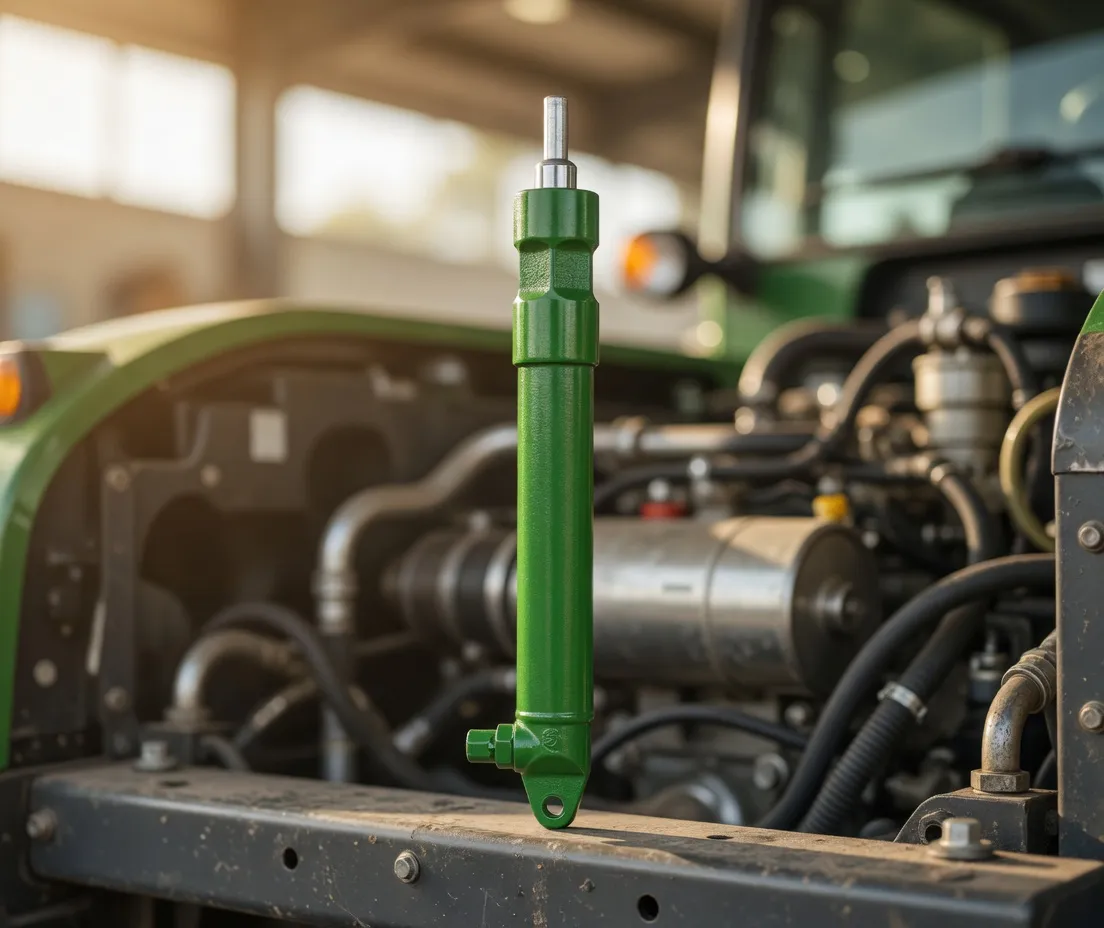
Bleeding Double Acting Hydraulic Cylinders
Double acting cylinders have air in both the cap-end and rod-end chambers after maintenance. The bleeding procedure cycles air out of both chambers alternately. Use the same low-pressure slow-cycling approach: extend fully, pause, retract fully, pause, repeat 8–10 times. If the cylinder has bleed screws at both ends, open the cap-end bleed during extension (bleeding cap-end air) and the rod-end bleed during retraction (bleeding rod-end air). Both screws must be closed before reversing direction.
Persistent Aeration: Finding the Air Ingress Source
| Symptom | Likely Air Ingress Source | Fix |
|---|---|---|
| Oil milky or foamy in reservoir | Suction line leak or low oil level drawing air | Check oil level; inspect all suction line fittings |
| Aeration returns within minutes of bleeding | Active suction-side air leak | Pressurise suction line with inert gas to locate leak |
| Aeration only after high-speed extension | Cavitation — pump inlet restriction | Clean suction filter; check suction line bore is adequate |
| Aeration only after maintenance | Air introduced during line reconnection not fully bled | Repeat bleeding procedure with more cycles at lower speed |
| Aeration worse when oil is cold | Dissolved air released as viscosity drops on warming | Allow longer warm-up time; check oil grade is correct for ambient temperature |
For hydraulic systems that repeatedly develop aeration despite correct bleeding procedures, the suction side of the hydraulic circuit must be inspected with the system running. Brushing liquid around suction line fittings while the pump is operating reveals air leaks by foaming at the leak point. Contact Ever-Power for guidance on suction circuit design and bleed port specification on new cylinders.
Request a Free Specification Review
Send your application details to [email protected] or call +86-571-88220653. Our engineers respond within 24 hours.