
A clevis mount hydraulic cylinder has a forked clevis bracket at the cap end — and often at the rod end as well — through which a mounting pin passes, allowing the cylinder to pivot freely as it extends and retracts. This pivoting capability is the defining feature of clevis mount hydraulic cylinders: where a flange mount cylinder must be perfectly aligned with the load direction throughout the full stroke, a clevis mount hydraulic cylinder accommodates the angular change that occurs when the load attachment point moves through an arc. This makes clevis mount cylinders the standard choice for agricultural implements, excavator linkages, tipper mechanisms, and log splitters worldwide.
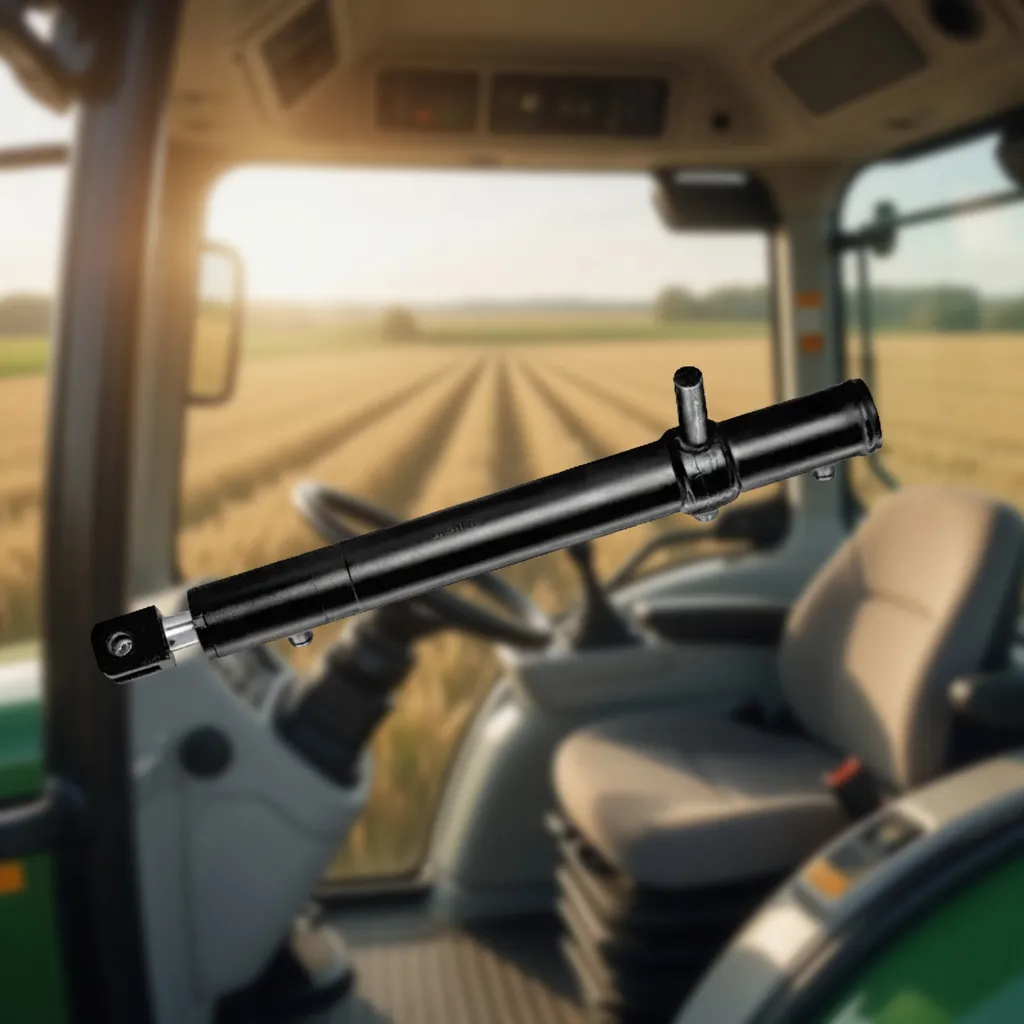
How Clevis Mounting Works
The clevis mount is a U-shaped bracket — two parallel arms (the fork) with aligned pin holes through both arms. A cylindrical pin passes through the clevis fork and through a matching eye in the machine structure, securing the cylinder end at that pivot point while allowing it to rotate freely about the pin axis. On a double-clevis cylinder (clevis at both ends), the cap-end clevis pivots on the machine frame and the rod-end clevis (or pin eye) pivots at the load attachment point. As the rod extends, the cylinder swings in the plane perpendicular to both pins, naturally following the arc of the load attachment point. This is what makes a clevis mount hydraulic cylinder geometrically self-aligning — it accommodates the geometry rather than forcing the load into a fixed line.
Standard Clevis Mount Configurations
Cap-End Clevis + Rod Pin Eye
The most common configuration. Cap-end clevis pivots on the machine frame; rod-end pin eye pivots at the load. Used in agricultural hitch cylinders, trailer tipping cylinders, and general mobile machinery.
Double Clevis (Both Ends)
Clevis mounts at both cap end and rod end. Used where both pivot points need maximum angular freedom and the load geometry requires pivot capability at both attachment points. Common in heavy equipment and long-stroke applications.
Cap-End Clevis + Spherical Rod Eye
Rod-end fitted with a spherical rod eye bearing that compensates for out-of-plane misalignment. Used where the load attachment point moves in two planes rather than a simple arc — steering cylinders and complex linkages.
Cap-End Clevis + Rod Flange
Clevis at cap end for pivot; flange at rod end for fixed linear connection. Used where the rod end attaches to a linearly guided load that must be pushed with no angular displacement.
Clevis Dimensions: What to Measure for Replacement
| Dimension | What to Measure | Why It Matters |
|---|---|---|
| Pin bore diameter | Hole diameter through both clevis arms | Must match the machine’s mounting pin exactly — undersized won’t fit, oversized allows play |
| Clevis width (jaw width) | Gap between the two clevis arms | Must match the width of the machine’s mating bracket — too narrow won’t clear it |
| Clevis arm thickness | Thickness of each fork arm | Determines shear area; must be adequate for the pin shear load |
| Centre-to-centre distance | Distance from pin centreline to cylinder cap face | Affects the collapsed length calculation for fitting in the available installation envelope |
| Pin material and grade | Steel grade of the supplied pin | Determines shear capacity; must be confirmed for the cylinder’s rated extension force |
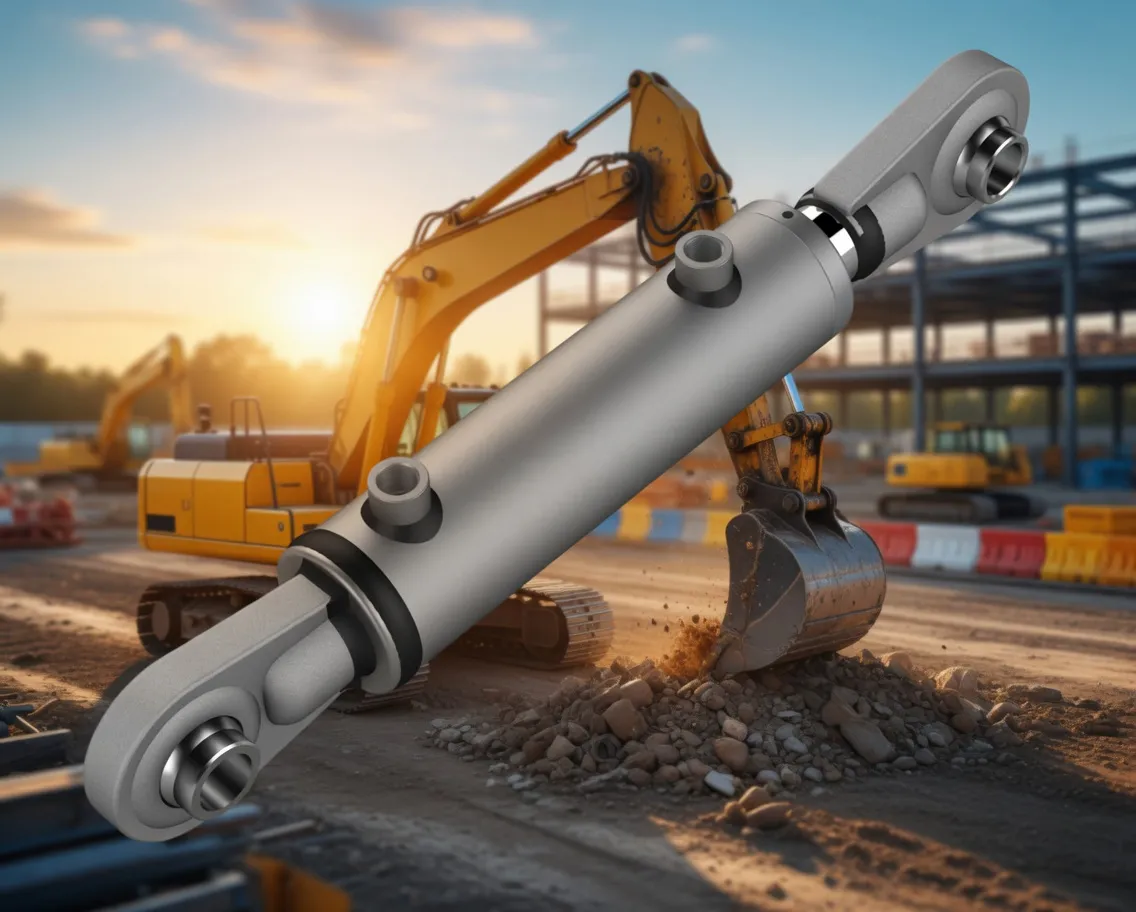
Clevis mount hydraulic cylinders from Ever-Power are available with standard clevis dimensions matching agricultural and construction industry norms, or with custom clevis bore, width, and arm dimensions to match specific machine installations. Single acting and double acting configurations are available in the same clevis mount format. For replacement clevis mount cylinders, provide the pin bore diameter, clevis jaw width, bore size, stroke, and working pressure — Ever-Power confirms dimensional match before manufacturing. Submit your clevis dimensions to the engineering team for a rapid quotation.
Request a Free Specification Review
Send your application details to [email protected] or call +86-571-88220653. Our engineers respond within 24 hours.