
Product Description
Product Title: Forklift tilting tilt cylinder forklift hydraulic cylinders for sale
Product Model: Forklift tilt cylinder (HL2-3T / H right DZ) and connector
| Item | Description |
| Product name | Forklift tilt cylinder (HL2-3T / H right DZ) Forklift tilt cylinder (HL2-3T) |
| P/N | H22N0-50011-TY |
| Applied Model | Heli H2000 # 2-3T (original) Heli H2 # 2-3.5T (right angle) |
| Net Weight (kg) | Tilt cylinder: 10.5 Connector: 0.05 |
| Gross Weight (kg) | 12 |
| Qty per Carton | 1 |
| Carton Size (cm) | 60*16*16 |
Forklift Tilt Cylinder
Forklift tilt cylinder is installed on the forklift mast. The tilting cylinder of the forklift is all double-acting piston type. Forklift hydraulic cylinders have an oil pipe joint at the front and rear ends. The front end of the tilting cylinder of the forklift is connected to the outer mast through a piston rod joint, and the rear end is connected to the support seat on the forklift frame.
The hydraulic cylinders of the forklift hydraulic system include forklift lifting hydraulic cylinders, forklift tilting hydraulic cylinders, forklift steering hydraulic cylinders, etc.
Specifications of Forklift Tilt Cylinder
| Name | Unit | Parameter |
| Cylinders diameter (piston diameter) | mm | 40~160 |
| Rod diameter (piston rod diameter) | mm | 20~120 |
| Stroke | mm | 50~2500 |
| Pressure | MPa | 16~25 |
| Operating temperature | ºC | -40~120 |
| Piston rod coating NSS neutral salt spray test time | H | ≥96 |
| Material: | Aluminum Alloy |
|---|---|
| Surface Treatment: | Baking Paint |
| Customized: | Non-Customized |
| Standard: | Standard |
| Condition: | New |
| Feature: | Cost-Effective OEM Forklift Parts |
| Samples: |
US$ 42.9/Piece
1 Piece(Min.Order) | |
|---|
| Customization: |
Available
|
|
|---|
Can hydraulic cylinders be integrated with modern telematics and remote monitoring?
Yes, hydraulic cylinders can indeed be integrated with modern telematics and remote monitoring systems. The integration of hydraulic cylinders with telematics and remote monitoring technology offers numerous benefits, including enhanced operational efficiency, improved maintenance practices, and increased overall productivity. Here’s a detailed explanation of how hydraulic cylinders can be integrated with modern telematics and remote monitoring:
1. Sensor Integration:
– Hydraulic cylinders can be equipped with various sensors to gather real-time data about their performance and operating conditions. Sensors such as pressure transducers, temperature sensors, position sensors, and load sensors can be integrated directly into the cylinder or its associated components. These sensors provide valuable information about parameters such as pressure, temperature, position, and load, enabling remote monitoring and analysis of the cylinder’s behavior.
2. Data Transmission:
– The data collected from the sensors in hydraulic cylinders can be transmitted wirelessly or through wired connections to a central monitoring system. Wireless communication technologies such as Bluetooth, Wi-Fi, or cellular networks can be employed to transmit data in real-time. Alternatively, wired connections such as Ethernet or CAN bus can be utilized for data transmission. The choice of communication method depends on the specific requirements of the application and the available infrastructure.
3. Remote Monitoring Systems:
– Remote monitoring systems receive and process the data transmitted from hydraulic cylinders. These systems can be cloud-based or hosted on local servers, depending on the implementation. Remote monitoring systems collect and analyze the data to provide insights into the cylinder’s performance, health, and usage patterns. Operators and maintenance personnel can access the monitoring system through web-based interfaces or dedicated software applications to view real-time data, receive alerts, and generate reports.
4. Condition Monitoring and Predictive Maintenance:
– Integration with telematics and remote monitoring enables condition monitoring and predictive maintenance of hydraulic cylinders. By analyzing the collected data, patterns and trends can be identified, allowing for the detection of potential issues or anomalies before they escalate into major problems. Predictive maintenance algorithms can be applied to the data to generate maintenance schedules, recommend component replacements, and optimize maintenance activities. This proactive approach helps prevent unexpected downtime, reduces maintenance costs, and maximizes the lifespan of hydraulic cylinders.
5. Performance Optimization:
– The data collected from hydraulic cylinders can also be utilized to optimize their performance. By analyzing parameters such as pressure, temperature, and load, operators can identify opportunities for improving operational efficiency. Insights gained from the remote monitoring system can guide adjustments in system settings, load management, or operational practices to optimize the performance of hydraulic cylinders and the overall hydraulic system. This optimization can result in energy savings, improved productivity, and reduced wear and tear.
6. Integration with Equipment Management Systems:
– Telematics and remote monitoring systems can be integrated with broader equipment management systems. This integration allows hydraulic cylinder data to be correlated with data from other components or related machinery, providing a comprehensive view of the overall system’s performance. This holistic approach enables operators to identify potential interdependencies, optimize system-wide performance, and make informed decisions regarding maintenance, repairs, or upgrades.
7. Enhanced Safety and Fault Diagnosis:
– Telematics and remote monitoring can contribute to enhanced safety and fault diagnosis in hydraulic systems. Real-time data from hydraulic cylinders can be used to detect abnormal conditions, such as excessive pressure or temperature, which may indicate potential safety risks. Fault diagnosis algorithms can analyze the data to identify specific issues or malfunctions, enabling prompt intervention and reducing the risk of catastrophic failures or accidents.
In summary, hydraulic cylinders can be effectively integrated with modern telematics and remote monitoring systems. This integration enables the collection of real-time data, remote monitoring of performance, condition monitoring, predictive maintenance, performance optimization, integration with equipment management systems, and enhanced safety. By harnessing the power of telematics and remote monitoring, hydraulic cylinder users can achieve improved efficiency, reduced downtime, optimized maintenance practices, and enhanced overall productivity in various applications and industries.
Contribution of Hydraulic Cylinders to the Precision of Robotic and Automation Systems
Hydraulic cylinders play a significant role in enhancing the precision of robotic and automation systems. These systems rely on precise and controlled movements to perform various tasks with accuracy and repeatability. Let’s explore how hydraulic cylinders contribute to the precision of robotic and automation systems:
- Precise Positioning: Hydraulic cylinders enable precise positioning of robotic arms or automation components. They provide accurate control over the linear motion required for tasks such as picking, placing, and assembly. By precisely controlling the extension and retraction of the hydraulic cylinder, the system can achieve the desired position with high accuracy, ensuring precise alignment and consistent results.
- Controlled Motion: Hydraulic cylinders offer controlled and smooth motion, which is crucial for precise operation in robotic and automation systems. The flow of hydraulic fluid can be precisely regulated to control the speed and acceleration of the cylinder’s movement. This precise control allows for gentle and controlled movements, minimizing vibrations, overshooting, or jerky motions that could affect the accuracy of the system.
- Force Control: Hydraulic cylinders provide force control capabilities that contribute to precision in robotic and automation systems. By adjusting the hydraulic pressure, the force exerted by the cylinder can be precisely controlled. This is particularly valuable in applications that require delicate force-sensitive tasks, such as gripping fragile objects or performing precise force feedback during assembly or testing processes.
- Load Handling: Hydraulic cylinders are capable of handling heavy loads, allowing robotic and automation systems to manipulate and transport objects with precision. The high force capabilities of hydraulic cylinders ensure secure and stable handling of loads, minimizing the risk of slippage or imprecise positioning. This is crucial in applications where precise control over heavy objects is required, such as material handling or industrial assembly processes.
- Durability and Reliability: Hydraulic cylinders are known for their durability and reliability in demanding industrial environments. The ability to withstand repeated use, high loads, and harsh conditions ensures consistent performance over time. This reliability contributes to the precision of robotic and automation systems, as any deviation or failure in the cylinder’s movement could lead to inaccuracies or disruptions in the system’s operation.
In summary, hydraulic cylinders make significant contributions to the precision of robotic and automation systems by enabling precise positioning, controlled motion, force control, load handling, and offering durability and reliability. These capabilities ensure accurate and repeatable movements, minimize errors, and enhance the overall precision of the system. By incorporating hydraulic cylinders into robotic and automation systems, manufacturers can achieve higher levels of precision, efficiency, and productivity in various industrial applications.
Can you explain the role and significance of hydraulic cylinders in machinery?
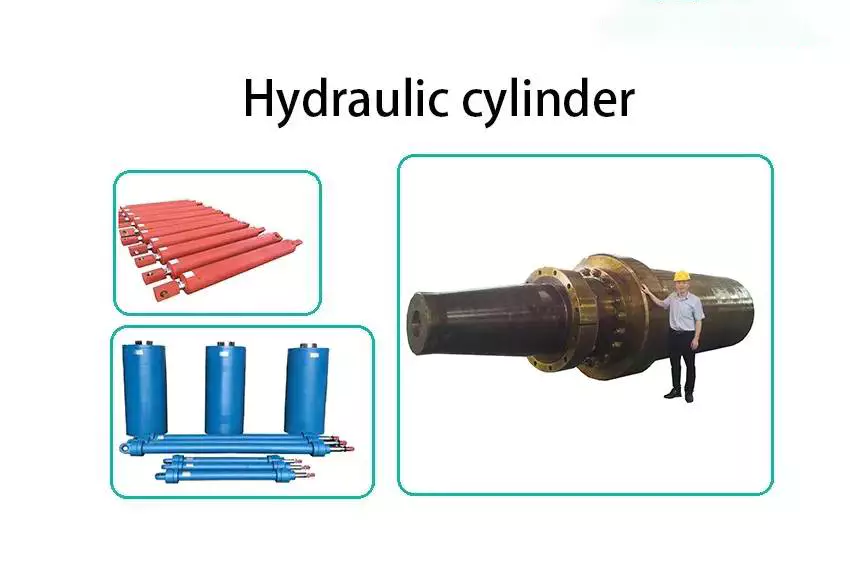
Hydraulic cylinders play a crucial role in machinery across various industries. They are essential components that provide controlled and powerful linear motion, enabling the operation of heavy equipment and facilitating numerous tasks. The role and significance of hydraulic cylinders in machinery can be explained in detail as follows:
Role of Hydraulic Cylinders:
– Conversion of Hydraulic Energy: Hydraulic cylinders convert hydraulic energy, typically in the form of pressurized hydraulic fluid, into linear force and motion. This conversion allows machinery to perform tasks such as lifting, pushing, pulling, clamping, tilting, and controlling various mechanisms.
– Generation of Linear Motion: Hydraulic cylinders generate linear motion by utilizing the principles of Pascal’s law. When hydraulic fluid is directed into one side of the cylinder, it applies pressure on the piston, resulting in linear movement of the piston and the attached piston rod. This linear motion can be used to actuate other components within the machinery or directly perform the required task.
– Force Generation: Hydraulic cylinders are capable of generating high forces due to the hydraulic pressure applied to the piston. The force output of a hydraulic cylinder depends on the surface area of the piston and the pressure of the hydraulic fluid. This force allows machinery to exert significant power for lifting heavy loads, applying pressure, or overcoming resistance.
– Precise Control: Hydraulic cylinders offer precise control over the linear motion and force exerted. By regulating the flow of hydraulic fluid, the speed and direction of the cylinder’s movement can be accurately adjusted. This level of control is crucial in machinery that requires precise positioning, delicate movements, or synchronization of multiple cylinders.
– Integration with Hydraulic Systems: Hydraulic cylinders are integral parts of hydraulic systems used in machinery. They work in conjunction with hydraulic pumps, valves, and actuators to create a complete hydraulic circuit. This integration allows for efficient power transmission, control, and coordination of various machine functions.
Significance of Hydraulic Cylinders:
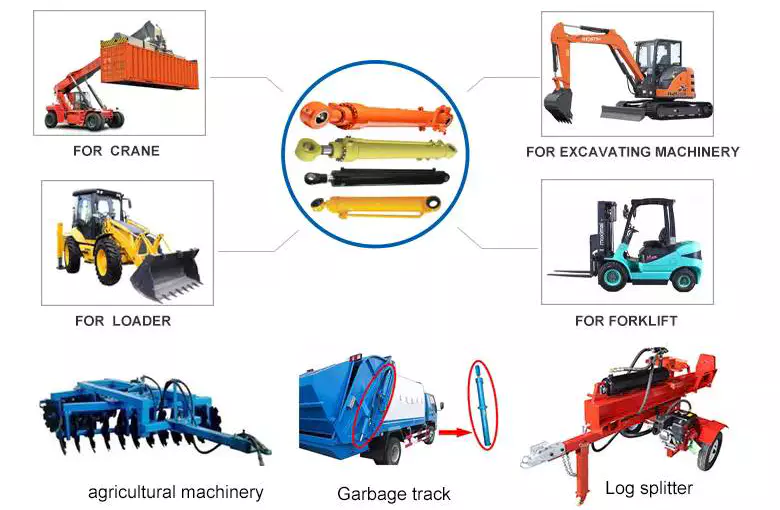
– Heavy Equipment Operation: Hydraulic cylinders are vital in heavy machinery used in construction, mining, agriculture, material handling, and other industries. They enable the lifting and movement of heavy loads, the operation of attachments, and the performance of tasks that require high force and precision.
– Versatility and Adaptability: Hydraulic cylinders are versatile components that can be designed and tailored to meet specific machinery requirements. They can be integrated into various types of equipment and customized based on factors such as force capacity, stroke length, speed, and mounting options. This adaptability makes hydraulic cylinders suitable for diverse applications.
– Durability and Reliability: Hydraulic cylinders are built to withstand rigorous operating conditions, including high pressures, heavy loads, and continuous use. They are designed with robust materials, precise machining, and effective sealing systems to ensure durability and reliability over extended periods of operation.
– Safety and Load Control: Hydraulic cylinders provide safe and controlled operation in machinery. They offer overload protection mechanisms, such as relief valves, to prevent damage caused by excessive force or pressure. Additionally, hydraulic cylinders allow for precise load control, minimizing the risk of accidents during lifting, lowering, or positioning of heavy loads.
– Compact Design: Hydraulic cylinders offer a high power-to-size ratio, allowing for compact machinery design. Their relatively small size compared to the forces they can generate makes them suitable for applications where space is limited or weight restrictions apply.
– Energy Efficiency: Hydraulic cylinders contribute to energy efficiency in machinery. The use of hydraulic systems allows for the transfer of power over long distances without significant power losses. Additionally, hydraulic cylinders can incorporate energy-saving features such as load-sensing technology and regenerative circuits, reducing energy consumption.
Overall, hydraulic cylinders play a vital role in machinery by providing controlled and powerful linear motion. Their significance lies in their ability to convert hydraulic energy, generate high forces, offer precise control, integrate with hydraulic systems, and facilitate the operation of heavy equipment across various industries. Hydraulic cylinders contribute to increased productivity, safety, and efficiency in machinery applications, making them indispensable components in modern-day engineering.


editor by CX 2023-11-01