
Product Description
Product Description
| Processing | Stamping |
| Available Material | Carbon steel, stainless steel, copper, aluminum alloy etc. |
| More Processing |
CNC Machining,Plastic Injection,Stamping,Die Casting, Welding,Forging,Silicone And Rubber,Mould Making,etc |
| Surface Finish | Powder Coating, Anodizing, Brushing, Polishing, Electric-plating, Pvd Coating, Hot Dip Galvanizing, E-coating, Tin Plating, Nickel Plating, Chrome Plating, Dacromet, Enamel Coating etc. |
| OEM | Silkscreening,Engraving,Laser Printing,Cut-out making, Custom Packaging Box etc. |
| Application | All kinds of cars,machinery,home appliance,electronic products,electric appliance,stationery,computers,power switches,miniature switcher,architecture,commodity and A/V equipment,hardware and plastic molds,sports equipment and gifts,and more. |
| Manufacturing Type | Precision Machining, CNC Milling, CNC Lathe Turning, Tapping, Drilling, Grinding, Wie EDM, Stamping, Deep Drawing, CNC Punching, Laser Cutting, CNC Bending, Die Casting, Welding etc |
| Industries Served | Aerospace, Automotive, Agriculture, Construction, Electrical, Electronic, Home Appliance, Medical,Marine, Machinery, Furniture, Food, Lighting,Telecommunication etc |
| QC | 100% Strict Inspection For Every Processing |
| One-stop Service | Custom Design, Fabrication, Assembly And Delivery |
Detailed Photos
Can Be Customized
With different mounting ways, all of them are designed as per your demand, it will be great if you can provide the drawing,
orelse, you can also provide all sizes you know and we design for you to confirm; The popular mounting are as follows: Clevis,
flange, trunnion, brakets and so on, or you can also make base design
Scope of application
Our Advantages
| One stop site | Casting+CNC+Surface treatment all in house.Gurantee the delivery time. |
| 3D Prototype | Own 3D printing machine in house,help you to develope new parts in shortly time with lower cost. |
| Experiences | More than 24 years experiences,strict quality standard,guarantee the quality. |
| Shipping | Long-relationship shipping partners from factory to all over the world. |
Packaging & Shipping
FAQ
Q1.Main market?
A:Germany,Japan,USA,Australian,Italy.
Q2:What’s the specialty of your factory?
A: We supply ODM & OEM services with strong R&D team and QC system.
Q3:What materials can you produce?
A: Stainless Steel; Carbon Steel; Alloy Steel; Aluminum Alloy;Copper alloy;Iron etc.
We test every CHINAMFG chemical component before pouring by spectrometer.
Q4:What information should I let you know if I want to get a precise quotation?
A: Please kindly send me your drawings. 2D in PDF or DWG format, 3D in STEP or IGS format.
Q5:How long get my customized sample?
A: Mold making time is 7-15 days,samples casting time is 8-12 days,CNC machining time is 2-4 days.
Q7:Do you have the ability to trace back?
A: Yes, the tested specimens will be stored at least 2 years in our lab.
| Material: | Stainless Steel |
|---|---|
| Usage: | Dump Truck |
| Structure: | Piston Cylinder |
| Power: | Hydraulic |
| Standard: | Nonstandard |
| Pressure Direction: | Double-acting Cylinder |
| Samples: |
US$ 0/Piece
1 Piece(Min.Order) | |
|---|
| Customization: |
Available
|
|
|---|
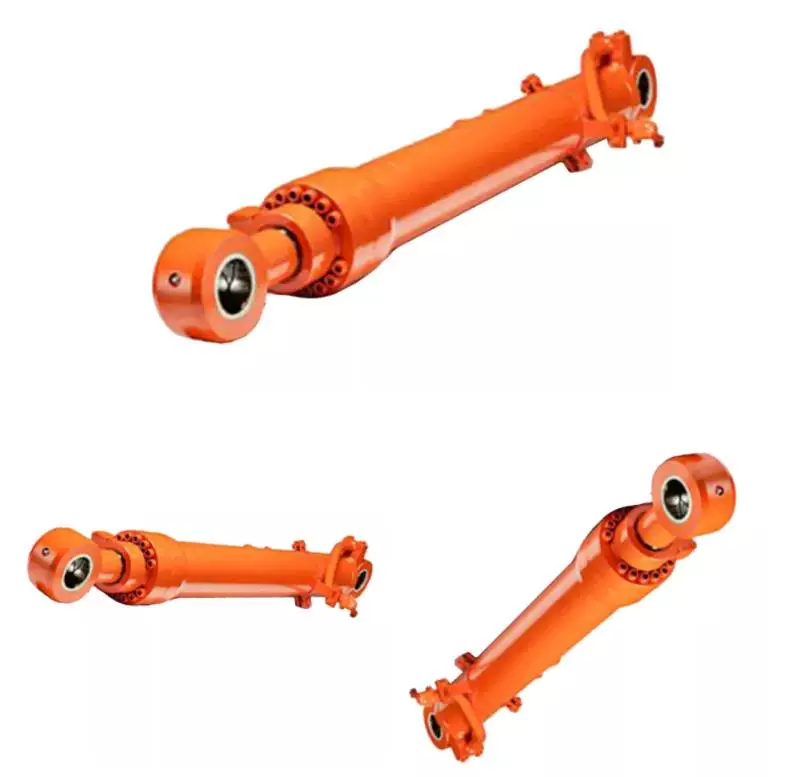
How do hydraulic cylinders handle the challenges of minimizing friction and wear?
Hydraulic cylinders employ several mechanisms and techniques to effectively minimize friction and wear, ensuring optimal performance and longevity. Minimizing friction and wear is crucial for hydraulic cylinders as it helps to maintain efficiency, reduce energy consumption, and prevent premature failure. Here’s a detailed explanation of how hydraulic cylinders handle the challenges of minimizing friction and wear:
1. Lubrication:
– Proper lubrication is essential for minimizing friction and wear in hydraulic cylinders. Lubricating fluids, such as hydraulic oils, are used to create a thin film between moving surfaces, reducing direct metal-to-metal contact. This lubricating film acts as a protective barrier, reducing friction and preventing wear. Regular maintenance practices include monitoring and maintaining the appropriate lubricant levels to ensure optimal lubrication and minimize frictional losses.
2. Surface Finishes:
– The surface finishes of components in hydraulic cylinders play a crucial role in minimizing friction and wear. Smoother surface finishes, achieved through precision machining, grinding, or the application of specialized coatings, reduce surface roughness and frictional resistance. By minimizing surface irregularities, the risk of wear and friction-induced damage is significantly reduced, resulting in improved efficiency and extended component life.
3. High-Quality Sealing Systems:
– Well-designed and high-quality sealing systems are crucial for minimizing friction and wear in hydraulic cylinders. Seals prevent fluid leakage and contamination while maintaining proper lubrication. Advanced sealing materials, such as polyurethane or composite materials, offer excellent wear resistance and low friction characteristics. Optimal seal design and proper installation ensure effective sealing, minimizing friction and wear between the piston and cylinder bore.
4. Proper Alignment and Clearances:
– Hydraulic cylinders must be properly aligned and have appropriate clearances to minimize friction and wear. Misalignment or excessive clearances can result in increased friction and uneven wear, leading to premature failure. Proper installation, alignment, and maintenance practices, including regular inspection and adjustment of clearances, help ensure smooth and even movement of the piston within the cylinder, reducing friction and wear.
5. Filtration and Contamination Control:
– Effective filtration and contamination control are essential for minimizing friction and wear in hydraulic cylinders. Contaminants, such as particles or moisture, can act as abrasive agents, accelerating wear and increasing friction. By implementing robust filtration systems and proper maintenance practices, hydraulic systems can prevent the ingress of contaminants, ensuring clean and properly lubricated components. Clean hydraulic fluids help minimize wear and friction, contributing to improved performance and longevity.
6. Material Selection:
– The selection of appropriate materials for hydraulic cylinder components is crucial in minimizing friction and wear. Components subject to high frictional forces, such as pistons and cylinder bores, can be made from materials with excellent wear resistance, such as hardened steel or composite materials. Additionally, selecting materials with low coefficients of friction helps reduce frictional losses. Proper material selection ensures durability and minimized wear in critical components of hydraulic cylinders.
7. Maintenance and Regular Inspection:
– Regular maintenance and inspection practices are vital for identifying and addressing potential issues that could lead to increased friction and wear in hydraulic cylinders. Scheduled maintenance includes lubrication checks, seal inspections, and monitoring of clearances. By promptly detecting and rectifying any signs of wear or misalignment, hydraulic cylinders can be kept in optimal condition, minimizing friction and wear throughout their operational lifespan.
In summary, hydraulic cylinders employ various strategies to handle the challenges of minimizing friction and wear. These include proper lubrication, employing suitable surface finishes, utilizing high-quality sealing systems, ensuring proper alignment and clearances, implementing effective filtration and contamination control measures, selecting appropriate materials, and conducting regular maintenance and inspections. By implementing these practices, hydraulic cylinders can minimize friction and wear, ensuring smooth and efficient operation while extending the overall lifespan of the system.
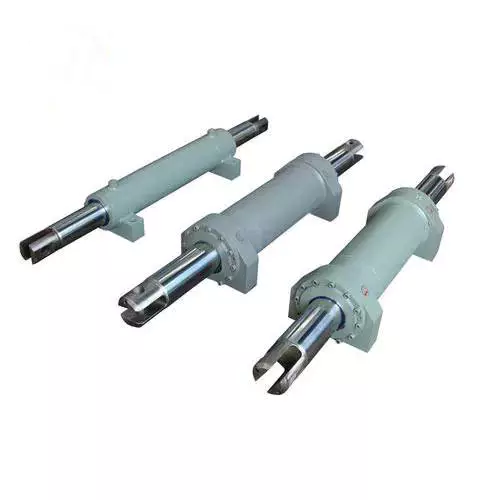
Ensuring Stable Performance of Hydraulic Cylinders Under Fluctuating Loads
Hydraulic cylinders are designed to provide stable performance even under fluctuating loads. They achieve this through various mechanisms and features that allow for efficient load control and compensation. Let’s explore how hydraulic cylinders ensure stable performance under fluctuating loads:
- Piston Design: The piston inside the hydraulic cylinder plays a crucial role in load control. It is typically equipped with seals and rings that prevent leakage of hydraulic fluid and ensure effective transfer of force. The piston design may incorporate features such as stepped or tandem pistons, which provide enhanced load-bearing capabilities and improved stability by distributing the load across multiple surfaces.
- Cylinder Cushioning: Hydraulic cylinders often incorporate cushioning mechanisms to minimize the impact and shock caused by fluctuating loads. Cushioning can be achieved through various methods, such as adjustable cushion screws, hydraulic cushioning valves, or elastomeric cushioning rings. These mechanisms slow down the piston’s movement near the end of the stroke, reducing the impact and preventing sudden stops that could lead to instability.
- Pressure Compensation: Fluctuating loads can result in pressure variations within the hydraulic system. To ensure stable performance, hydraulic cylinders are equipped with pressure compensation mechanisms. These mechanisms maintain a consistent pressure level in the system, regardless of load changes. Pressure compensation can be achieved through the use of pressure relief valves, compensating pistons, or pressure-compensated flow control valves.
- Flow Control: Hydraulic cylinders often incorporate flow control valves to regulate the speed of the cylinder’s movement. By controlling the flow rate of hydraulic fluid, the cylinder’s motion can be adjusted to match the changing load conditions. Flow control valves allow for smooth and controlled movement, preventing abrupt changes that could lead to instability.
- Feedback Systems: To ensure stable performance under fluctuating loads, hydraulic cylinders can be integrated with feedback systems. These systems provide real-time information on the cylinder’s position, velocity, and force. By continuously monitoring these parameters, the hydraulic system can make immediate adjustments to maintain stability and compensate for load fluctuations. Feedback systems can include position sensors, pressure sensors, or load sensors, depending on the specific application.
- Proper Sizing and Selection: Ensuring stable performance under fluctuating loads starts with proper sizing and selection of hydraulic cylinders. It is crucial to choose cylinders with appropriate bore size, rod diameter, and stroke length to match the anticipated load conditions. Oversized or undersized cylinders can lead to instability and reduced performance. Proper sizing also involves considering factors such as the required force, speed, and duty cycle of the application.
In summary, hydraulic cylinders ensure stable performance under fluctuating loads through features such as piston design, cushioning mechanisms, pressure compensation, flow control, feedback systems, and proper sizing and selection. These mechanisms and considerations allow hydraulic cylinders to provide consistent and controlled movement, even in dynamic load conditions, resulting in reliable and stable performance.
How do hydraulic cylinders ensure precise and controlled movement in equipment?
Hydraulic cylinders are widely used in various equipment and machinery to provide precise and controlled movement. They utilize hydraulic fluid and mechanical components to achieve accurate positioning, smooth operation, and reliable control. Here’s a detailed explanation of how hydraulic cylinders ensure precise and controlled movement in equipment:
1. Hydraulic Principle:
– Hydraulic cylinders operate based on Pascal’s law, which states that pressure exerted on a fluid is transmitted equally in all directions. The hydraulic fluid is contained within the cylinder, and when pressure is applied, it acts on the piston, generating force. By controlling the pressure and flow of hydraulic fluid, the movement of the cylinder can be precisely regulated, allowing for accurate and controlled motion.
2. Force and Load Management:
– Hydraulic cylinders are designed to handle specific loads and forces. The force generated by the hydraulic cylinder depends on the hydraulic pressure and the surface area of the piston. By adjusting the pressure, the force output can be controlled. This allows for precise management of the load and ensures that the cylinder can handle the required force without exerting excessive or insufficient force. Proper load management contributes to the precise and controlled movement of the equipment.
3. Control Valves:
– Control valves play a crucial role in regulating the flow and direction of hydraulic fluid within the cylinder. These valves allow operators to control the extension and retraction of the cylinder, adjust the speed of movement, and stop or hold the cylinder at any desired position. By manipulating the control valves, precise and controlled movement can be achieved, enabling operators to position equipment accurately and perform specific tasks with precision.
4. Flow Control:
– Hydraulic cylinders incorporate flow control valves to manage the rate of hydraulic fluid flow. These valves control the speed of the cylinder’s extension and retraction, allowing for smooth and controlled movement. By adjusting the flow rate, operators can precisely control the speed of the cylinder, ensuring that it moves at the desired rate without sudden or erratic movements. Flow control contributes to the overall precision and control of the equipment’s movement.
5. Position Sensing:
– To ensure precise movement, hydraulic cylinders can be equipped with position sensing devices such as linear transducers or proximity sensors. These sensors provide feedback on the position of the cylinder, allowing for accurate position control and closed-loop control systems. By continuously monitoring the position, the equipment’s movement can be controlled with high accuracy, enabling precise positioning and operation.
6. Proportional Control:
– Advanced hydraulic systems utilize proportional control technology, which allows for precise and fine-tuned control of the hydraulic cylinder’s movement. Proportional valves, often operated by electronic control systems, provide variable flow rates and pressure adjustments. This technology enables precise control of speed, force, and position, resulting in highly accurate and controlled movement of the equipment.
7. Cushioning and Damping:
– Hydraulic cylinders can incorporate cushioning and damping mechanisms to ensure smooth and controlled movement at the end of the stroke. Cushioning features, such as adjustable cushions or shock absorbers, reduce the impact and decelerate the cylinder before reaching the end of the stroke. This prevents abrupt stops and minimizes vibrations, contributing to precise and controlled movement.
8. Load Compensation:
– Some hydraulic systems utilize load compensation mechanisms to maintain precise movement even when the load varies. Load-sensing systems monitor the load demand and adjust the hydraulic pressure and flow accordingly to meet that demand. This compensation ensures that the equipment’s movement remains accurate and controlled, regardless of changes in the applied load.
In summary, hydraulic cylinders ensure precise and controlled movement in equipment through the application of hydraulic principles, force and load management, control valves, flow control, position sensing, proportional control, cushioning and damping mechanisms, and load compensation. These features and technologies allow operators to achieve accurate positioning, smooth operation, and reliable control, enabling equipment to perform tasks with precision and efficiency. The combination of hydraulic power and careful design considerations ensures that hydraulic cylinders deliver precise and controlled movement in a wide range of industrial applications.


editor by CX 2023-11-12