
Product Description
CHINAMFG RC Series hydraulic cylinders set the industry standard for general purpose cylinders.
- Unique GR2 Bearing Design, reduces wear, extending life
- Collar threads, plunger threads and base mounting holes enable easy fixturing (on most models)
- Designed for use in all positions
- High strength alloy steel for durability
- Redesigned cylinder thread protector for ease of use
- Heavy-duty, pretensioned spring improves retraction speed
- Baked enamel finish for increased corrosion resistance
- CR-400 coupler and dust cap included on all models
- Plunger wiper reduces contamination, extending cylinder life
| Model Number |
Cylinder Capacity |
Stroke | Cylinder Effective Area |
Oil Capacity |
Collapsed Height |
Weight |
| ton (kN) | mm | cm2 | cm3 | mm | kg | |
| SOV-RC-50** | 5 (45) |
16 | 6,5 | 10 | 41 | 1 |
| SOV-RC-51 | 25 | 6,5 | 16 | 110 | 1 | |
| SOV-RC-53 | 76 | 6,5 | 50 | 165 | 1,5 | |
| SOV-RC-55* | 127 | 6,5 | 83 | 215 | 1,9 | |
| SOV-RC-57 | 177 | 6,5 | 115 | 273 | 2,4 | |
| SOV-RC-59 | 232 | 6,5 | 151 | 323 | 2,8 | |
| SOV-RC-101 | 10 (101) |
26 | 14,5 | 38 | 89 | 1,8 |
| SOV-RC-102* | 54 | 14,5 | 78 | 121 | 2,3 | |
| SOV-RC-104 | 105 | 14,5 | 152 | 171 | 3,3 | |
| SOV-RC-106* | 156 | 14,5 | 226 | 247 | 4,4 | |
| SOV-RC-108 | 203 | 14,5 | 294 | 298 | 5,4 | |
| SOV-RC-1571* | 257 | 14,5 | 373 | 349 | 6,4 | |
| SOV-RC-1012 | 304 | 14,5 | 441 | 400 | 6,8 | |
| SOV-RC-1014 | 356 | 14,5 | 516 | 450 | 8,2 | |
| SOV-RC-151 | 15 (142) |
25 | 20,3 | 51 | 124 | 3,3 |
| SOV-RC-152 | 51 | 20,3 | 104 | 149 | 4,1 | |
| SOV-RC-154* | 101 | 20,3 | 205 | 200 | 5 | |
| SOV-RC-156* | 152 | 20,3 | 308 | 271 | 6,8 | |
| SOV-RC-158 | 203 | 20,3 | 411 | 322 | 8,2 | |
| SOV-RC-1510 | 254 | 20,3 | 516 | 373 | 9,5 | |
| SOV-RC-1512 | 305 | 20,3 | 619 | 423 | 10,9 | |
| SOV-RC-1514 | 356 | 20,3 | 723 | 474 | 11,8 | |
| SOV-RC-251 | 25 (232) |
26 | 33,2 | 86 | 139 | 5,9 |
| SOV-RC-252* | 50 | 33,2 | 166 | 165 | 6,4 | |
| SOV-RC-254* | 102 | 33,2 | 339 | 215 | 8,2 | |
| SOV-RC-256* | 158 | 33,2 | 525 | 273 | 10 | |
| SOV-RC-258 | 210 | 33,2 | 697 | 323 | 12,2 | |
| SOV-RC-2510 | 261 | 33,2 | 867 | 374 | 14,1 | |
| SOV-RC-2512 | 311 | 33,2 | 1033 | 425 | 16,3 | |
| SOV-RC-2514* | 362 | 33,2 | 1202 | 476 | 17,7 | |
| SOV-RC-308 | 30 (295) | 209 | 42,1 | 880 | 387 | 18,1 |
| SOV-RC-502 | 50 (498) |
51 | 71,2 | 362 | 176 | 15 |
| SOV-RC-504 | 101 | 71,2 | 719 | 227 | 19,1 | |
| SOV-RC-506* | 159 | 71,2 | 1131 | 282 | 23,1 | |
| SOV-RC-5013 | 337 | 71,2 | 2399 | 460 | 37,6 | |
| SOV-RC-756 | 75 (718) |
156 | 102,6 | 1601 | 285 | 29,5 |
| SOV-RC-7513 | 333 | 102,6 | 3417 | 492 | 59 | |
| SOV-RC-1006 | 95 (933) |
168 | 133,3 | 2239 | 357 | 59 |
| SOV-RC-1571 | 260 | 133,3 | 3466 | 449 | 72,6 |
* Also available as cylinder-pump set.
** SOV-RC-50 cylinder has a non removable grooved saddle and no collar thread.
Product Description
Single Acting Hydraulic Cylinder
Single acting hydraulic cylinder with the most extensive range of stroke length and lifting capacity, is the best choice for maintenance, produce, manufacture, architecture and other operations . Neck thread can withstand full load, the unique double guide ring technology can easily absorb partial load, reduce wear, prolong service life. Outer ring thread, most models with plunger thread and bottom mounting hole, making use of positioning more convenient.
Features
* Single acting, heavy-duty return springs
* High strength alloy steel for durability.
* Plated steel plungers.
* Stop ring to prevent the plunger over stro ke , the piston top standard antiskid saddle
* Collar threads, plunger threads and base mounting holes enable easy fixturing .
* Baked enamel finish for increased corrosion resistance.
* Removable strap handles for unobstructed fixturing .
* Plunger wiper reduces contamination, extending cylinder life
* 3/8 “- 18NPT coupler and dust cap included on all models.
Details lmages
Product Specifications
| Item No |
Capacity
(T) |
Max. Working Pressure
(MPa) |
Closed Height A (mm) |
Stroke
(mm) |
Oil Capacity
(cm3) |
Weight
(kg) |
| SOV-RC-502 | 50 | 70 | 176 | 51 | 362 | 15 |
Recommend Products
Company Profile
SOV Hydraulic Technoloy (ZheJiang ) Co., Ltd. is a professional manufacturing in hydraulic tools and products, we have been in the industry for more than 20 years. Since the establishment in 1995, we successfully transformed from OEM manufacturer to create our own brand SOV, and our factory has been approved by CE, ISO9001:2008 consecutively. Our Products have been widely used in petrochemical, cement, shipbuilding, steel plant and heavy constructions areas, etc.
We produce and supply Hydraulic tools, such as:
* Hydraulic cylinders, jacks (5-1000ton), single acting and double acting, hollow plunger;
* Hydraulic/ electric /pneumatic torque wrench (100-72000Nm);
* Hydraulic bolt tensioner (100-11486NM);
* Hydraulic pumps, manual and electric type (max up to 3000bar);
* Integrated hydraulic lifting system solutions ( 4-72 points lifting system for house translation or leveling, bridge supporting and tank welding supporting)
* Hydraulic nut and couplings. (M50-Tr1000)
FAQ
Q1: How can contact sales ?
A1: Please click the contact find our website and email address.
Q2: How can I buy CHINAMFG products in my country?
A2: Please send us an inquiry or email , we will reply to your if there is distributor in your country.
Q3: Can I have CHINAMFG products catalog and price list ?
A3: Please visit our English website:sov-china to download our E-catalog, and send us an email for price list.
Q4: How long does it take to get the product If I place an order?
A4: If products stock available, after confirmation of your payment or advance payment , we will pack and deliver in 3-7 days. If you select international parcel service, it can be arrived in 3-7 days. If it is by sea shipment, it will take 15-45 days depending on different locations
Q5: How to make payment ?
A5: First send us an inquiry, and we will reply you quotation, if our price suits you, we will prepare proforma invoice with our banking details.
Q6: Manufacturing time?
A6: Please send us an inquiry for stock condition, if we don’t have stock, and it is our standard products (refer to our model), it can be produced in 10-20 days. If it is customized, not our standard products, it will take 20-45 days to produce.
WHY CHOOSE US
Our Services:
* 24 hours online service;
* One year warranty, repair and service for the whole life;
* Question report will be replied in 48 hours;
* Quality guaranteed.
Packaging:
* All products will be packed with wooden case.
Shipping:
* Small quantity: by international exress, such as DHL, TNT, FEDEX, UPS, etc. depending on the customers’ choice. Goods will arrive within 7 days in normal cicumstances;
* Large quantity: by sea transportation. Goods will arrive in 10~45 days, according to the diatance.
| Material: | Steel |
|---|---|
| Usage: | Automation and Control |
| Structure: | Series Cylinder |
| Power: | Hydraulic |
| Standard: | Standard |
| Pressure Direction: | Single-acting Cylinder |
| Customization: |
Available
|
|
|---|
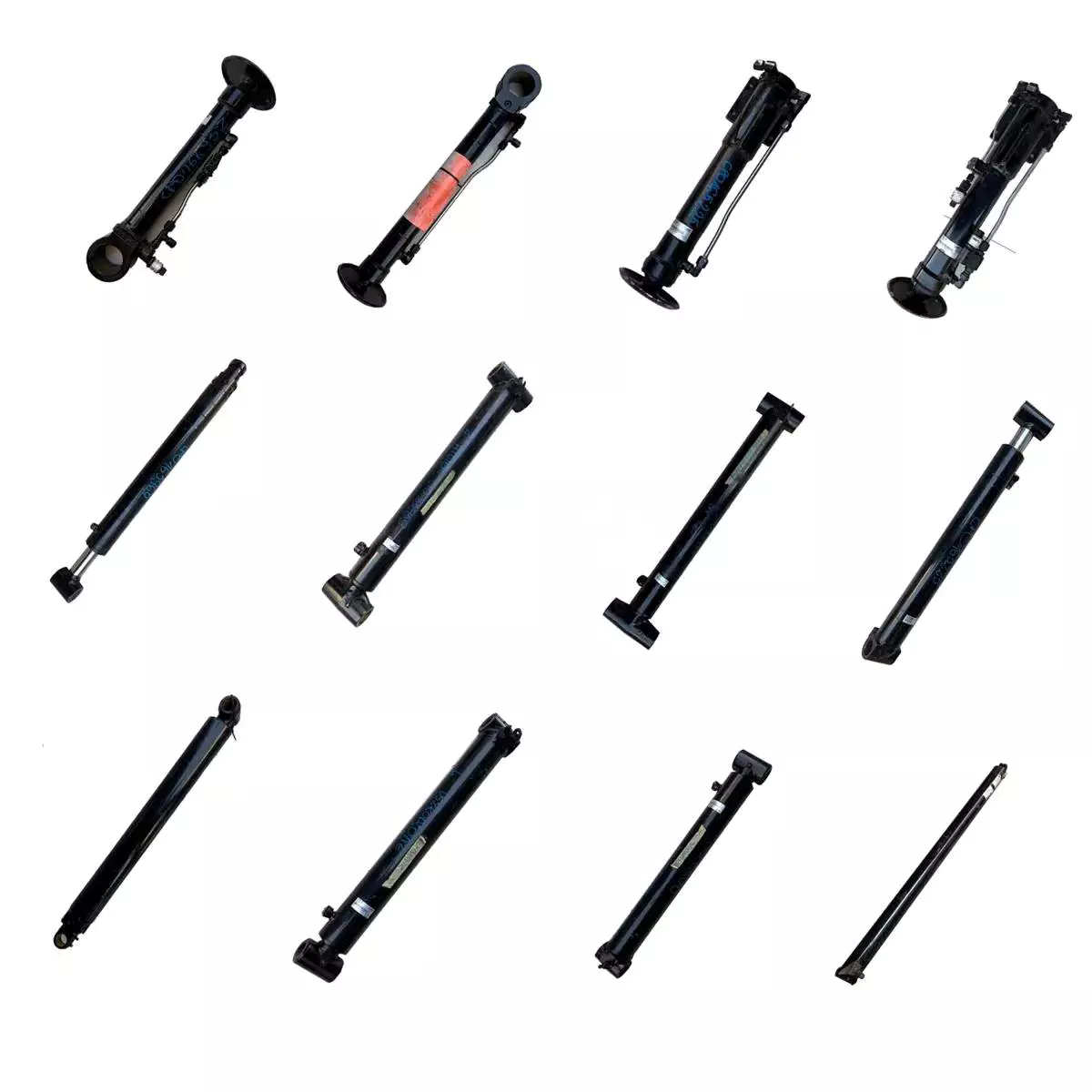
How do hydraulic cylinders handle the challenges of precise positioning and control?
Hydraulic cylinders are designed to handle the challenges of precise positioning and control with a combination of engineering principles and advanced control systems. These challenges often arise in applications where accurate and controlled movements are required, such as in industrial automation, construction, and material handling. Here’s a detailed explanation of how hydraulic cylinders overcome these challenges:
1. Fluid Power Control:
– Hydraulic cylinders utilize fluid power control to achieve precise positioning and control. The hydraulic system consists of a hydraulic pump, control valves, and hydraulic fluid. By regulating the flow of hydraulic fluid into and out of the cylinder, operators can control the speed, direction, and force exerted by the cylinder. The fluid power control allows for smooth and accurate movements, enabling precise positioning of the hydraulic cylinder and the attached load.
2. Control Valves:
– Control valves play a crucial role in handling the challenges of precise positioning and control. These valves are responsible for directing the flow of hydraulic fluid within the system. They can be manually operated or electronically controlled. Control valves allow operators to adjust the flow rate of the hydraulic fluid, controlling the speed of the cylinder’s movement. By modulating the flow, operators can achieve fine control over the positioning of the hydraulic cylinder, enabling precise and accurate movements.
3. Proportional Control:
– Hydraulic cylinders can be equipped with proportional control systems, which offer enhanced precision in positioning and control. Proportional control systems utilize electronic feedback and control algorithms to precisely regulate the flow and pressure of the hydraulic fluid. These systems provide accurate and proportional control over the movement of the hydraulic cylinder, allowing for precise positioning at various points along its stroke length. Proportional control enhances the cylinder’s ability to handle complex tasks that require precise movements and control.
4. Position Feedback Sensors:
– To achieve precise positioning, hydraulic cylinders often incorporate position feedback sensors. These sensors provide real-time information about the position of the cylinder’s piston rod. Common types of position feedback sensors include potentiometers, linear variable differential transformers (LVDTs), and magnetostrictive sensors. By continuously monitoring the position, the feedback sensors enable closed-loop control, allowing for accurate positioning and control of the hydraulic cylinder. The feedback information is used to adjust the flow of hydraulic fluid to achieve the desired position accurately.
5. Servo Control Systems:
– Advanced hydraulic systems employ servo control systems to handle the challenges of precise positioning and control. Servo control systems combine electronic control, position feedback sensors, and proportional control valves to achieve high levels of accuracy and responsiveness. The servo control system continuously compares the desired position with the actual position of the hydraulic cylinder and adjusts the flow of hydraulic fluid to minimize any positional error. This closed-loop control mechanism enables the hydraulic cylinder to maintain precise positioning and control, even under varying loads or external disturbances.
6. Integrated Automation:
– Hydraulic cylinders can be integrated into automated systems to achieve precise positioning and control. In such setups, the hydraulic cylinders are controlled by programmable logic controllers (PLCs) or other automation controllers. These controllers receive input signals from various sensors and use pre-programmed logic to command the hydraulic cylinder’s movements. The integration of hydraulic cylinders into automated systems allows for precise and repeatable positioning and control, enabling complex sequences of movements to be executed with high accuracy.
7. Advanced Control Algorithms:
– Advancements in control algorithms have also contributed to the precise positioning and control of hydraulic cylinders. These algorithms, such as PID (Proportional-Integral-Derivative) control, adaptive control, and model-based control, enable sophisticated control strategies to be implemented. These algorithms consider factors such as load variations, system dynamics, and environmental conditions to optimize the control of hydraulic cylinders. By employing advanced control algorithms, hydraulic cylinders can compensate for disturbances and achieve precise positioning and control over a wide range of operating conditions.
In summary, hydraulic cylinders overcome the challenges of precise positioning and control through the use of fluid power control, control valves, proportional control, position feedback sensors, servo control systems, integrated automation, and advanced control algorithms. By combining these elements, hydraulic cylinders can achieve accurate and controlled movements, enabling precise positioning and control in various applications. These capabilities are essential for industries that require high precision and repeatability in their operations, such as industrial automation, robotics, and material handling.
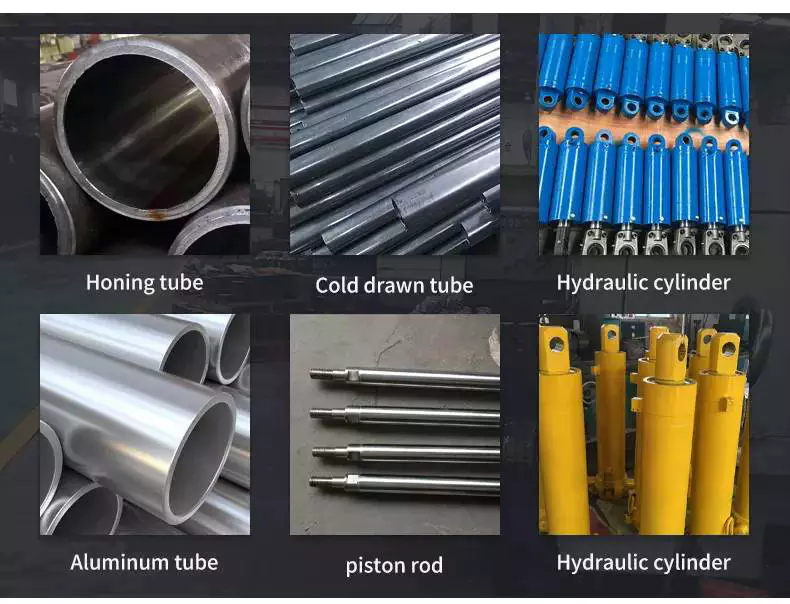
Ensuring Consistent Force Output for Repetitive Tasks with Hydraulic Cylinders
Hydraulic cylinders are designed to ensure consistent force output for repetitive tasks. This consistency is essential for maintaining precise control, achieving uniform results, and optimizing the performance of hydraulic systems. Let’s explore how hydraulic cylinders achieve consistent force output for repetitive tasks:
- Design and Manufacturing Standards: Hydraulic cylinders are manufactured to meet strict design and manufacturing standards. These standards ensure that the cylinders are built with precision and accuracy, enabling them to deliver consistent force output. The components, such as the piston, cylinder barrel, seals, and valves, are engineered to work together harmoniously, minimizing variations in force generation.
- Pressure Regulation: Hydraulic systems incorporate pressure regulation mechanisms to maintain a constant pressure level. Pressure relief valves, pressure regulators, and pressure-compensated pumps help maintain a consistent hydraulic pressure throughout the system. By regulating the pressure, hydraulic cylinders receive a consistent supply of pressurized fluid, resulting in consistent force output for repetitive tasks.
- Flow Control: Flow control valves are utilized in hydraulic systems to manage the flow rate of hydraulic fluid. These valves regulate the speed at which the fluid enters and exits the hydraulic cylinder, influencing the force output. By controlling the flow rate, hydraulic cylinders can achieve consistent force output for repetitive tasks. This is particularly important when it comes to tasks that require precise and uniform force application.
- Effective Seal Performance: Sealing systems play a crucial role in hydraulic cylinders by preventing fluid leakage and maintaining pressure integrity. High-quality seals and proper installation ensure effective sealing throughout the cylinder’s operation. By minimizing internal leakage, hydraulic cylinders can maintain consistent force output, even during repetitive tasks.
- Maintenance and Inspection: Regular maintenance and inspection of hydraulic cylinders are essential for ensuring consistent force output. By following maintenance schedules, replacing worn-out components, and monitoring cylinder performance, any potential issues that could affect force consistency can be identified and addressed promptly. This proactive approach helps maintain the reliability and performance of hydraulic cylinders over time.
In summary, hydraulic cylinders employ various mechanisms to ensure consistent force output for repetitive tasks. Adherence to design and manufacturing standards, pressure regulation, flow control, effective seal performance, and regular maintenance all contribute to achieving consistent force output. By maintaining precision, minimizing variations, and addressing potential issues, hydraulic cylinders provide reliable and consistent force generation, facilitating the successful completion of repetitive tasks in various applications.
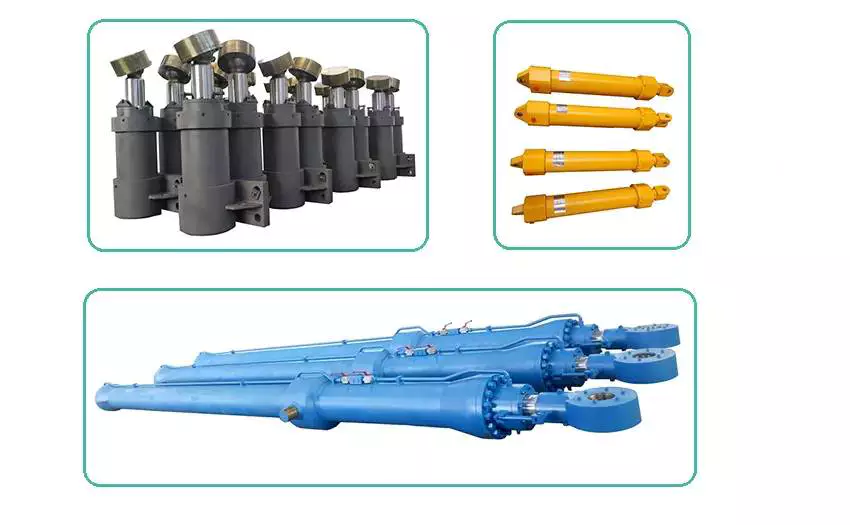
Can hydraulic cylinders be adapted for use in both industrial and mobile equipment?
Yes, hydraulic cylinders can be adapted for use in both industrial and mobile equipment. The versatility and adaptability of hydraulic systems make them suitable for a wide range of applications across various industries. Here’s a detailed explanation:
1. Industrial Equipment:
– Hydraulic cylinders are extensively used in industrial equipment such as manufacturing machinery, construction equipment, material handling systems, and heavy-duty machinery. They provide the necessary force and controlled movement for tasks such as lifting, pushing, pulling, and positioning heavy loads. Industrial hydraulic cylinders are typically designed for robustness, durability, and high load-bearing capacities to withstand the demanding environments and heavy-duty applications encountered in industries.
2. Mobile Equipment:
– Hydraulic cylinders are also widely adopted in mobile equipment, including agricultural machinery, mining equipment, forestry machinery, and transportation vehicles. These cylinders enable various functions such as tilting, lifting, steering, and stabilizing. Mobile hydraulic cylinders are designed to be compact, lightweight, and efficient to meet the specific requirements of mobile applications. They are often integrated into hydraulic systems that power multiple functions in a single machine.
3. Adaptability:
– One of the key advantages of hydraulic cylinders is their adaptability. They can be customized and configured to suit different operating conditions, equipment sizes, load capacities, and speed requirements. Hydraulic cylinder manufacturers offer a wide range of sizes, stroke lengths, mounting options, and rod configurations to accommodate diverse applications. This adaptability allows hydraulic cylinders to be utilized in both industrial and mobile equipment, serving various purposes across different sectors.
4. Mounting Options:
– Hydraulic cylinders can be adapted to different mounting arrangements to suit the specific requirements of industrial and mobile equipment. They can be mounted in various orientations, including vertical, horizontal, or at an angle. Different mounting options, such as flange mounts, trunnion mounts, and clevis mounts, provide flexibility in integrating hydraulic cylinders into different equipment designs.
5. Integration with Hydraulic Systems:
– Hydraulic cylinders are often part of a larger hydraulic system that includes components such as pumps, valves, hoses, and reservoirs. These systems can be tailored to meet the specific needs of both industrial and mobile equipment. The hydraulic system’s design and configuration can be adapted to provide the necessary flow rates, pressures, and control mechanisms required for optimal performance in the intended application.
6. Control and Automation:
– Hydraulic cylinders in both industrial and mobile equipment can be integrated with control systems and automation technologies. This allows for precise and automated control of the cylinder’s movement and function. Proportional control valves, sensors, and electronic controls can be incorporated to achieve accurate positioning, speed control, and synchronization of multiple hydraulic cylinders, enhancing overall equipment performance and productivity.
7. Safety Considerations:
– Hydraulic cylinders for both industrial and mobile equipment are designed with safety in mind. They often feature built-in safety mechanisms such as overload protection, pressure relief valves, and emergency stop systems to prevent accidents and equipment damage. Safety standards and regulations specific to each industry are taken into account during the design and adaptation of hydraulic cylinders for different applications.
Overall, hydraulic cylinders offer the adaptability and performance required for use in both industrial and mobile equipment. Their versatility, customizable features, mounting options, integration capabilities, and safety considerations make them suitable for a wide range of applications across diverse industries. Whether it’s heavy-duty industrial machinery or mobile equipment operating in challenging environments, hydraulic cylinders can be adapted to meet the specific needs and requirements of various equipment types.


editor by CX 2023-11-29