
Product Description
Hydraulic cylinders, mill type CDH
- Rexroth standard
- Series H1
- Component series 3X
- Nominal pressure 250 bar
- Piston Ø 40 … 320 mm
- Piston rod Ø 22 … 220 mm
- Stroke length up to 6000
- ering code
-
01
02
03
04
05
06
07
08
09
10
11
12
13
14
15
16
17
CD
M1
/
/
/
A
2X
/
01
Single rod cylinder
CD
02
Series
M1
Types of mounting
03
Without mounting
M001)
Rectangular flange at cylinder head
MF12)
Rectangular flange at cylinder base
MF22)
Round flange at the cylinder head
MF3
Round flange at the cylinder base
MF4
Swivel eye at cylinder base
MP3
Self-aligning clevis at cylinder base
MP5
Trunnion
MT43)
Foot mounting
MS2
04
Piston Ø (ØAL) from 25 … 200 mm; see Technical data
…
05
Piston rod Ø (ØMM) 14 … 140 mm; see Technical data
…
06
Stroke length in mm
…
Design principle
07
Head and base flanged
A
08
Component series 20 … 29 (20 … 29: unchanged installation and connection dimensions)
2X
Line connection / version
09
Pipe thread according to ISO 1179-1
B
Metric ISO thread (DIN/ISO 6149-1)
R
Enlarged pipe thread according to ISO 1179-1; see Dimensions
S4;5)
Rectangular flange connection according to ISO 6162; see Dimensions
F5;6)
Square flange connection according to ISO 6164; see Dimensions
H5;7)
For directional and high-response valves; see Dimensions
Subplate NG6
P5;8;13)
Subplate NG10
T5;9;13)
Subplate NG16
U5;10;13)
For SL and SV valves14); see Dimensions
Subplate NG6
A5;8;13)
Subplate NG10
E5;9;13)
Subplate NG20
L5;10;13)
Line connection/position at cylinder head
10
View to piston rod16)
1
2
3
4
Line connection/position at cylinder base
11
View to piston rod16)
1
2
3
4
Piston rod design
12
Hard chromium-plated
C
Hardened and hard chromium-plated
H11)
Stainless steel, hard chromium-plated
L
Piston rod end
13
Thread (ISO 6571-1) for swivel head CGKD
G
Thread (VW standard) for swivel head CGKD
H15)
Internal thread; see dimensions
E12)
Piston rod end “H” with mounted swivel head CGKD
F15)
Piston rod end “G” with mounted swivel head CGKD
K
End position cushioning
14
Without end position cushioning
U
Both sides, self-adjusting
D
Head sides, self-adjusting
S
Base sides, self-adjusting
K
Both sides, adjustable
E
Seal design
15
Suitable for mineral oil according to DIN 51524 HL, HLP
Standard seal system
M
Servo quality/reduced friction
T7)
Chevron seal kits
A6)
Suitable for phosphoric acid esters HFR
Standard seal system
V
Servo quality/reduced friction
S7)
Option 1
16
Without option
W
Measuring coupling, on both sides
A
Inductive proximity switches without mating connector, mating connector – separate order; see Accessories
E7)
Option 2
17
Without option
W
With piston rod extension “LY” in mm
Y17)
1) Only available CHINAMFG request 2) Piston Ø 25 … 125 mm 3) When ordering, always specify the “XV” dimensions in the plain text in mm (see order example) 4) Piston Ø 63 … 200 mm 5) Not for MF2; MF4 6) Piston Ø 50 … 200 mm 7) Piston Ø 40 … 200 mm 8) Piston Ø 40 … 80 mm, only position 11 9) Piston Ø 63 … 200 mm, only position 11 10) Piston Ø 125 … 200 mm, only position 11 11) Piston rod Ø 14 … 110 mm 12) Piston rod Ø 22 … 140 mm 13) Subplates only possible with pipe thread (ISO 1179-1) 14) Subplates for SL and SV valves (isolator valves)
Please note: Seal designs T and S are not designed for the static holding function!15) Per piston Ø only possible with large piston rod Ø 16) All graphical representations in the data sheet show position 1 17) When ordering, always specify the piston rod extension dimension “LY” in the plain text in mm (see order example)
Order example: CDM1MT4/50/28/550A2X/B11CGDMWW, XV = 175 mm CDM1MF3/200/140/950A2X/B11CHKAWW Note: Replacement cylinder for series 1X In case of exchange with series 2X, you also have to exchange the bearing blocks (trunnions)!
| Certification: | CE, ISO9001 |
|---|---|
| Pressure: | High Pressure |
| Work Temperature: | High Temperature |
| Customization: |
Available
|
|
|---|
.shipping-cost-tm .tm-status-off{background: none;padding:0;color: #1470cc}
|
Shipping Cost:
Estimated freight per unit. |
about shipping cost and estimated delivery time. |
|---|
| Payment Method: |
|
|---|---|
|
Initial Payment Full Payment |
| Currency: | US$ |
|---|
| Return&refunds: | You can apply for a refund up to 30 days after receipt of the products. |
|---|
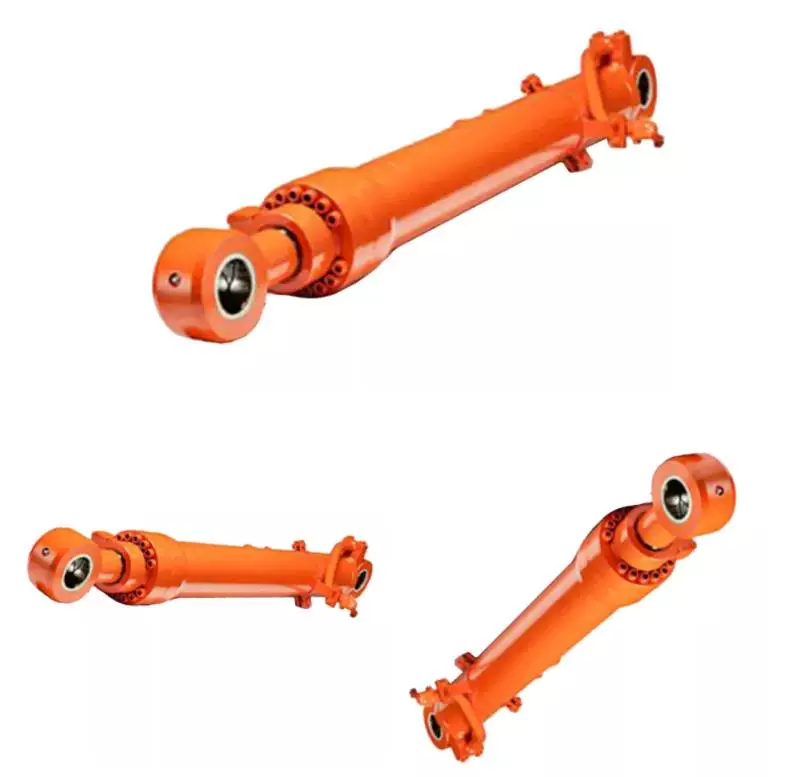
How do hydraulic cylinders enhance the performance of construction and mining equipment?
Hydraulic cylinders play a vital role in enhancing the performance of construction and mining equipment by providing powerful and precise linear motion. These industries require heavy-duty machinery that can withstand demanding conditions and efficiently perform tasks such as lifting, pushing, and digging. Here’s a detailed explanation of how hydraulic cylinders enhance the performance of construction and mining equipment:
1. Power and Force:
– Hydraulic cylinders are capable of generating substantial force, allowing construction and mining equipment to handle heavy loads and perform challenging tasks. The hydraulic system applies pressure to the fluid, which is transmitted to the hydraulic cylinder, resulting in the movement of the piston rod. The larger the diameter of the cylinder, the greater the force that can be generated. Hydraulic cylinders enable the equipment to exert significant force, making it possible to lift and move heavy materials, excavate soil and rock, and perform other demanding operations.
2. Precise Control:
– Hydraulic cylinders offer precise control over the movement of construction and mining equipment. By regulating the flow of hydraulic fluid into and out of the cylinder through control valves, operators can precisely control the speed, position, and force exerted by the hydraulic cylinder. This level of control allows for accurate and controlled movements, enabling operators to perform tasks with precision and efficiency. Whether it’s lifting a specific load, positioning an attachment, or maneuvering in tight spaces, hydraulic cylinders provide the necessary control for optimal equipment performance.
3. Adaptability:
– Hydraulic cylinders are highly adaptable to various construction and mining equipment. They can be designed and manufactured in different sizes, stroke lengths, and configurations to suit specific requirements. Hydraulic cylinders can be integrated into different types of equipment, such as excavators, loaders, bulldozers, and drilling rigs. Their adaptability allows for the customization of equipment to meet the needs of different applications and operating conditions, enhancing overall performance.
4. Durability and Reliability:
– Construction and mining environments are known for their harsh conditions, including extreme temperatures, vibrations, and exposure to dust, dirt, and debris. Hydraulic cylinders are designed to withstand these challenging conditions and provide long-lasting performance. They are constructed using robust materials, such as high-strength steel, and equipped with seals and components that can endure heavy loads, impacts, and contaminants. The durability and reliability of hydraulic cylinders ensure that construction and mining equipment can operate continuously and withstand the demanding nature of these industries.
5. Safety:
– Hydraulic cylinders contribute to the safety of construction and mining equipment operations. Their precise control allows operators to perform tasks with accuracy, minimizing the risk of accidents and damage to the equipment or surrounding structures. Hydraulic cylinders also enable the implementation of safety features, such as overload protection systems and emergency stop mechanisms, ensuring the safe operation of the equipment. The reliable and controlled movements provided by hydraulic cylinders enhance overall safety in construction and mining operations.
6. Increased Productivity:
– By providing the necessary power, precise control, and adaptability, hydraulic cylinders contribute to increased productivity in construction and mining applications. Construction and mining equipment equipped with hydraulic cylinders can perform tasks more efficiently and effectively, reducing the time and effort required to complete projects. The ability to handle heavy loads, control movements precisely, and adapt to various tasks improves the overall productivity of the equipment, leading to cost savings and improved project timelines.
In summary, hydraulic cylinders enhance the performance of construction and mining equipment by providing power, precise control, adaptability, durability, and safety. They enable these machines to handle heavy loads, perform tasks with accuracy, withstand harsh conditions, and increase productivity. Hydraulic cylinders are integral components that contribute to the efficiency and effectiveness of construction and mining operations.
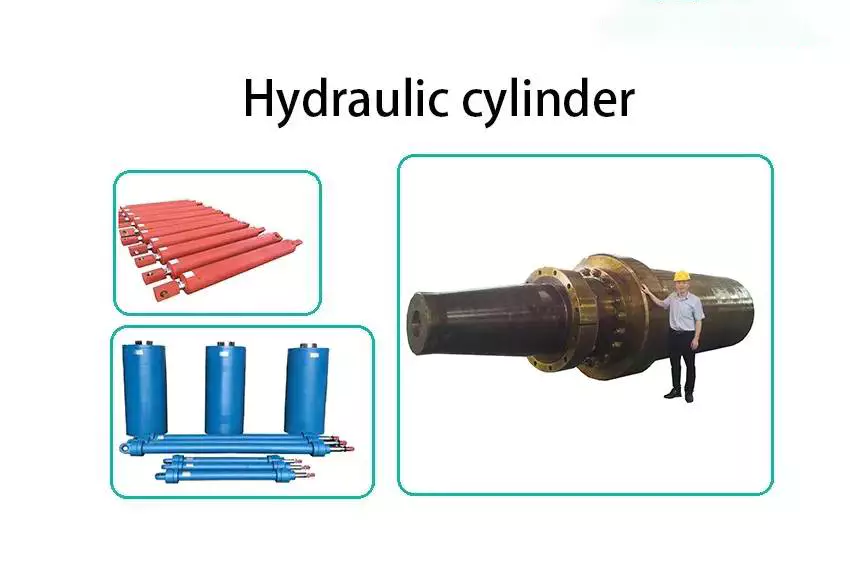
Adaptation of Hydraulic Cylinders for Medical Equipment and Aerospace Applications
Hydraulic cylinders have the potential to be adapted for use in medical equipment and aerospace applications, offering unique advantages in these industries. Let’s explore how hydraulic cylinders can be adapted for these specialized fields:
- Medical Equipment: Hydraulic cylinders can be adapted for various medical equipment applications, including hospital beds, patient lifts, surgical tables, and rehabilitation devices. Here’s how hydraulic cylinders are beneficial in medical equipment:
- Positioning and Adjustability: Hydraulic cylinders provide precise and smooth movement, allowing for accurate positioning and adjustments of medical equipment. This is crucial for ensuring patient comfort, proper alignment, and ease of use.
- Load Handling: Hydraulic cylinders offer high force capabilities, enabling the safe handling of heavy loads in medical equipment. They can support the weight of patients, facilitate smooth transitions, and provide stability during procedures.
- Controlled Motion: Hydraulic cylinders provide controlled and stable motion, which is essential for delicate medical procedures. The ability to adjust speed, position, and force allows for precise and controlled movements, minimizing patient discomfort and ensuring accurate treatment.
- Durability and Reliability: Hydraulic cylinders are designed to withstand rigorous use and demanding environments, making them suitable for medical equipment applications. Their durability and reliability contribute to the long-term performance and safety of medical devices.
- Aerospace Applications: Hydraulic cylinders can also be adapted for aerospace applications, where lightweight yet robust systems are essential. Here’s how hydraulic cylinders are advantageous in aerospace:
- Flight Control Systems: Hydraulic cylinders play a critical role in aircraft flight control systems, including ailerons, elevators, rudders, and landing gear. They provide precise and reliable actuation, allowing pilots to control the aircraft’s movements with accuracy and responsiveness.
- Weight Optimization: Hydraulic cylinders can be designed using lightweight materials, such as aluminum alloys or composite materials, to reduce overall weight. This weight optimization is crucial in aerospace applications to enhance fuel efficiency, payload capacity, and aircraft performance.
- Shock and Vibration Resistance: Aerospace environments involve significant shock and vibration forces. Hydraulic cylinders can be engineered to withstand these dynamic loads while maintaining performance and reliability, ensuring consistent operation even under extreme conditions.
- Space Constraints: Hydraulic cylinders can be designed to fit within the space constraints of aircraft or spacecraft. Their compact size and flexible mounting options allow for efficient integration into the limited available space.
In summary, hydraulic cylinders can be adapted for use in medical equipment and aerospace applications, leveraging their precise positioning, load handling capabilities, controlled motion, durability, and reliability. In medical equipment, hydraulic cylinders enable comfortable patient positioning, smooth transitions, and controlled movements during procedures. In aerospace, hydraulic cylinders provide precise actuation, weight optimization, shock and vibration resistance, and space-efficient solutions. By adapting hydraulic cylinders to these specialized fields, manufacturers can meet the unique requirements and enhance the performance of medical equipment and aerospace systems.
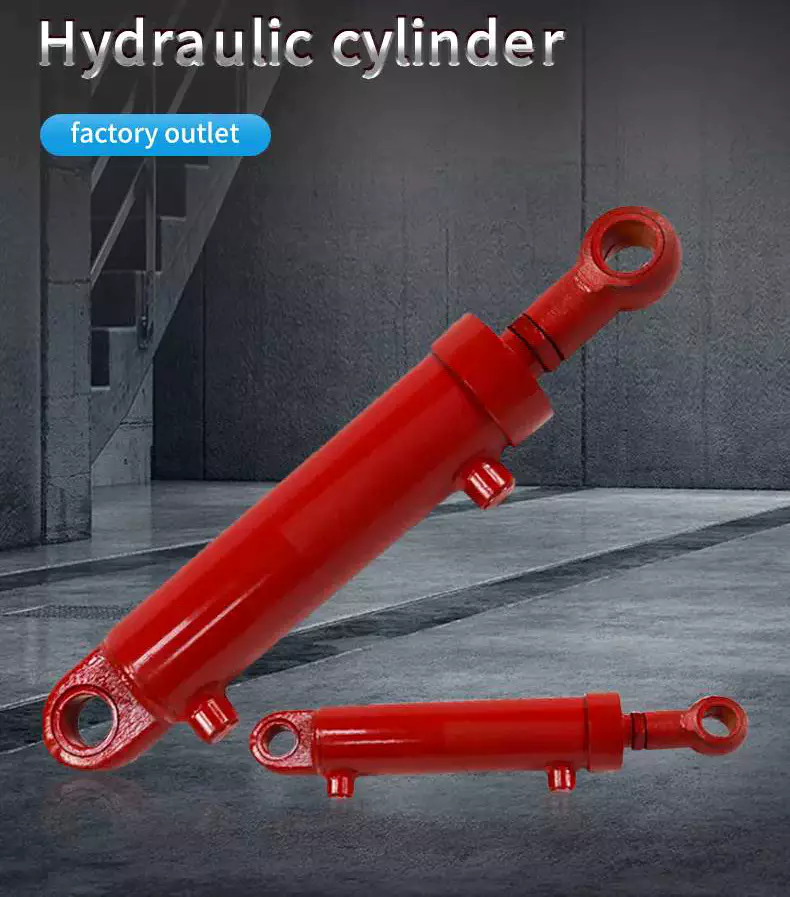
What is a hydraulic cylinder and how does it function in various applications?
A hydraulic cylinder is a mechanical actuator that converts hydraulic energy into linear force and motion. It plays a critical role in various applications where controlled and powerful linear motion is required. Hydraulic cylinders are commonly used in industries such as construction, manufacturing, agriculture, and transportation. Here’s a detailed explanation of what a hydraulic cylinder is and how it functions:
Definition and Components:
– A hydraulic cylinder consists of a cylindrical barrel, a piston, a piston rod, and various seals. The barrel is a hollow tube that houses the piston and allows for fluid flow. The piston divides the cylinder into two chambers: the rod side and the cap side. The piston rod extends from the piston and provides a connection point for external loads. Seals are used to prevent fluid leakage and maintain hydraulic pressure within the cylinder.
Function:
– The function of a hydraulic cylinder is to convert the pressure and flow of hydraulic fluid into linear force and motion. The hydraulic fluid, typically oil, is pressurized and directed into one of the chambers of the cylinder. As the fluid enters the chamber, it applies pressure on the piston, causing it to move in a linear direction. This linear motion of the piston is transferred to the piston rod, creating a pushing or pulling force.
Working Principle:
– The working principle of a hydraulic cylinder is based on Pascal’s law, which states that pressure exerted on a fluid in a confined space is transmitted equally in all directions. In a hydraulic cylinder, when hydraulic fluid is pumped into one side of the cylinder, it creates pressure on the piston. The pressure is transmitted through the fluid to the other side of the piston, resulting in a balanced force across the piston and piston rod. This force generates linear motion in the direction determined by the fluid input.
Applications:
– Hydraulic cylinders find extensive use in a wide range of applications due to their ability to generate high forces and precise control of linear motion. Some common applications include:
1. Construction Equipment: Hydraulic cylinders are used in excavators, loaders, bulldozers, and cranes for lifting, pushing, and digging tasks.
2. Manufacturing Machinery: Hydraulic cylinders are employed in presses, machine tools, and material handling equipment for pressing, clamping, and lifting operations.
3. Agricultural Machinery: Hydraulic cylinders are used in tractors, harvesters, and irrigation systems for tasks like steering, lifting, and controlling attachments.
4. Transportation: Hydraulic cylinders are utilized in vehicles such as dump trucks, garbage trucks, and forklifts for tilting, lifting, and tipping operations.
5. Aerospace and Defense: Hydraulic cylinders are employed in aircraft landing gear, missile systems, and hydraulic actuators for control surfaces.
6. Marine and Offshore: Hydraulic cylinders are used in ship steering systems, cranes, and offshore drilling equipment for various lifting and positioning tasks.
In these applications, hydraulic cylinders offer advantages such as high force capability, precise control, compact size, and durability. They provide efficient and reliable linear motion, contributing to enhanced productivity and functionality in a wide range of industries.
Overall, hydraulic cylinders are integral components in various applications where controlled and powerful linear motion is required. Their ability to convert hydraulic energy into mechanical force makes them invaluable in numerous industries, enabling the operation of heavy machinery, precise positioning, and efficient load handling.


editor by CX 2023-10-31