
Product Description
Product Description
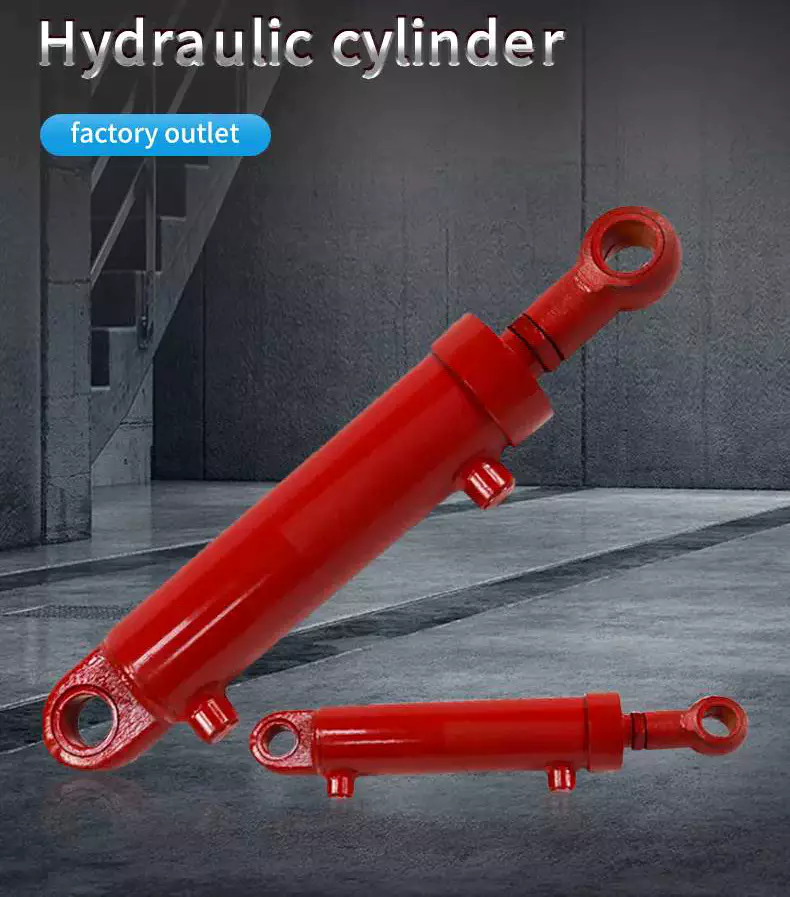
A: Product Description
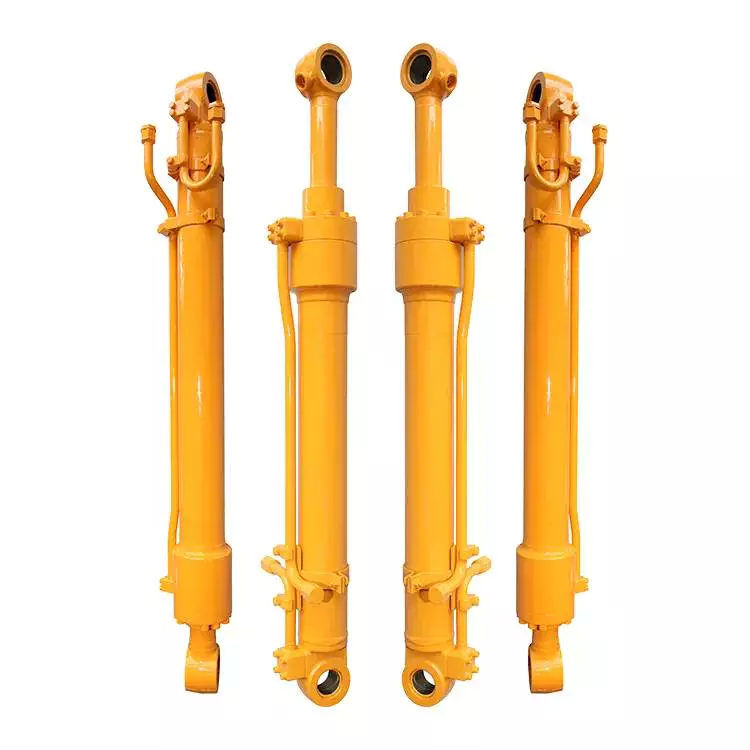
| Commodity Name | double acting hydraulic cylinder, hydraulic cylinder |
| Suitable Model | construction machinery |
| Original | ZheJiang , China |
| Warranty | One year |
| Min of quantity | 1 piece |
| Packing | standard export wooden box or as your require |
| Time of Shipment | Usual 30-60days. Different according the quantity of order. |
| Port of Delivery | HangZhou, China |
Product Parameters
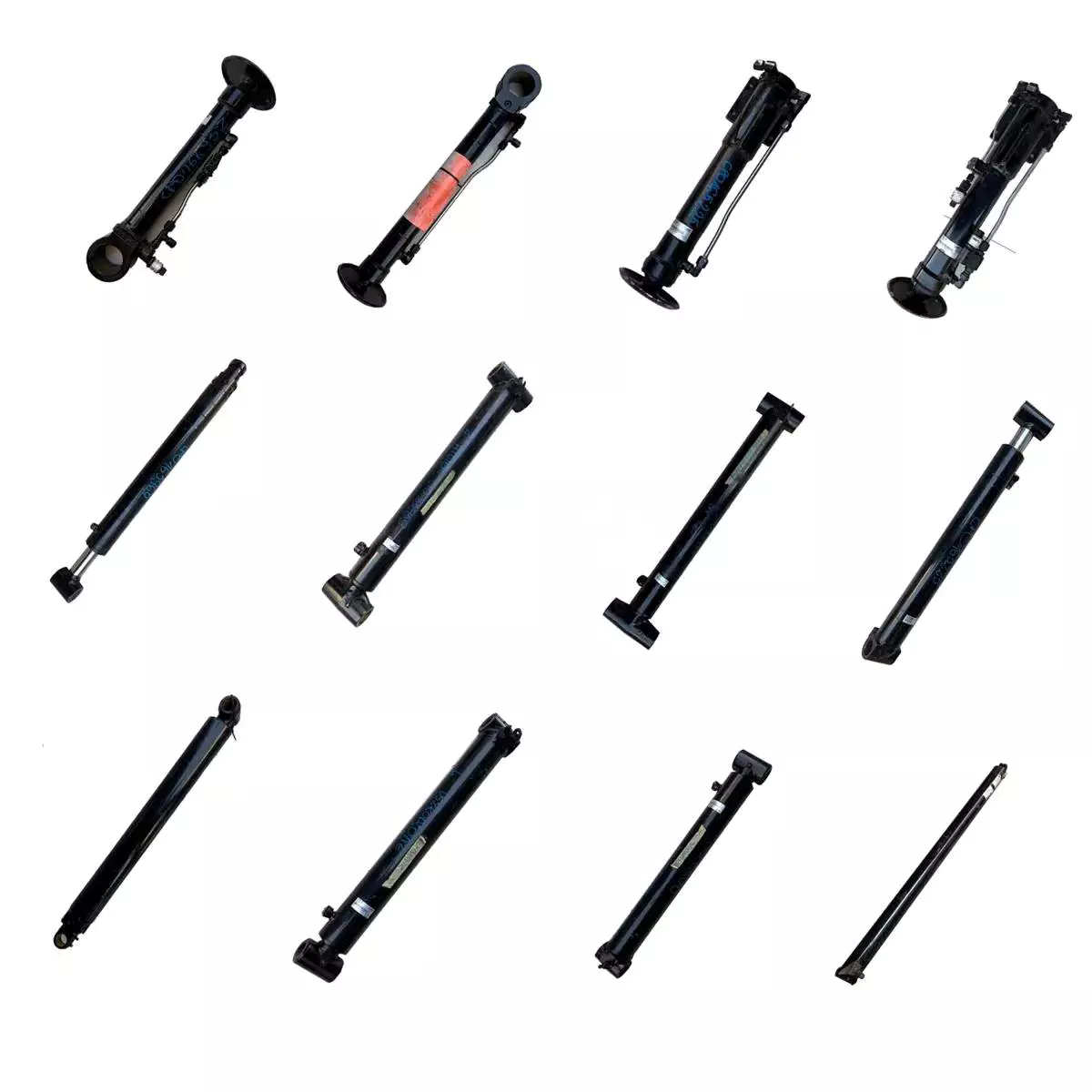
CATALOGUE OF HYDRAULIC CYLINDERS
| NO. | MACHINERY NAME | CYLINDER MODEL | TUBE(mm) | ROD(mm) | STROKE LENGTH(mm) | LOCATING DISTANCE(mm) | WORKING PRESSURE(Mpa) |
| 1 | CANE HARVESTER | 40-22-108 | 40 | 22 | 108 | 352 | 16 |
| 2 | CANE HARVESTER | 40-43-180 | 40 | 43 | 180 | 295 | 16.5 |
| 3 | CANE HARVESTER | 50-25-165 | 50 | 25 | 165 | 440 | 16 |
| 4 | CANE HARVESTER | 63-40-733 | 63 | 40 | 733 | 1120 | 16 |
| 5 | CANE HARVESTER | 75-40-250 | 75 | 40 | 250 | 521 | 16.5 |
| 6 | CANE HARVESTER | 83-60-140 | 83 | 60 | 140 | 525 | 16 |
| 7 | COMBINE HARVESTER | 32-18-123 | 32 | 18 | 123 | 313 | 16 |
| 8 | COMBINE HARVESTER | 50-25-87 | 50 | 25 | 87 | 265 | 16 |
| 9 | COMBINE HARVESTER | 50-25-126 | 50 | 25 | 126 | 816 | 16 |
| 10 | COMBINE HARVESTER | 83-60-150 | 83 | 60 | 150 | 625 | 16 |
| 11 | CORN HARVESTER | 40-22-200 | 40 | 22 | 200 | 367 | 16 |
| 12 | CORN HARVESTER | 40-35-270 | 40 | 35 | 270 | 640 | 16 |
| 13 | CORN HARVESTER | 45-25-200 | 45 | 25 | 200 | 430 | 16 |
| 14 | CORN HARVESTER | 50-25-220 | 50 | 25 | 220 | 439 | 16 |
| 15 | CORN HARVESTER | 50-28-210 | 50 | 28 | 210 | 490 | 16 |
| 16 | CORN HARVESTER | 52-35-190 | 52 | 35 | 190 | 350 | 16 |
| 17 | CORN HARVESTER | 55-35-270 | 55 | 35 | 270 | 739 | 16 |
| 18 | CORN HARVESTER | 55-35-780 | 55 | 35 | 780 | 1030 | 16 |
| 19 | CORN HARVESTER | 55-45-160 | 55 | 45 | 160 | 279 | 16 |
| 20 | CORN HARVESTER | 63-35-621 | 63 | 35 | 621.5 | 1066 | 16 |
| 21 | CORN HARVESTER | 63-45-950 | 63 | 45 | 950 | 1310 | 16 |
| 22 | CORN HARVESTER | 68-50-255 | 68 | 50 | 255 | 764 | 16 |
| 23 | CORN HARVESTER | 75-45-916 | 75 | 45 | 916 | 1320 | 16 |
| 24 | CORN HARVESTER | 25-180 | / | 25 | 180 | 340 | 16 |
| 25 | CORN HARVESTER | 45-185 | / | 45 | 185 | 300 | 16 |
| 26 | CORN HARVESTER | 45-280 | / | 45 | 280 | 795 | 16 |
| 27 | CORN HARVESTER | 45-360 | / | 45 | 360 | 520 | 16 |
| 28 | CORN HARVESTER | 50-155 | / | 50 | 155 | 405 | 16 |
| 29 | CORN HARVESTER | 50-215 | 50 | 215 | 467 | 16 | |
| 30 | CORN HARVESTER | 60-210 | 60 | 210 | 1130 | 16 |
Seals: Hallite, Parker, Merkel, etc.
Painting: anti rust painting
Certificate: ISO9001,SGS, CE, BV, TUV
Shaft diameter: 15mm to 600mm
Model number: double acting or single acting
Stage: Up to 5 level
Process: CNC Lathe Machining, CNC Cleaning Machining Robot welding, Milling
Testing Equipment: digital ultrasonic flow detector, ZEISS metallurgical microscope, ultrasonic thickness gauge, CAAM, Projector, Pin Gauge, etc
Application: Agricultural, Industrial, Engineer, Construction etc
Keyword: Double Acting Telescopic Hydraulic Cylinder,
After Warranty Service: Online support, Video technical support
Color: blue, red, yellow, green,grey, black, or Client’s Request
Size: Custom
MOQ: 1
Lead time: 30~40days
Customization: customized logo, customized package (min. Order 1 piece)
Shipping: sea freight, land freight, express, air freight
Protection: On-time dispatch is guaranteed
Supply Ability Supply Ability 3000 Pieces per Month
*We can customize and design according to your needs
*We can also produce according to your drawings
*If you need any hydraulic cylinder, please feel free to contact us
Our service/certifications
—CE Certificate of Quality Checked
—Adopt ISO Certificate of Quality Management System
—BV Certificate of Main Products Line verification
—Fast Delivery
—After-sales Service
—24 Hours, 7 Days on-line Service
Company Profile
KENDE is a leading global designer, manufacturer and marketer of hydraulic cylinder,cab, oil tank, counterweight, boom, arm, bucket, chassis, outrigger, pipe, hose, fitting, valve block, tyre, wheel,and other parts. Products are widely used in construction, mining, crane, material handing, automobile, truck, transportation, oil and gas, farm and garden equipment and so on .
We supply a wide range of parts for excavators, loaders, drills, dumpers, forklifts, tractors, trailers, harvestors, cars, buses, trucks and so on. Our products are focused on improved efficiency and life of the machineries and equipments.
Founded in January of 2015, we have become a big group till now which has 3 factories in asia to supply a wide range of products and service for the global customers.
We have the most advanced production equipments and specialized R &D center to assure the highest quality products to customers.
Our vision statement is “Science and technology first, Always with a grateful heart, Walk the world by virtue, Struggle for a better future”
FAQ
1)>. How about your delivery time?
: Generally, it will take 30 to 60 days after receiving your advance payment. The specific delivery time depends on the items and the quantity of your order.
2)>. What is your terms of price?
: EXW, FOB, CFR, CIF, DDU.
3)> . What is your terms of payment?
: T/T 50% as deposit, and 50% before delivery. We’ll show you the photos of the products and packages before you pay the balance.
4)> . Can you supply a sample freely?
: Sorry, we only can produce the sample with the cost price for you.
5)> Can you produce according to the samples?
: Yes, we can produce by your samples or technical drawings. We can build the molds and fixtures.
6)>. What is your sample policy?
: We can supply the sample if we have ready parts in stock, but the customers have to pay the sample cost and the courier cost.
7)>. Do you test all your goods before delivery?
: Yes, we have 100% test before delivery
8)>: How do you make our business long-term and good relationship?
:1. We keep good quality and competitive price to ensure our customers benefit ;
2. We respect every customer as our friend and we sincerely do business and make friends with them, no matter where they come from.
| Certification: | CE, TUV,SGS,BV |
|---|---|
| Pressure: | High Pressure Low Pressure Medium Pressure |
| Work Temperature: | High Temperature Low Temperature Normal Temperat |
| Acting Way: | Double Acting Single Acting |
| Working Method: | Straight Trip |
| Adjusted Form: | Regulated Type |
| Customization: |
Available
|
|
|---|
How do hydraulic cylinders ensure smooth and consistent movement in heavy machinery?
Hydraulic cylinders play a vital role in ensuring smooth and consistent movement in heavy machinery. Their design and operation allow for precise control over the motion of heavy loads, resulting in efficient and reliable performance. Here’s a detailed explanation of how hydraulic cylinders contribute to smooth and consistent movement in heavy machinery:
1. Hydraulic Fluid and Pressure:
– Hydraulic cylinders operate by utilizing hydraulic fluid, typically oil, to transmit force and motion. The fluid is pressurized by a hydraulic pump, creating a force that acts on the piston inside the cylinder. The pressure of the hydraulic fluid can be precisely controlled, allowing for smooth and gradual movement of heavy machinery. The fluid’s incompressibility ensures that the force is evenly distributed, resulting in consistent and predictable motion.
2. Piston and Cylinder Design:
– Hydraulic cylinders are designed with precision to ensure smooth movement. The piston and cylinder bore are machined to tight tolerances, reducing friction and minimizing internal leakage. This precise fit between the piston and cylinder walls helps maintain consistent motion without jerks or sudden changes in speed. Additionally, the use of high-quality seals and lubrication further enhances the smooth operation of the cylinder.
3. Control Valves and Flow Control:
– Hydraulic systems incorporate control valves that regulate the flow of hydraulic fluid into and out of the cylinder. These valves allow for precise control over the speed and direction of the cylinder’s movement. By adjusting the flow rate, operators can achieve smooth and controlled motion of heavy machinery, avoiding sudden starts or stops. Flow control valves also enable speed adjustment, ensuring consistent movement even under varying loads or operating conditions.
4. Cushioning and Damping:
– Hydraulic cylinders can be equipped with cushioning mechanisms to absorb shock and minimize impacts during the movement of heavy machinery. Cushioning is achieved by incorporating specialized valves or adjustable orifices in the cylinder, which restrict the flow of hydraulic fluid near the end of the stroke. This gradual deceleration helps prevent sudden jolts or vibrations, maintaining smooth and consistent movement while reducing stress on the machinery and its components.
5. Load Balancing:
– Hydraulic cylinders can be designed and arranged in a system to balance the load and distribute forces evenly. By utilizing multiple cylinders in parallel or series configurations, heavy machinery can achieve balanced movement, preventing uneven stress and ensuring smooth operation. Load balancing also helps minimize the risk of component failure and enhances the overall stability and longevity of the machinery.
6. Feedback and Control Systems:
– Advanced hydraulic systems incorporate feedback sensors and control systems to monitor and adjust the movement of heavy machinery. These sensors provide real-time information about the position, speed, and force exerted by the hydraulic cylinders. The control system processes this data and adjusts the flow of hydraulic fluid accordingly to maintain smooth and consistent movement. By continuously monitoring and regulating the cylinder’s operation, feedback and control systems contribute to precise and reliable motion control.
7. Maintenance and Servicing:
– Regular maintenance and servicing of hydraulic cylinders are essential to ensure their smooth and consistent movement in heavy machinery. Proper lubrication, inspection of seals, and replacement of worn-out components help maintain optimal performance. Preventive maintenance practices, such as filter replacements and fluid analysis, also contribute to the longevity and reliability of hydraulic systems, ensuring consistent movement over time.
In summary, hydraulic cylinders ensure smooth and consistent movement in heavy machinery through the use of hydraulic fluid and pressure, precise piston and cylinder design, control valves and flow control, cushioning and damping mechanisms, load balancing, feedback and control systems, and regular maintenance and servicing. By leveraging these features, hydraulic cylinders provide the necessary force and control to handle heavy loads while maintaining precise and reliable motion, enhancing the overall performance and productivity of heavy machinery in various industrial applications.
Ensuring Controlled and Safe Force Application in Heavy Machinery with Hydraulic Cylinders
Hydraulic cylinders play a critical role in heavy machinery by ensuring controlled and safe force application. The ability to exert and control high forces is essential for heavy machinery operations, such as lifting, pressing, pushing, or pulling heavy loads. Let’s explore how hydraulic cylinders ensure controlled and safe force application in heavy machinery:
- Force Control: Hydraulic cylinders provide precise force control capabilities. The hydraulic system’s pressure can be adjusted to regulate the force exerted by the cylinder. This control allows operators to apply the necessary force for a specific task while ensuring it remains within safe limits. By accurately controlling the force, hydraulic cylinders help prevent excessive force that could damage the machinery or compromise the safety of the operation.
- Load Balancing: In heavy machinery, multiple hydraulic cylinders are often used in conjunction to distribute and balance the applied force. By using multiple cylinders, the load can be evenly distributed across the machinery, minimizing stress concentrations and ensuring controlled force application. This load balancing approach enhances the stability and safety of the machinery, preventing uneven loading that could lead to structural issues or instability.
- Safety Valves: Hydraulic systems in heavy machinery are equipped with safety valves to protect against excessive force or overloading. Safety valves are designed to release hydraulic fluid from the cylinder when the force exceeds a predetermined threshold. This prevents the force from reaching dangerous levels, safeguarding the machinery and preventing potential accidents or damage. Safety valves provide an additional layer of safety and ensure controlled force application even in unexpected circumstances.
- Pressure Relief Systems: Hydraulic cylinders incorporate pressure relief systems to further enhance safety. These systems are designed to relieve excess pressure in the hydraulic system, which could occur due to factors such as thermal expansion or system malfunctions. By relieving excess pressure, the pressure relief systems prevent sudden and uncontrolled force surges, maintaining safe and controlled force application in heavy machinery.
- Structural Integrity: Hydraulic cylinders are designed to withstand the high forces and loads associated with heavy machinery applications. The cylinders are constructed using robust materials, such as high-strength steel, and undergo rigorous testing to ensure their structural integrity. This ensures that the cylinders can safely handle the forces applied during heavy machinery operations without experiencing failures or deformations that could compromise the safety and controlled force application.
In summary, hydraulic cylinders ensure controlled and safe force application in heavy machinery through force control, load balancing, safety valves, pressure relief systems, and robust structural design. These features and design considerations enable operators to exert the necessary force while maintaining safety and preventing excessive loads or force surges. By incorporating hydraulic cylinders into heavy machinery, manufacturers can achieve controlled force application, enhance operational safety, and protect the machinery from damage or failure.
What maintenance practices are essential for extending the lifespan of hydraulic cylinders?
Maintaining hydraulic cylinders is crucial for extending their lifespan and ensuring optimal performance. Regular maintenance helps prevent premature wear, damage, and failure, ultimately reducing downtime and saving costs. Here are some essential maintenance practices to consider for extending the lifespan of hydraulic cylinders:
1. Regular Inspections:
– Conduct routine visual inspections of hydraulic cylinders to identify any signs of damage, leaks, or wear. Inspect the cylinder body, piston rod, seals, and mounting points. Look for fluid leaks, rust, dents, or any abnormal wear patterns. Early detection of issues allows for timely repairs or replacements, preventing further damage and extending the lifespan of the cylinder.
2. Cleanliness:
– Maintain a clean environment around hydraulic cylinders to prevent contaminants from entering the system. Dust, dirt, and debris can damage seals and other internal components, leading to accelerated wear and reduced performance. Regularly clean the cylinder and its surroundings to minimize the risk of contamination.
3. Proper Lubrication:
– Adequate lubrication is critical for the smooth operation and longevity of hydraulic cylinders. Follow the manufacturer’s recommendations for lubrication intervals and use the appropriate lubricant. Apply lubrication to the cylinder’s moving parts, such as the piston rod, to reduce friction and minimize wear.
4. Seal Maintenance:
– Seals play a vital role in preventing hydraulic fluid leaks and maintaining the cylinder’s performance. Inspect and replace worn or damaged seals promptly. Ensure that seals are properly installed and lubricated. Regularly clean the seal grooves to remove any debris that could compromise seal effectiveness.
5. Pressure Checks:
– Periodically check the hydraulic system’s pressure to ensure it is within the recommended operating range. Excessive pressure can strain the cylinder and its components, leading to premature wear. Monitor pressure levels and make adjustments as necessary to prevent overloading the cylinder.
6. Control Valve Maintenance:
– Maintain and inspect control valves that regulate the flow and direction of hydraulic fluid. Ensure that the valves are functioning correctly and not causing excessive stress or pressure spikes in the cylinder. Clean or replace control valves if they are damaged or malfunctioning.
7. Cylinder Alignment:
– Proper alignment of hydraulic cylinders is essential for their longevity. Misalignment can cause excessive side loads, leading to uneven wear and potential damage. Ensure that the cylinder is correctly aligned with other components and that the mounting points are secure.
8. Preventing Overloading:
– Avoid subjecting hydraulic cylinders to loads exceeding their rated capacity. Overloading can cause internal damage, seal failure, and reduced lifespan. Ensure that the load requirements are within the cylinder’s capabilities and consider using safety devices like overload protection systems when necessary.
9. Training and Operator Awareness:
– Provide proper training to equipment operators on the correct use and handling of hydraulic cylinders. Operators should be aware of the cylinder’s limitations, safe operating procedures, and the importance of regular maintenance. Promote a culture of proactive maintenance and encourage operators to report any potential issues promptly.
10. Documentation and Record-Keeping:
– Maintain detailed documentation of all maintenance activities, including inspections, repairs, and replacements. Keep records of lubrication schedules, pressure checks, and any maintenance performed on the hydraulic cylinders. This documentation helps track the cylinder’s history, identify recurring issues, and plan future maintenance effectively.
By following these maintenance practices, hydraulic cylinder lifespan can be extended, ensuring reliable performance and reducing the risk of unexpected failures. Regular inspections, cleanliness, proper lubrication, seal maintenance, pressure checks, control valve maintenance, cylinder alignment, preventing overloading, operator training, and documentation contribute to the overall longevity and optimal functioning of hydraulic cylinders.


editor by CX 2023-12-02