Description
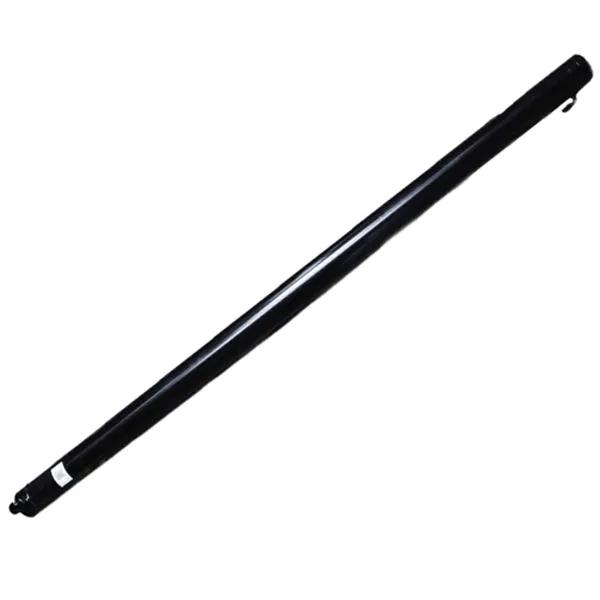
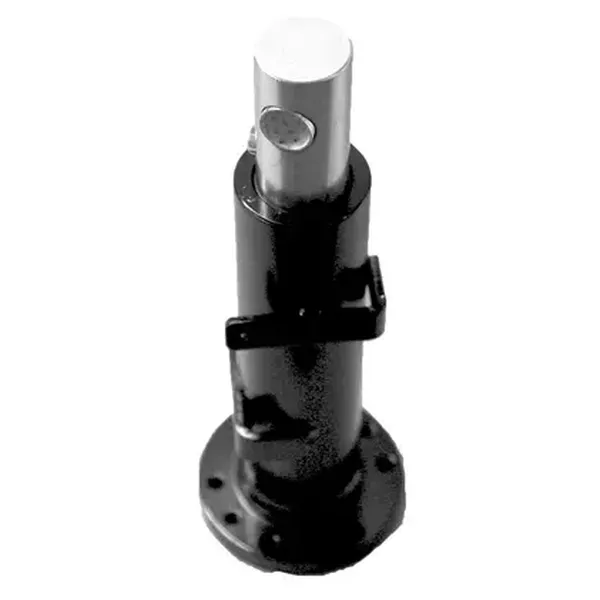
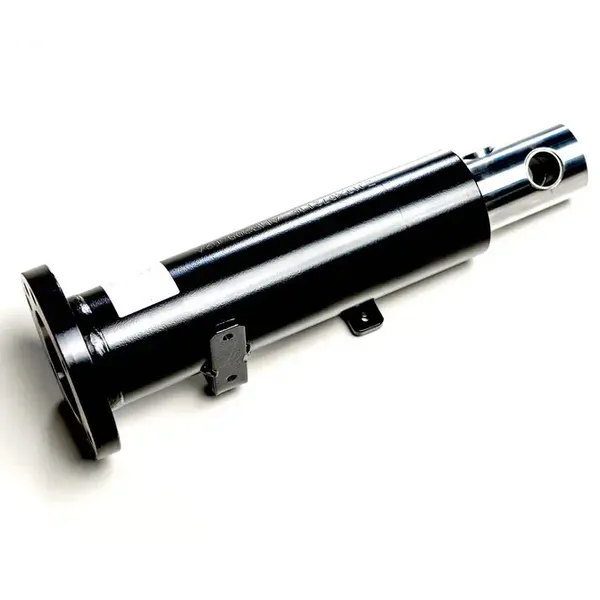
Forklift Lifting Hydraulic Cylinder — Function and Engineering Basis
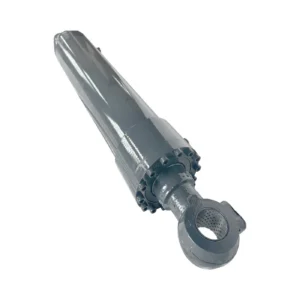
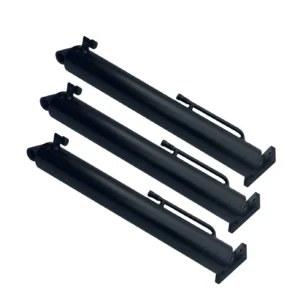
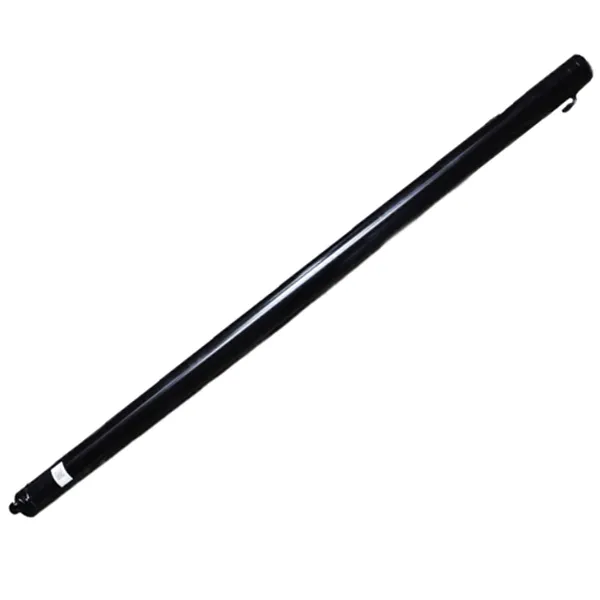
The lifting hydraulic cylinder drives vertical travel of the forklift’s inner mast and carriage. In a free-lift or full-free-lift mast configuration, one or more cylinders operate in sequence to provide smooth, controlled rise from floor level to the maximum rated lift height. This is a single-acting hydraulic cylinder — hydraulic pressure extends the rod to lift the load; gravity and load weight retract the rod when the lowering valve opens. The result is an inherently safe retraction mechanism that requires no hydraulic pressure to lower.
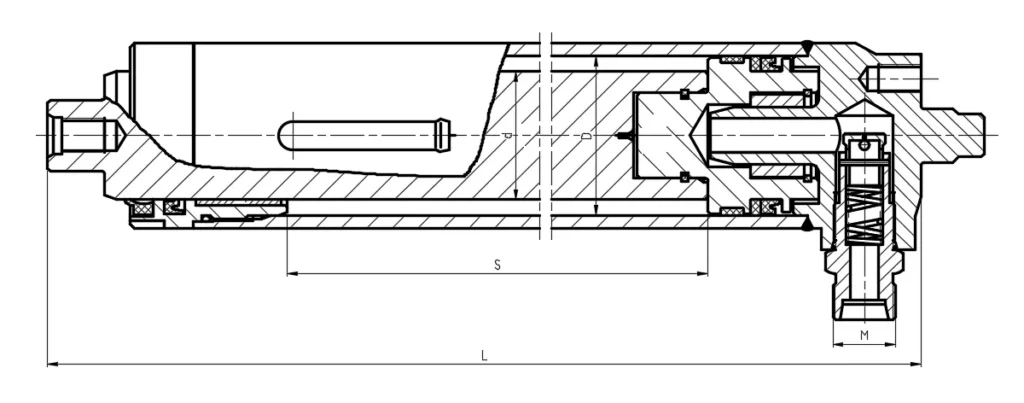
Specifications and Parameter Reference
| Parameter | Value | Notes |
|---|---|---|
| Type | Single-acting | Gravity return on lowering |
| Application | Mast vertical travel / inner mast lift | Free-lift and full-free-lift configurations |
| Bore Range | Standard and custom | Match to OEM specification |
| Sealing | Composite piston + rod seal kit | Polyurethane / PTFE / nitrile |
| Rod | Hard chrome, ground finish | Corrosion and abrasion resistant |
| Mounting | Threaded base or pin mount | Specify per mast design |
| Fluid Compatibility | ISO VG 46 / VG 68 mineral oil | OEM standard hydraulic oils |
Why Single-Acting Is Preferred for Forklift Lifting
A double-acting cylinder in the lift position would require hydraulic pressure to lower a load — if the hydraulic system fails while a load is elevated, a double-acting cylinder traps the load at height with no safe lowering mechanism. The single-acting design allows the operator to open the lowering control valve to let the load descend under gravity regardless of pump or engine status. This is a fundamental safety principle in industrial vehicle design, and it is why virtually all counterbalance forklift lift cylinders are single-acting.
Sealing System Design
The lift cylinder’s seal package must manage two distinct challenges: the rod seal retains pressurized oil during lifting and must hold position under static load (preventing load drift), while the rod wiper strips contamination from the rod on each retraction stroke. Dust, paper fibers, pallet wood splinters, and warehouse debris all contact the exposed rod. Our composite wiper design uses a dual-lip geometry — the outer lip scrapes gross contamination; the inner lip provides a secondary barrier before the rod seal. This reduces the frequency of seal replacement in high-particulate warehouse environments.
Performance Highlights
Precision bore honing ensures consistent seal contact across the full stroke, preventing stick-slip at low lift speeds.
Static bypass test at 1.5× rated pressure ensures the load stays at height with the valve closed.
Gland accessible with standard hex tooling. Seal kits available separately to minimise downtime during seal replacement.
Available in single-stage, two-stage, and plunger-type configurations to suit simplex, duplex, and triplex mast assemblies.
Replacement Guidance
Simplex, duplex, and triplex masts use different cylinder configurations. Count the number of cylinders on your mast and note whether they are centre-mounted or side-mounted.
Note bore ID, rod OD, stroke (fully extended vs. retracted length), and base mount dimensions. For threaded-base cylinders, record the thread diameter and pitch.
Most forklift lift cylinders include an integral lowering flow-control valve or check valve at the base port. Specify whether your application requires an integral lowering valve in the cylinder.
Email dimensions or a sample cylinder number to [email protected]. Our engineering team confirms match or proposes closest equivalent within 24 hours.
To request pricing for the forklift lifting cylinder, custom specifications, or an OEM supply assessment, contact Hangzhou Ever-Power Hydraulic Cylinder Co., Ltd. at +86-571-88220653 or [email protected]. Our address is Shenhua Road, Hangzhou. Use the contact form for a response within one business day.
Customer feedback
“We replaced 28 OEM distance adjustment cylinders with Ever-Power’s equivalent. The chrome rod finish held through 18 months of continuous sideshift use — no gland seepage, no bore scoring. Cost was 40% below the OEM spare parts price.”
James H.
Distribution Centre Engineer · Canada
“The HCYY11112000 lifting cylinder dropped straight into our fleet with zero modification. Delivery was on day 11 and each unit came with its own pressure test certificate. We now source all three series cylinders from Ever-Power.”
S. Ramirez
Maintenance Supervisor · Colombia
“The harvesting machinery cylinder set was well matched to our combine headers. Bore dimensions were spot on; the parameter drawing supplied with the order saved our engineers significant measurement time during installation.”
F. Kovacs
Agri-Equipment Distributor · Hungary