
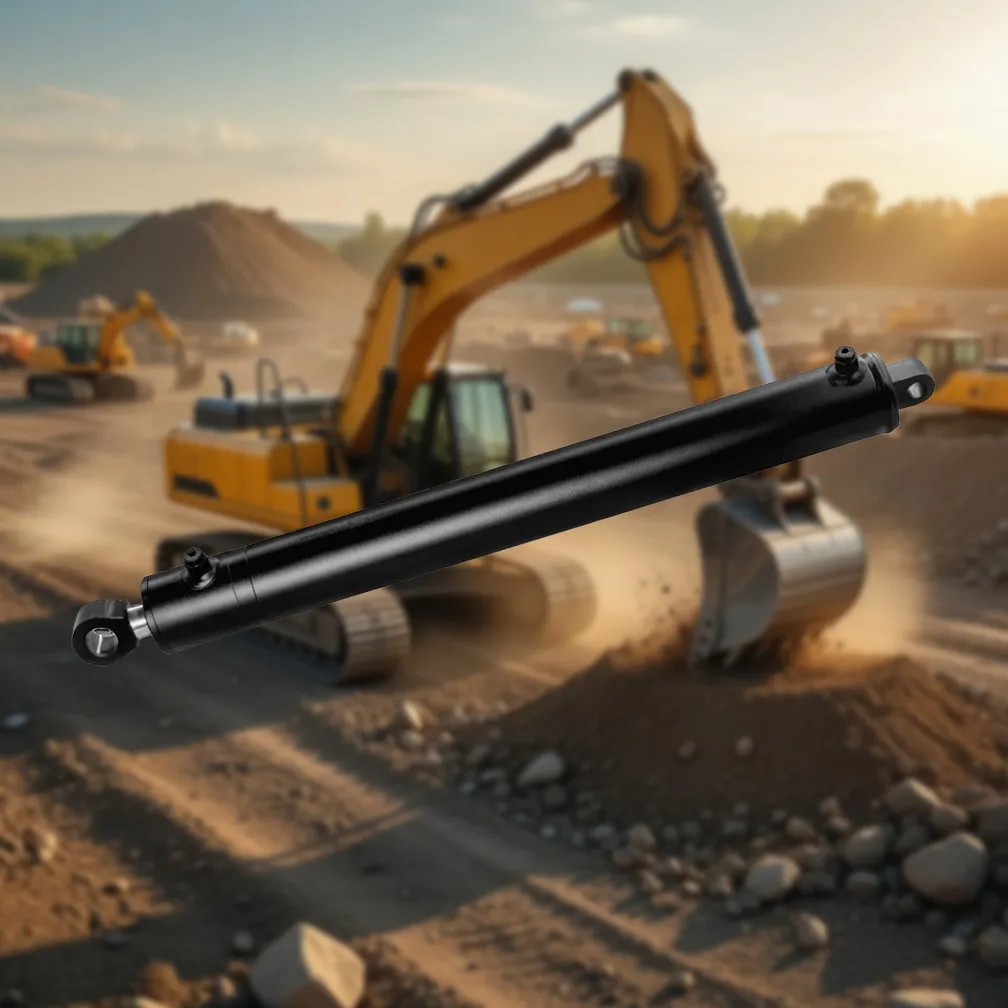
A gravity return hydraulic cylinder is a single acting cylinder that extends under hydraulic pressure and retracts when the load weight pushes the piston rod back into the barrel as pressure is released. It is the simplest hydraulic cylinder type: one hydraulic port, no return spring, no second hydraulic line. The gravity return hydraulic cylinder is the dominant actuator type in agricultural three-point hitch systems, dump truck tipping bodies, and scissor lifts — any application where lifting a load and allowing it to return under its own weight precisely matches the work cycle.
How a Gravity Return Hydraulic Cylinder Works
The operating cycle of a gravity return hydraulic cylinder has two distinct phases. In the extension (lifting) phase, hydraulic pressure from the pump enters the cap-end port, acts on the piston face, and pushes the piston rod outward — lifting or pressing the load. In the retraction (lowering) phase, the directional valve shifts to connect the cap-end line to the tank return port. Hydraulic pressure in the cap-end chamber drops to near-zero. The load weight — which is always present — now acts on the rod end, pushing the piston inward and displacing oil back through the cap-end port and directional valve to the reservoir.
This simple two-phase cycle requires only one hydraulic line between the directional valve and the cylinder cap-end port. No second line, no second port, no return spring, and no powered retraction valve are needed. The gravity return hydraulic cylinder circuit is the simplest possible hydraulic actuator configuration, and this simplicity is the primary reason it is so widely used in agricultural and construction lifting applications.
Minimum Retraction Force Requirement
The load weight must exceed the sum of all forces opposing retraction: rod seal friction, wiper seal friction, and any residual cap-end back-pressure in the return line. For a 63 mm bore cylinder, rod seal friction is typically 150–400 N depending on seal compound and condition. If the load weight — or the weight of the rod and piston assembly itself — is less than this friction level, the cylinder will not retract reliably.
In agricultural hitch cylinders, implement weight of 100–500 kg ensures reliable retraction in all conditions. In scissor lift platforms, the platform weight of 200–500 kg similarly provides ample retraction force. Verify the minimum load weight against the estimated seal friction before specifying gravity return — where load weight is uncertain or may be reduced (e.g. a partially unloaded platform), a spring return design provides more reliable retraction assurance.
Controlling Lowering Speed in Gravity Return Systems
| Speed Control Method | How It Works | Best For |
|---|---|---|
| Meter-out flow control in return line | Restricts oil flow leaving the cap end, slowing retraction regardless of load weight | Most gravity return lifting applications |
| Proportional directional valve | Controls the opening of the valve return port proportionally to the command signal | Precise speed control, operator-adjustable |
| Counterbalance valve | Maintains a set back-pressure on the return line — prevents runaway if load accelerates the cylinder | Heavy loads where uncontrolled descent is a risk |
| Load-sensing system | Pump output tracks the load demand, controlling both extension speed and retraction back-pressure | Advanced tractor hydraulic systems |
Gravity Return vs Spring Return: The Practical Choice
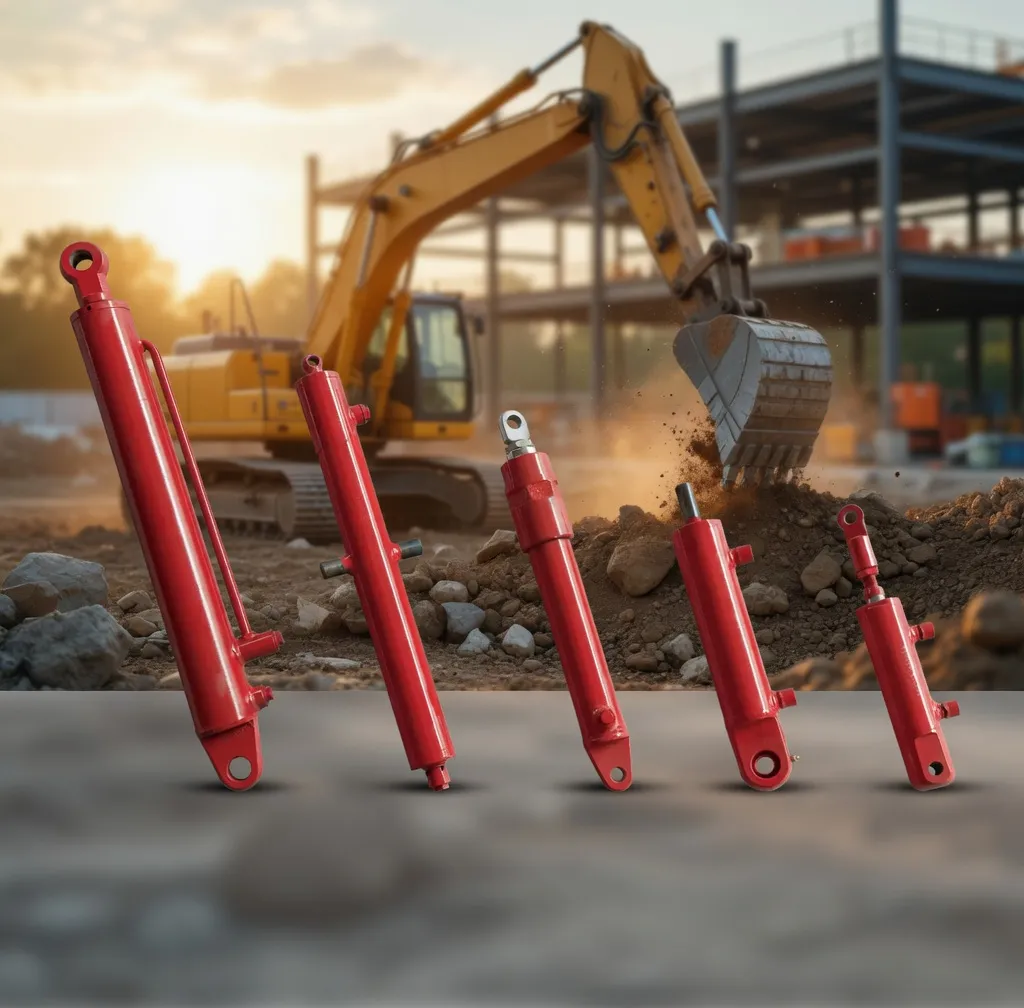
For vertical lifting with a reliable, heavy load — tractor hitch lifting, grain tank raising, dump body tipping — gravity return is always the preferred choice. It adds no weight, no cost, no additional wear component, and no minimum retraction force uncertainty. For horizontal installations, light loads, inverted mounting, or any orientation where gravity does not assist retraction, spring return is the practical requirement. Agricultural gravity return cylinders from Ever-Power are available with cap-end ports, matched stroke and bore, and clevis or pin-eye mounting for direct replacement of standard agricultural cylinder installations.
Request a Free Specification Review
Send your application details to [email protected] or call +86-571-88220653. Our engineers respond within 24 hours.