
A single acting hydraulic cylinder is one of the most widely used linear actuators in industrial and mobile machinery — from agricultural tractors to bridge jacking equipment, from manufacturing presses to offshore wellhead tools. Despite its simplicity, it covers an enormous range of forces, sizes, and configurations. This guide explains how a single acting cylinder works, the different types available, where each is used, and how to select and specify the right one for a given application.
How a Single Acting Hydraulic Cylinder Works
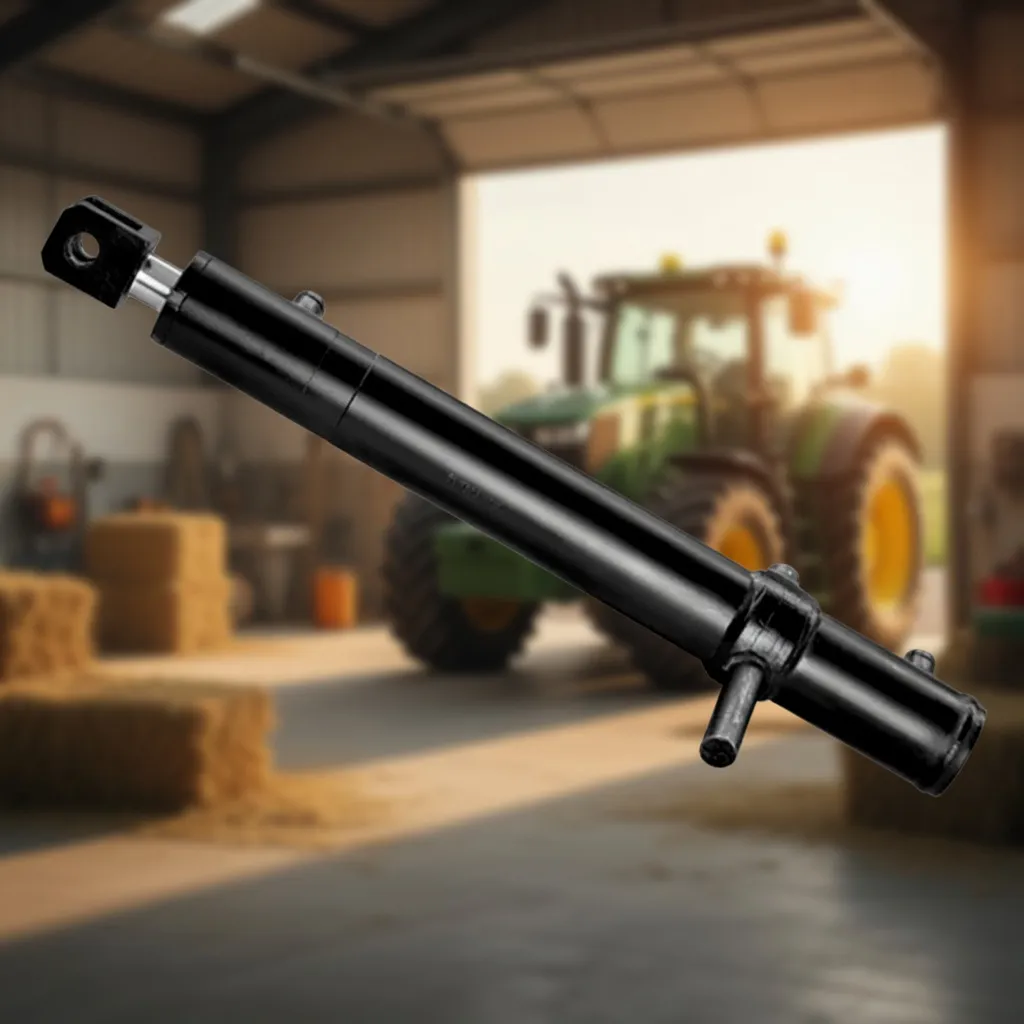
The operating principle is straightforward. The cylinder consists of a cylindrical barrel, a piston that slides inside the barrel, and a piston rod attached to the piston. One hydraulic port is located at the cap end (the closed end). When the hydraulic pump delivers pressurised oil through this port, oil fills the chamber behind the piston. The pressure acts on the piston face — Force = Pressure × Area — and pushes the piston and rod outward.
When the control valve is moved to the return position, the cap end port is connected to the hydraulic tank return line. The external return force — the weight of the load, an internal spring, or the machine’s own mechanism — pushes the piston back toward the cap end, displacing the oil out through the same port back to the reservoir. No oil enters the rod side of the cylinder during the entire cycle. The rod side is either open to atmosphere (gravity return types) or contains a spring.
The Four Types of Single Acting Hydraulic Cylinder
Gravity Return
The load weight provides retraction force. The simplest and most common configuration. Must be mounted with the rod pointing upward — or in a geometry where gravity assists retraction. Used in agricultural hitch lifting, scissor lifts, and dump truck tipping gear.
Spring Return
An internal compression spring pushes the rod back when hydraulic pressure is released. Works in any mounting orientation. Used in clamping fixtures, valve actuators, and horizontal installations where gravity cannot assist. Spring rate must be matched to the retraction load.
Hollow Plunger
A solid steel plunger slides through a sealed bore instead of a piston-and-rod assembly. No piston seal — only a rod seal at the gland. Provides very high force in a compact body. Standard for hydraulic jacks, load testing, and bridge jacking applications. Gravity return only.
Telescopic Single Acting
Multiple nested steel stages extend sequentially to provide long stroke from a short collapsed length. Used in dump truck tipping bodies and tipper trailers where a long stroke is needed but the collapsed cylinder must fit within a compact chassis envelope.
Key Technical Specifications Explained
Understanding the key specifications on a single acting cylinder data sheet allows correct selection without guesswork.
| Specification | What It Means | How to Determine It |
|---|---|---|
| Bore Diameter | Internal barrel diameter; determines extension force | Calculate from F = P × A; select nearest standard size |
| Stroke Length | Distance rod travels from fully retracted to fully extended | Measure required travel; add 5–10 mm end clearance each end |
| Working Pressure | Maximum rated operating pressure | Must equal or exceed hydraulic system relief valve setting |
| Rod Diameter | External diameter of the piston rod | Check buckling safety when stroke exceeds 10× rod diameter |
| Collapsed Height | Length of the cylinder when fully retracted | Must fit within the available installation envelope |
| Return Method | How the rod retracts — gravity, spring, or mechanism | Determined by mounting orientation and available return force |
| Seal Compound | Material of piston rod and wiper seals | Match to operating temperature range and fluid chemistry |
Extension Force and the Force Calculation
The extension force produced by a single acting cylinder is determined entirely by the system pressure and the bore area. The formula is: Force (N) = System Pressure (Pa) × Bore Area (m²), where Bore Area = π × (bore diameter ÷ 2)². At 20 MPa system pressure, common bore sizes produce the following extension forces: 50 mm bore → 39.3 kN; 63 mm bore → 62.4 kN; 80 mm bore → 100.5 kN; 100 mm bore → 157.1 kN; 125 mm bore → 245.4 kN.
Unlike double acting cylinders, single acting cylinders produce no hydraulic retraction force — retraction force is limited to the spring rate or the load weight. When specifying a spring return single acting cylinder, confirm that the spring force is sufficient to overcome seal friction, any residual load on retraction, and the weight of the rod and piston assembly itself.
Where Single Acting Cylinders Are Used
Agricultural Machinery
Three-point hitch lifting, grain tank raising, implement folding, and bale ejectors. Gravity return from implement weight makes single acting the natural choice for these applications.
Dump Trucks and Tippers
Telescopic single acting cylinders are the standard for tipping bodies worldwide. Multi-stage designs provide long stroke within a compact chassis envelope.
Industrial Presses
Pressing, forming, and stamping operations where force is needed only on the downstroke and the tooling weight or a return spring provides upstroke.
Construction Lifting
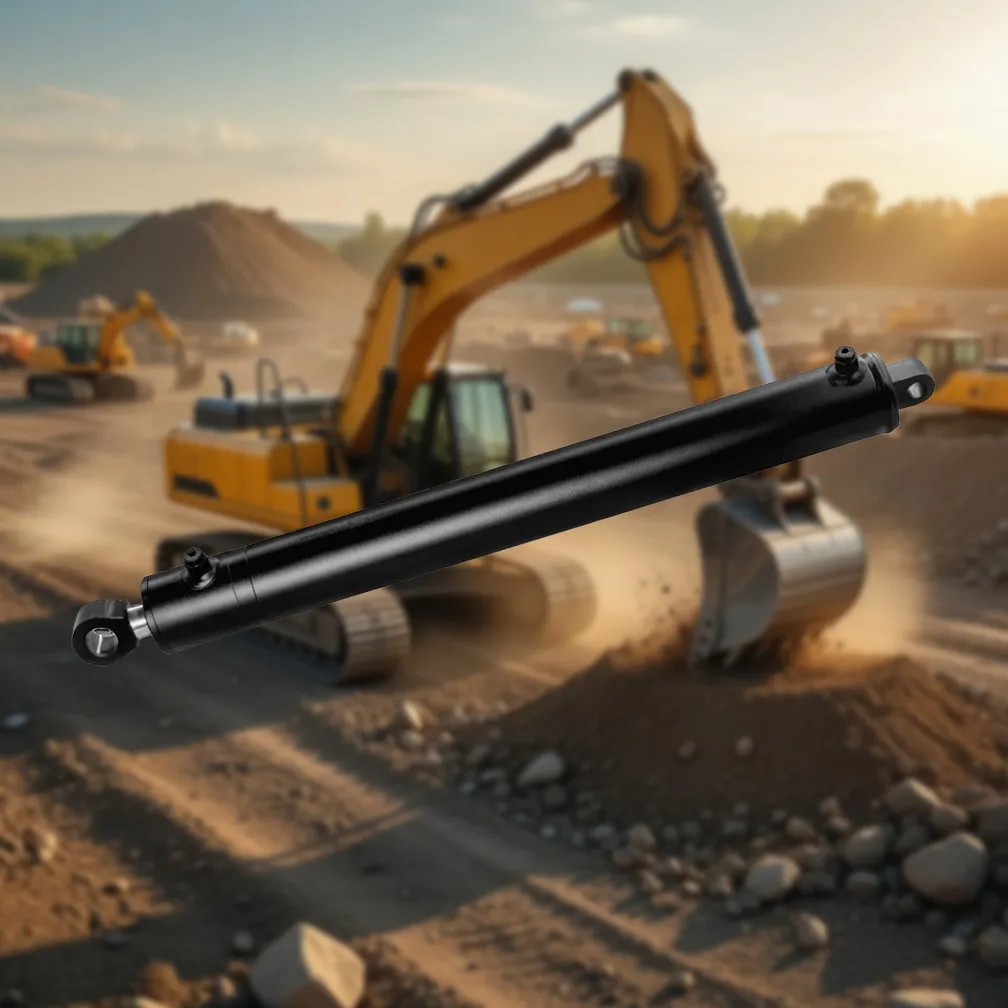
Hollow plunger single acting jacks for structural load testing, bridge jacking, slab lifting, and shoring. Forces from 5 tonnes to 500 tonnes or more.
Single Acting vs. Double Acting: When to Choose Each
Single acting is the correct choice whenever an external force — the load weight, an internal spring, or the machine mechanism — reliably provides the retraction force. It delivers a simpler circuit, lower cost, and less maintenance than double acting for the same job. Double acting is necessary only when controlled force is required in both directions, or when the mounting orientation makes gravity-assisted retraction impossible without a spring. View Ever-Power single acting cylinders for agricultural applications, or contact the engineering team to discuss the right configuration for your specific machine.
Request a Free Specification Review
Send your application details to [email protected] or call +86-571-88220653. Our engineers respond within 24 hours.