
Hydraulic cylinder cushioning is a built-in end-of-stroke deceleration mechanism that prevents the piston from striking the end cap at full operating speed. A cushion spear on the piston rod enters a matched bore in the end cap near end of stroke, trapping oil that can only escape through a small adjustable needle valve. This restricted escape path decelerates the piston smoothly, absorbing the kinetic energy of the moving load before any metal-to-metal contact occurs. Hydraulic cylinder cushioning is essential when rod speed exceeds 100–150 mm/s or when the moving load carries significant inertia.
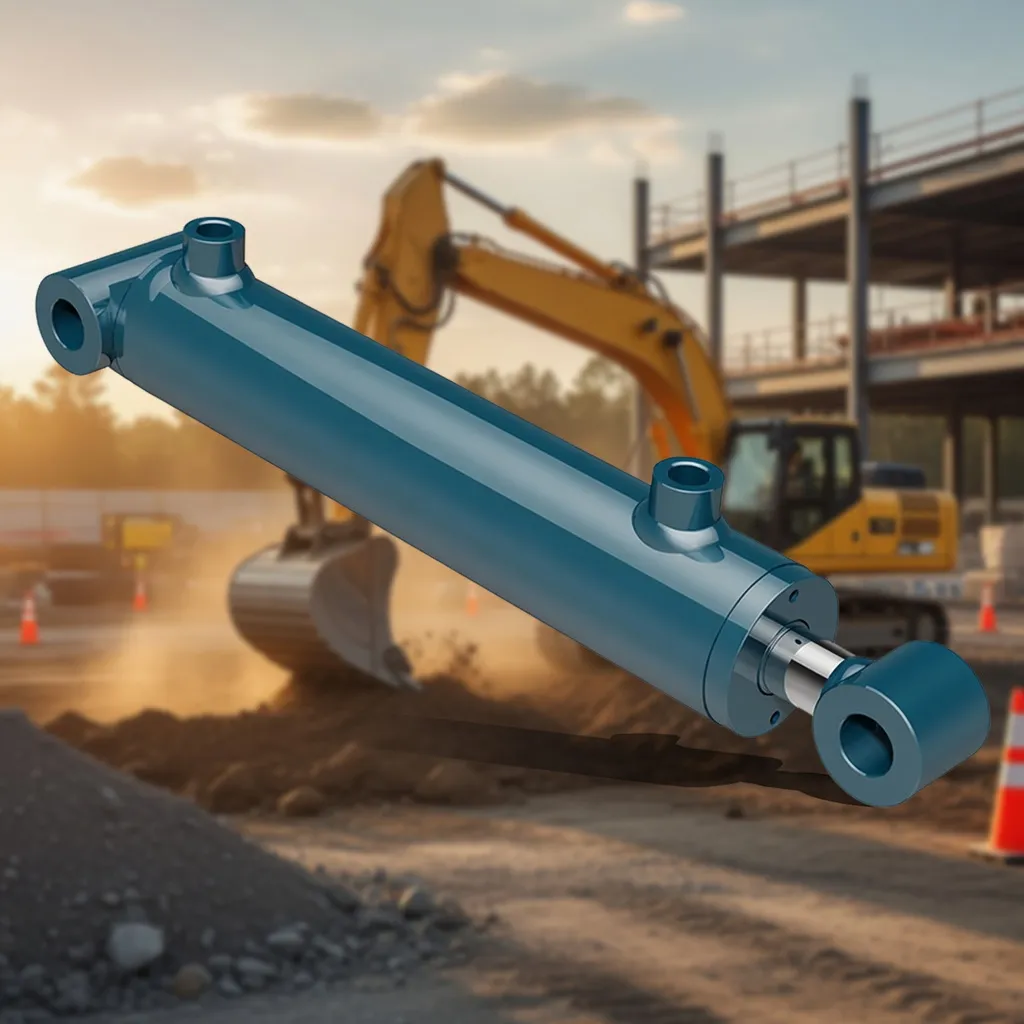
How Hydraulic Cylinder Cushioning Works
The cushioning mechanism consists of three elements: a cushion spear (a reduced-diameter section of the piston rod near the piston), a matched bore in the end cap that the spear enters as the piston approaches end of stroke, and a needle valve that controls the rate at which trapped oil can escape. During normal stroke operation, oil flows freely in and out of the cylinder port. When the cushion spear enters the end cap bore — typically 20–50 mm before end of stroke — the main flow path is blocked. Oil can only escape through the small needle valve orifice, creating a restriction that decelerates the piston. The deceleration rate is proportional to the needle valve restriction setting.
When Hydraulic Cylinder Cushioning Is Required
The need for cushioning is determined by the kinetic energy the system must absorb at end of stroke: KE = ½ × m × v², where m is the total moving mass (piston + rod + load) and v is the rod velocity. Even moderate loads at high speed carry significant kinetic energy that the end cap must absorb if no cushioning is present.
| Application | Typical Rod Speed | Cushioning Needed? | Notes |
|---|---|---|---|
| Agricultural tractor hitch cylinder | 30–80 mm/s | Usually not needed | Low speed, load limits velocity |
| Log splitter cylinder | 50–150 mm/s | At higher speed end | Impact from spring-assisted return is worse |
| Industrial press — slow approach | < 50 mm/s | Not required | Controlled speed throughout stroke |
| Dump truck tipping — first stage | 50–120 mm/s | Recommended | High mass of tipping body |
| Machine tool cylinder — fast traverse | 200–500 mm/s | Essential | High speed plus large moving mass |
| Automated press — high cycle | 150–400 mm/s | Essential | Cycle rate compounds fatigue damage |
Fixed vs Adjustable Cushioning
Fixed Cushioning
Restriction is built into the end cap at manufacture — cannot be adjusted in the field. Suitable for applications with constant, known speed and load. Lower cost. If the load or speed changes, the cushioning may be too soft or too hard.
Adjustable Cushioning
A needle valve accessible from the end cap exterior allows on-site tuning of the deceleration rate. Preferred for variable load, multi-application, or high-value machinery where optimal tuning is required. Slightly higher cost. Needle valve can be mis-set — always adjust with the cylinder operating at working speed.
How to Adjust the Cushion Needle Valve
Turn the needle valve fully counter-clockwise. This provides the minimum restriction — the piston will still decelerate but may still contact the end cap at low residual speed.
Do not adjust the cushion at slow speed — the optimal setting is speed-dependent. The load must be at its normal operating weight.
Turn the needle clockwise in quarter-turn increments. After each adjustment, complete 2–3 full cycles and listen and feel for the quality of the deceleration at end of stroke.
The correct setting produces a smooth, progressive deceleration with no audible impact at end of stroke and no jerky hesitation before the piston reaches the end cap. The deceleration zone should feel like a controlled soft stop.
Over-restriction causes excessive back-pressure in the cushion zone, which can exceed the cylinder’s rated working pressure during deceleration. If the piston decelerates so early that it hesitates before reaching end of stroke, reduce restriction slightly.
Hydraulic cylinder cushioning is available as a factory option on all Ever-Power welded and tie rod cylinder series. Specify whether cushioning is required on the cap end, rod end, or both ends when placing your order. For applications where speed and load are not yet confirmed at the time of ordering, adjustable cushioning on both ends is the safest specification. Contact Ever-Power with your bore, stroke, speed, and load to confirm whether cushioning is required for your application.
Hydraulic cylinder cushioning addresses a problem that only becomes visible after the damage has been done: an end cap that is cracked, seals that have failed from repeated pressure spikes, or a mounting structure that has developed fatigue cracks from thousands of uncontrolled end-of-stroke impacts. Specifying hydraulic cylinder cushioning at the time of order costs a fraction of the repair bill it prevents. For any cylinder operating above 100 mm/s rod speed, hydraulic cylinder cushioning is not an optional feature — it is a basic engineering requirement for acceptable service life.
Request a Free Specification Review
Send your application details to [email protected] or call +86-571-88220653. Our engineers respond within 24 hours.