
Selecting the best hydraulic cylinder for lifting applications requires matching the cylinder type to the load range, stroke requirement, and load-holding safety specification of the task. Lifting is one of the primary applications of single acting hydraulic cylinders, from 2-tonne agricultural hitch lifting to 1,000-tonne bridge jacking. This guide identifies the best hydraulic cylinder type for lifting across the full load range and explains the load-holding requirements that make lifting different from other hydraulic actuator applications.
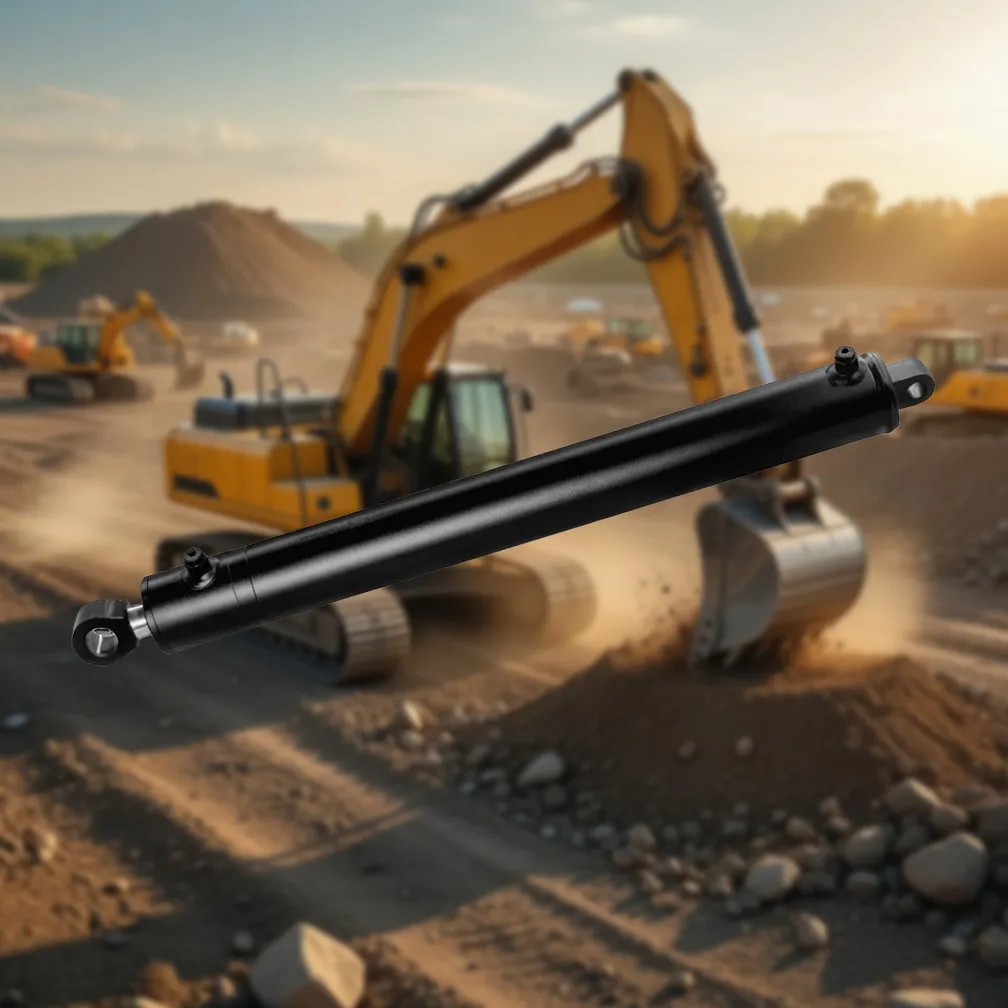
Matching Cylinder Type to Lifting Load Range
Agricultural Lifting — 1–20 tonnes
Standard piston single acting cylinders with clevis or pin-eye mounting. Three-point hitch cylinders, grain tank lifting cylinders, and seed drill depth cylinders. Gravity return from implement weight. Load-holding by directional valve in most tractor installations.
Industrial Lifting — 5–100 tonnes
Standard bore single acting piston cylinders in flanged or clevis mount configurations. Add a POCV for load-holding if the directional valve is remote from the cylinder. Typical applications: press platens, tooling positioners, die set lifters.
High-Tonnage Jacking — 10–1,000 tonnes
Hollow plunger single acting cylinders. The hollow bore allows a tie rod or tension cable to pass through the unit. Used for bridge jacking, structural load testing, and foundation pressing. Gravity return — units must be oriented with plunger pointing downward.
Vehicle Lifts and Scissor Platforms
Telescopic single acting cylinders where the platform must rise from floor level to 1.5–2 m with a compact retracted height. Spring return or gravity return depending on platform weight and intended lowering speed.
The Critical Difference: Load Holding in Lifting Applications
Lifting applications differ from other hydraulic cylinder applications in one critical respect: the lifted load must be held safely in position for extended periods, often with personnel or equipment working beneath or around it. A cylinder that holds a load under normal conditions but drifts slowly due to directional valve leakage is not acceptable in a lifting application — it is a safety hazard.
The standard engineering solution is a pilot-operated check valve (POCV) installed as close as possible to the cylinder cap-end port. The POCV blocks oil from leaving the cylinder unless a deliberate pilot pressure signal opens it. Even if the directional valve leaks internally, the POCV holds the load. A burst hydraulic line between the POCV and the cylinder — or between the cylinder and a line-mounted POCV — can still cause uncontrolled load drop; for maximum safety, install the POCV in the cylinder port itself or in a manifold bolted directly to the end cap.
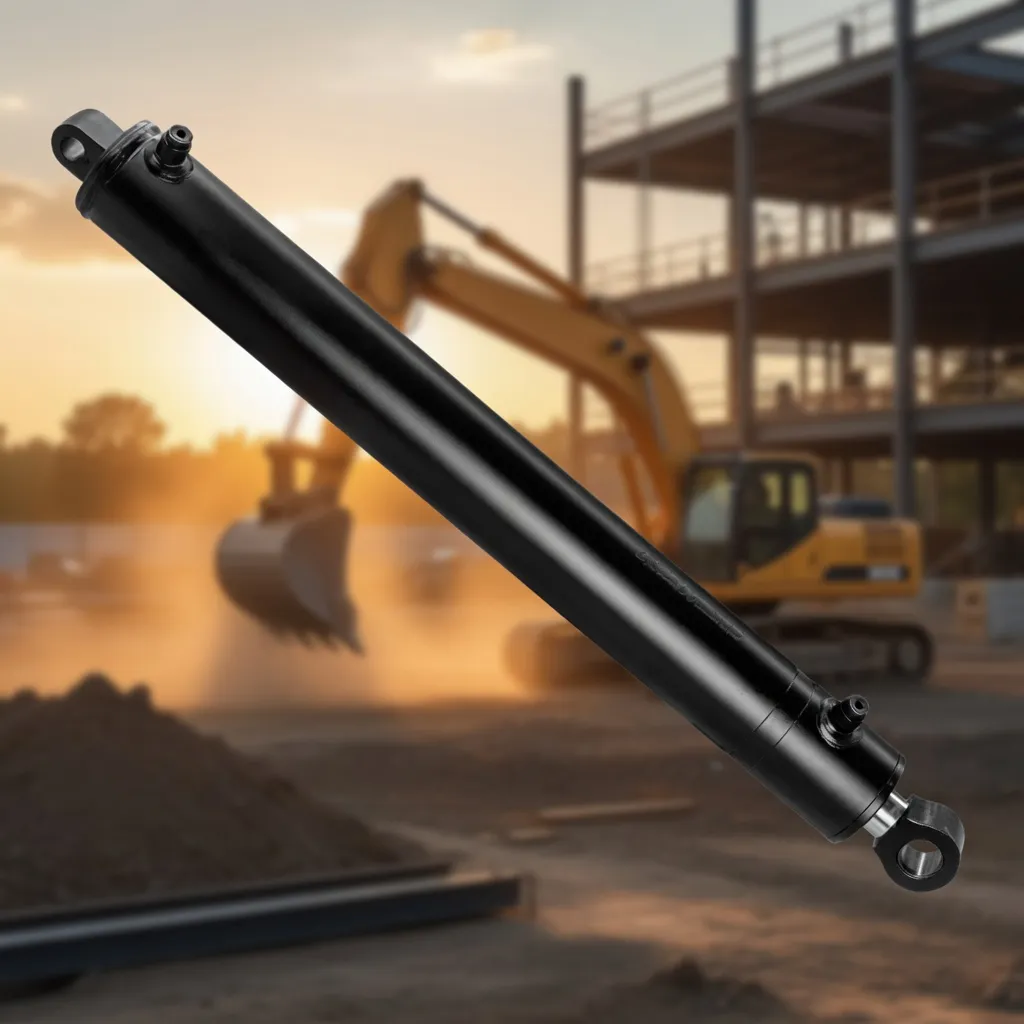
Bore Size Guide: Force Required to Lift Common Loads at 20 MPa
| Load to Lift | Required Force (kN) | Min Bore at 20 MPa | Recommended Standard Bore |
|---|---|---|---|
| 500 kg (0.5 tonne) | 4.9 kN | 17.7 mm | 25 mm bore (safety margin) |
| 2 tonnes | 19.6 kN | 35.3 mm | 40 mm bore |
| 5 tonnes | 49.1 kN | 55.9 mm | 63 mm bore |
| 10 tonnes | 98.1 kN | 79.0 mm | 100 mm bore (with 1.5× safety factor) |
| 20 tonnes | 196.2 kN | 111.8 mm | 125 mm bore |
| 50 tonnes | 490.5 kN | 176.7 mm | 200 mm bore |
| 100 tonnes | 981.0 kN | 250 mm | Custom or hollow plunger |
For lifting applications above 50 tonnes, or for any lifting application where personnel safety is a primary concern, submit the full load specification and duty cycle to Ever-Power engineering for a complete cylinder and load-holding valve specification. High-tonnage and safety-critical lifting cylinders are manufactured with 4:1 rated safety factors and individually pressure-tested and certified before despatch.
The best hydraulic cylinder for lifting is one that is correctly sized for the load, equipped with a pilot-operated check valve for safe load holding, and specified with the correct seal compound for the operating environment. A hydraulic cylinder for lifting that does not have load-holding provision is a safety hazard in any application where personnel or equipment are exposed beneath the raised load. Specify the pilot-operated check valve as an integral part of the hydraulic cylinder for lifting system — not as an afterthought added after the first near-miss incident.
Specifying a hydraulic cylinder for lifting correctly requires three checks beyond the basic bore calculation: (1) the load-holding valve must be rated to the same pressure as the lifting cylinder and installed as close to the cylinder port as possible; (2) the cylinder mounting must resist the full lifting load without side-loading the rod — a rod that bends under the lifting load will destroy seals within hours; (3) the hydraulic cylinder for lifting must be pressure tested to 1.5× its rated working pressure before installation on any safety-critical lifting application. These three checks are what separates a hydraulic cylinder for lifting that performs reliably for years from one that fails during the first lift cycle.
Request a Free Specification Review
Send your application details to [email protected] or call +86-571-88220653. Our engineers respond within 24 hours.