
The single acting hydraulic cylinder has been the standard actuator in log splitters for over 50 years — and for good reason. The log splitting work cycle maps precisely to the single acting cylinder’s strengths: maximum force in one direction, passive gravity return, a simple one-line hydraulic circuit, and low maintenance requirements. This guide explains why a single acting hydraulic cylinder is the correct choice for log splitter applications, how to size it correctly, and what operational factors determine its service life.
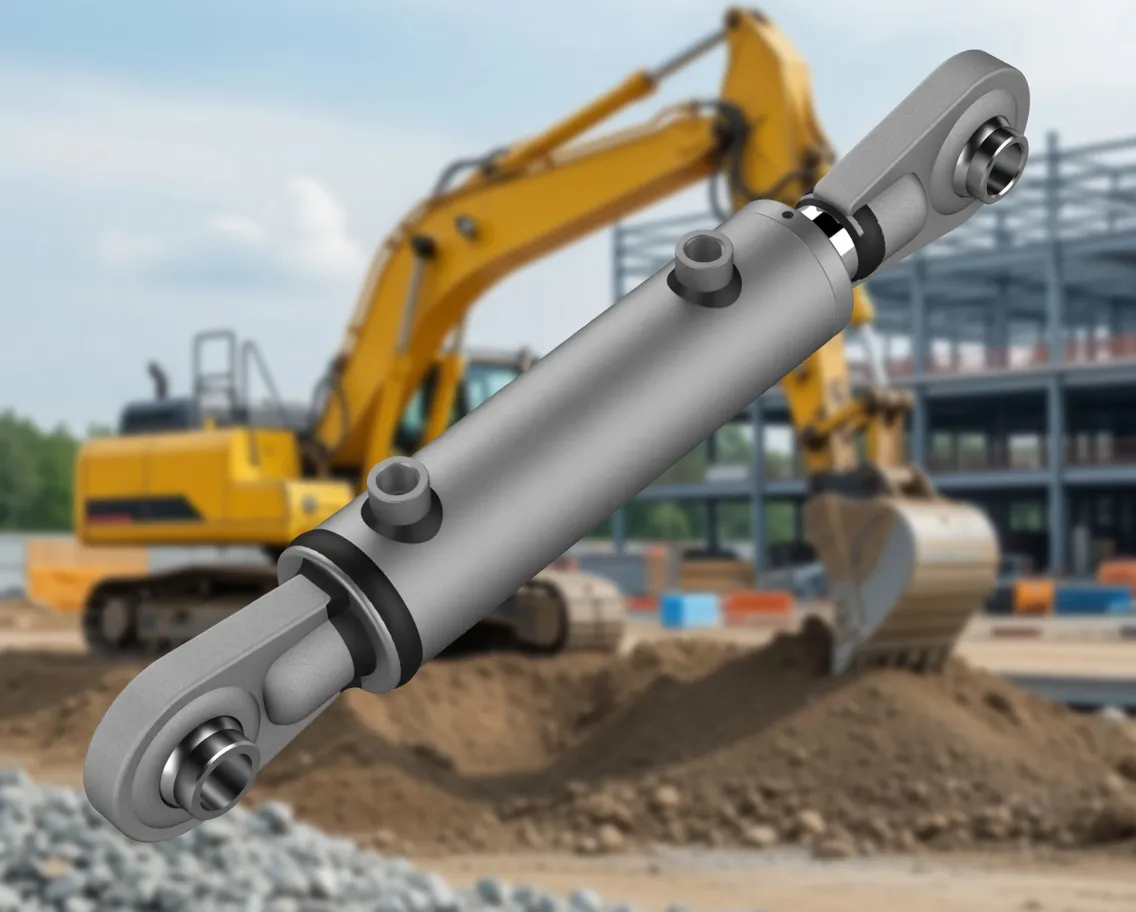
Why the Log Splitting Work Cycle Suits Single Acting Perfectly
Log splitting is a one-direction force task. The wedge must be driven through the wood grain with high compressive force — typically 20–100 kN depending on log diameter and wood species. Once the log splits, the resistance drops to zero and the wedge is free. The only requirement from this point is to return the ram to the start position so the next log can be positioned. Gravity pulling the wedge back down (on a vertical splitter) or a light spring (on a horizontal splitter) provides perfectly adequate retraction force.
A double acting cylinder adds a second hydraulic line, a more complex directional valve, and the requirement to manage pressurised retraction — none of which provide any benefit in this application. The extra cost, extra plumbing, and extra maintenance of double acting components deliver exactly zero additional performance in a log splitter. This is why single acting cylinders dominate the log splitter market across every price and power level.
Sizing the Log Splitter Cylinder: Force and Bore Calculation
Splitting force depends on wood species, log diameter, grain direction, and moisture content. Hard, dry, large-diameter hardwoods (oak, elm, ash) require significantly more force than soft, green softwoods (pine, spruce). Published splitting force guidelines by application:
| Application | Typical Splitting Force | Recommended Bore at 20 MPa |
|---|---|---|
| Residential — softwood, up to 400 mm dia. | 20–40 kN (2–4 tonnes) | 40–63 mm bore |
| Residential — hardwood, up to 500 mm dia. | 40–70 kN (4–7 tonnes) | 63–80 mm bore |
| Commercial — hardwood, up to 600 mm dia. | 70–120 kN (7–12 tonnes) | 80–100 mm bore |
| Industrial — large diameter, knotted timber | 120–200 kN (12–20 tonnes) | 100–125 mm bore |
Apply a 1.5× safety factor to the estimated splitting force before calculating bore — wood properties vary significantly and the safety margin ensures the cylinder can handle the worst-case log without stalling. A stalled cylinder at full relief valve pressure generates significant heat and wear if held for extended periods.
Stroke Length: Matching the Split Depth
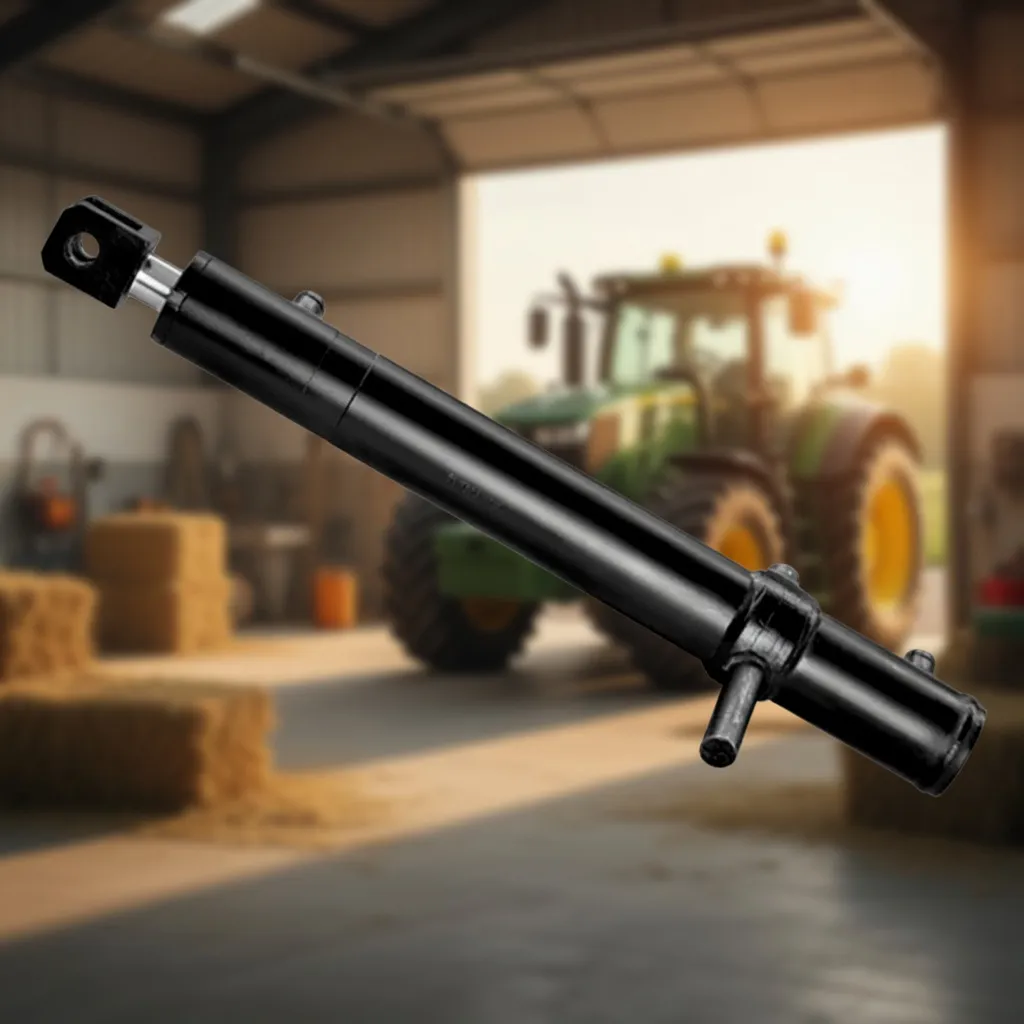
Log splitter cylinder stroke is determined by the maximum log length the machine must handle plus clearance for the wedge travel beyond full log separation. A typical horizontal log splitter handling logs up to 500 mm length requires a stroke of 550–600 mm. Vertical splitters with a fixed wedge and moving beam require stroke equal to the maximum log height plus 50–100 mm clearance. Telescopic cylinders are not used in log splitters — a standard single-stage cylinder with the required stroke is always more practical.
Return Method: Gravity vs Spring Return in Log Splitters
Vertical log splitters — where the wedge points downward — use gravity return exclusively. The weight of the ram, piston rod, and wedge assembly provides reliable retraction force as long as the combined weight exceeds the rod seal friction. Horizontal log splitters — where the ram moves horizontally — use spring return single acting cylinders. The return spring is sized to overcome rod seal friction and any residual hydraulic back-pressure. Ever-Power welded hydraulic cylinders are available in both gravity return and spring return configurations, with stroke lengths from 300 mm to 800 mm for log splitter applications.
Maintenance: Keeping the Log Splitter Cylinder in Long-Term Service
Log splitter cylinders face specific contamination risks: wood bark and sawdust settle on the extended rod surface and are dragged back into the wiper seal on every retraction. Inspect and clean the rod surface before and after each splitting session in high-dust conditions. Check the wiper seal annually — bark abrasion accelerates wiper seal wear more than oil contamination does in clean systems. Retract the ram fully and clean the rod before winter storage. A log splitter cylinder properly maintained along these lines should outlast the machine frame.
The single acting hydraulic cylinder in a log splitter benefits from exactly the properties that make single acting designs broadly useful: high force in one direction, passive gravity or spring return, and a simple one-line hydraulic circuit that requires less maintenance than a double acting installation. Whether the log splitter is a compact residential unit with a 40 mm bore single acting hydraulic cylinder or a commercial machine with a 100 mm bore unit producing 157 kN, the operating principle is identical — and the single acting design is the right choice for every size in the range.
The single acting hydraulic cylinder in a log splitter is loaded in compression on every stroke. Selecting the correct bore for the required splitting force — using F = P × A with a 1.5× safety factor — ensures the single acting hydraulic cylinder generates enough force to split the hardest log in the intended range without stalling at the relief valve. At 20 MPa, a 63 mm bore single acting hydraulic cylinder produces 62.4 kN, sufficient for residential hardwood splitting to 500 mm diameter. A 100 mm bore single acting hydraulic cylinder at the same pressure produces 157 kN for demanding commercial log processing applications.
Request a Free Specification Review
Send your application details to [email protected] or call +86-571-88220653. Our engineers respond within 24 hours.